Sun, sex, and synthetic jellyfish: How the film adaptation of Deborah Levy’s sapphic drama Hot Milk was made
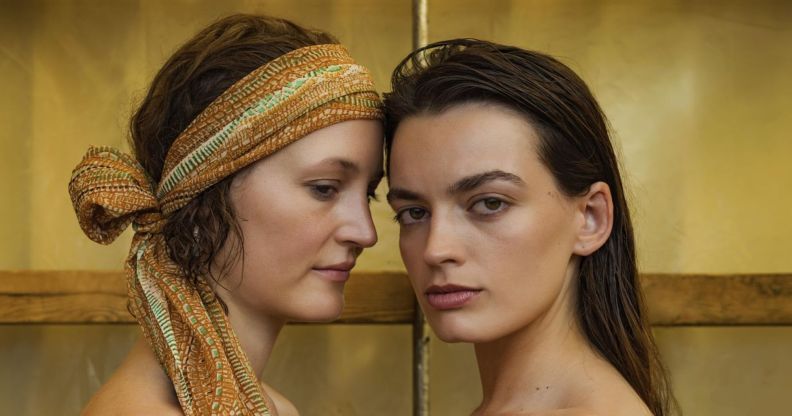
Vicky Krieps and Emma Mackey play troubled lovers in Rebecca Lenkiewicz’s Hot Milk adaptation. (Film4/Bonnie Productions/Heretic/MUBI)
On the set of Hot Milk, the film adaptation of Deborah Levy’s 2016, Man Booker-nominated novel of the same name, there was a jellyfish issue.
“The jellyfish were a saga in themselves,” laughs screenwriter and playwright Rebecca Lenkiewicz, who is helming the film in her directorial debut. In one pivotal early scene early in the simmering drama, twentysomething anthropology student Sofia (played with bubbling irascibility by Sex Education’s Emma Mackey) is stung by one of the creatures while wading through the Spanish seawater (sort of: the film is set in Almeria, but was filmed in Greece). The crew used a tracking app to try and source the jellies to film, but failing that, they had to be made artificially by production designer Andrey Ponkratov.
“They were getting caught by waves and going out to sea, and we were catching them because we didn’t want plastic in the sea,” Lenkiewicz explains, still chuckling. Then, suddenly serious as if catching herself: “And no plastic went into the sea. No fish were harmed in the making of this film.”
After her sting, Sofia’s mother Rose, played by a customarily steely Fiona Shaw (Killing Eve) quips: “At least you can swim.” It’s a statement that characterises the tensions in Hot Milk, which is screening this week at BFI Flare London LGBTQ+ Film Festival, before its cinema release in July. Rose, a woman in her sixties using a wheelchair owing to a sickness that no one seems to be able to diagnose, is dependent on Sofia for care, yet disparaging of her daughter’s attempted independence. She’s thrashed by her own hidden trauma, while Sofia is trapped by the co-dependent relationship of her mother’s making.
The duo are in Spain seeking last-ditch treatment from private consultant Dr Gomez (Vincent Perez), yet while Rose petulantly complains about the trip, the treatment options, the water, the heat, the pests et cetera, Sofia uses her spare time to chainsmoke and stroll the town’s sandy shores. On one of these days, she meets the alluring yet quietly troubled seamstress, Ingrid (Vicky Krieps).
“Ingrid is very fluid with her sexuality, and Sofia hasn’t yet found her sexuality in a way. I imagine this is the first time she’s fallen in love, and just to have this profound sexual and sensual attraction to Ingrid, pretty much instantly, I thought was quite fascinating,” Lenkiewicz says. “I think it happens. It’s happened to me in the past, just that instant attraction where it’s compulsive.”
Lenkiewicz hadn’t read Levy’s commercial hit when she was approached to adapt it by Christine Langan, the film’s eventual producer. Nor had she directed a film full stop. The three women at Hot Milk’s core enticed her and, with the promise that she could direct not just adapt it, she and Langan took a leap of faith. “The women in the novel leapt out, and I just thought, I always want to have lots of women on stage or on screen.”
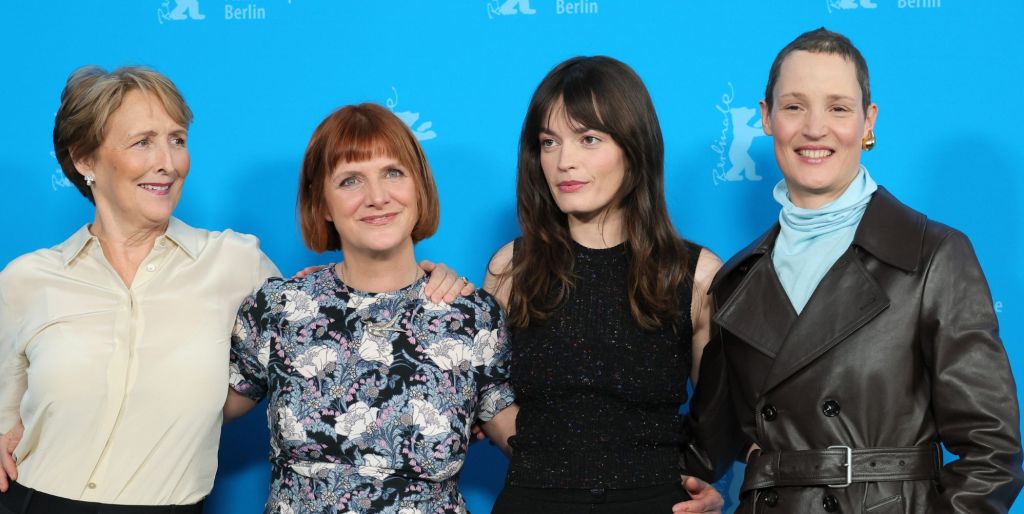
Up to this point, much of the director’s career has centred on putting women, particularly queer women, on stage or screen. As a writer, she crafted the 2017 adaptation of Naomi Alderman’s novel Disobedience, about two women – Ronit (Rachel Weisz) and Esti (Rachel McAdams) – in North London’s Orthodox Jewish community who push the boundaries of friendship into something more. In 2018 she wrote Collette, bringing the story of bisexual French novelist Sidonie-Gabrielle Colette (Keira Knightley) to the big screen. Even her first TV writing gig, Billie Piper’s Secret Diary of a Call Girl, teased out themes of bisexuality.
Perhaps her most distinguished work is 2013’s Oscar-winning, Polish-language drama Ida, which traces the painful familial history of the titular protagonist (Agata Trzebuchowska), a woman orphaned during World War II. Meanwhile, 2022 saw her adapt the screenplay for She Said, a drama recollecting The New York Times’ exposé of accusations against Harvey Weinstein.
Loosely then, Hot Milk integrates Lenkiewicz’s creative specialities: sapphic intimacy, deep-rooted generational trauma, and women’s struggle for freedom. Or, as she perceives it, “sexuality is so much about freedom,” while the question to ask about fractured family dynamics is when “you’ve got damage in the past, can you unravel that damage [or] are you just colliding and clashing against each other?”
Filming was intense, despite the end product coming in at a taut 92 minutes. Often, the team had to swap day shoots for night shoots as it became illegal to film in the soaring, 45 degree temperatures. “One location burnt down,” Lenkiewicz recalls. “So we were up against it.”

While the crew could cool off with a “plunge into the sea at lunchtime,” the actors weren’t afforded that luxury. None less so than Mackey, who bore the brunt of the “relentless” 25-day shoot by appearing in almost every scene. Despite her ubiquity, Mackey’s Sofia says very little in the film’s first half, as the claustrophobia of her mother’s affliction leaves her sullen and smouldering. As with her breakout role as Maeve in Sex Education, Mackey’s countenance does much of the talking: her brow permanently furrowed, lips lightly pursed in silent frustration, chin tilted in thought. In the second half, her frustration boils over via smashed bottles and expletive, jealous outbursts.
In one scene, Sofia blows up over a neighbour who won’t release his barking dog from its chain. “The first take, I think, was what we used. There was no warming up,” Lenkiewicz says. “Emma Mackey has such an incredible presence and you can see the thoughts just from quite an impassive look. She never overplays anything and she’s so detailed in what temperature her emotion is at that moment.” It’s a particularly impressive feat given Mackey joined the project late; The Lost Daughter’s Jessie Buckley was originally cast, but had to pull out due to scheduling conflicts.
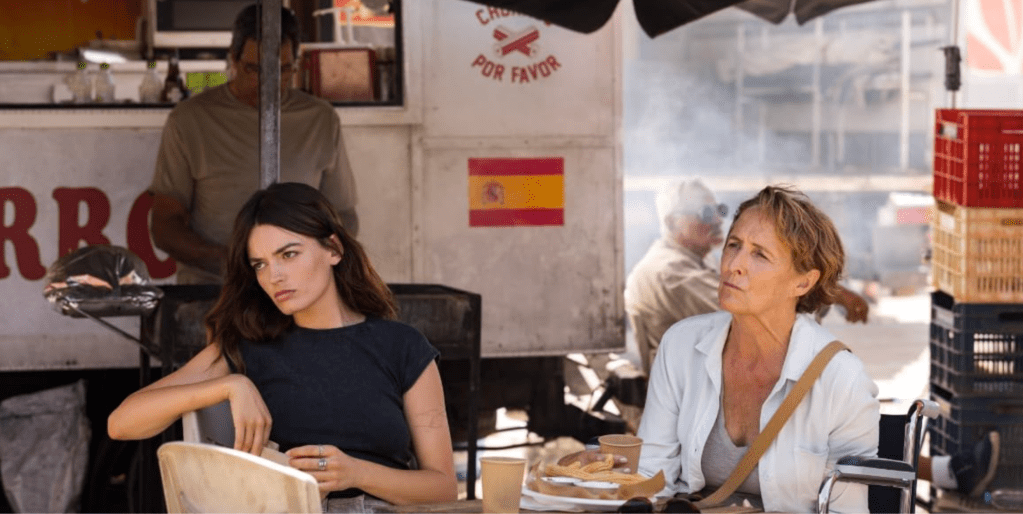
Mackey’s late arrival meant she and Shaw didn’t have any rehearsal time together. Yet Lenkiewicz affirms that “they really connected and were kind of thrown in together. I think both of them had such brilliant takes on their own character that they were instantly mother and daughter.” Shaw was keen to stay in Rose’s wheelchair while filming, so Mackey would push her. “You’d see them around set with Emma negotiating little bumps. It was sort of moving and very authentic.”
Both actresses were “open to any ideas, but also giving ideas,” and Lenkiewicz was happy to listen. “She’s a very sensitive, thoughtful, warm, generous person. It was very fluid,” Mackey told Variety recently. “Rebecca was very keen on… just letting us exist.” The director took a similar approach with the film’s intimate scenes, during which Mackey and Krieps, as her inscrutable, damaged lover Ingrid, had to kiss and cozy “for hours in a bed together”.
Prestigious UK intimacy coordinator Ita O’Brien had oversight here, but otherwise, Lenkiewicz let Mackey and Krieps quite literally feel their way through it. “Emma and Vicky just loved each other, you know? They really enjoyed the intimate scenes. Vicky would say, ‘Shall I do this to you? Shall I do that?’ It was fun… and they were both so open about everything, about their bodies,” she explains. “I didn’t say, ‘Do this, do that’. It was just like: here you are, you’re in love, see what happens.”
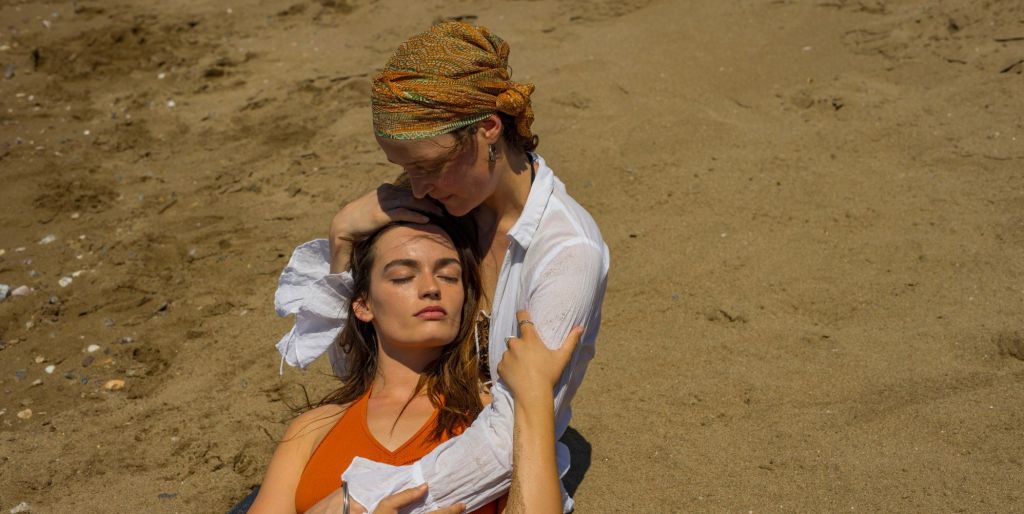
She describes this process – an intimacy coordinator on hand ensuring all participants are comfortable, and the actors allowed to embody what feels natural – as “incredibly important”. There were “no issues” on the Hot Milk set as far as these scenes were concerned, but Lenkiewicz has “heard, of course, absolute nightmares, and that’s why intimacy coordinators are essential”. She continues: “In our case, it was a very fluid and very beautiful process… we would watch them kissing or being together and we weren’t thinking technically, we were just like, ‘Gosh, wasn’t that beautiful. It was very free.”
It ties back to much of the work she’s produced in her 25-year career. “The male gaze has been around for centuries and I was very determined that they were free to do as they would,” she emphasises.
Krieps, for instance, would ask to don a coat and oversized boots in spite of the heat in scenes that were originally more exposing. “I was like, ‘Great… if you feel sexy like that, wear that.’ It’s that conversation where it’s not about me saying, ‘You are sexy because –’ It’s like, ‘Yeah, you can have a parka on, and it’s still erotic.’ It’s just beautiful that a woman claims herself in whatever way she wants to.”
While Hot Milk‘s characters are restricted by circumstances past and present, its actors at least could be free.
Hot Milk is screening at BFI Flare London LGBTQ+ Film Festival. Ticket information here.
Hot Milk lands in UK cinemas on 4 July.
Share your thoughts! Let us know in the comments below, and remember to keep the conversation respectful.