
Thousands of Hungarians protest against law banning Pride: ‘This is fascism’

Protestors in Budapest, Hungary, signalling their opposition to a Pride march ban bill. (Getty)
Thousands of Hungarians took to the streets of Budapest on Tuesday (1 April) to signal their disdain for the government’s ban on Pride marches.
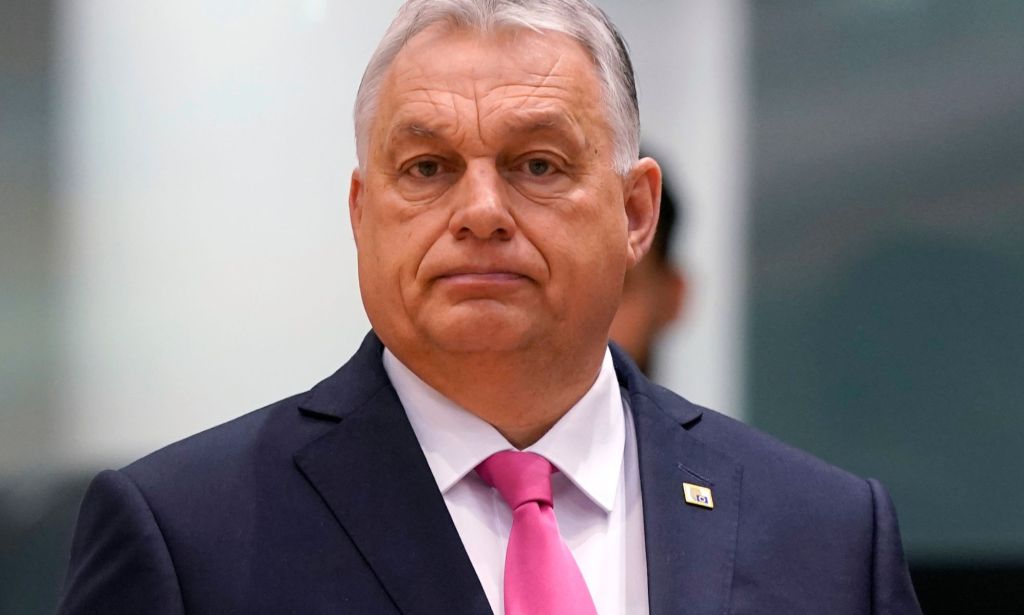
The Central European country’s prime minister, Viktor Orbán, passed legislation in March banning pro-LGBTQ+ marches as part of his continued legislative campaign against the community.
Under the so-called “child protection” law, allows districts in Hungary to fine Pride organisations and attendees up to 200,000 forints (£420) for hosting marches or LGBTQ+ events. It allows authorities to use facial recognition to identify people at Pride events.
The move was met with fury by the LGBTQ+ community, who have continued to hold protests across the country condemning Orbán’s continued right-wing rhetoric.
Budapest Pride, one of the LGBTQ+ organisations affected by the bill, said in a statement on Monday (31 March) that the move is “not child protection, this is fascism.”
MPs in the centrist Momentum Movement party protested the law by burning flares in the Országház – Hungary’s Parliament building in Budapest – and distributing what appeared to be AI-generated images of Orbán kissing Russian president Vladimir Putin, whom he has close ties with.
Hungary protestors condemn Viktor Orbán for ‘corrupt’ Pride march law
The latest in the series of protests took place on Tuesday (1 April) along the Elisabeth Bridge in the heart of Budapest, where thousands of protestors held signs which, according to AFP photographers, read “enough of the lies” and “down with Orbán! We want democracy.”
It’s believed that more than 10,000 protestors turned up to what is the third major demonstration against the 61-year-old prime minister, waving Hungarian and Pride flags
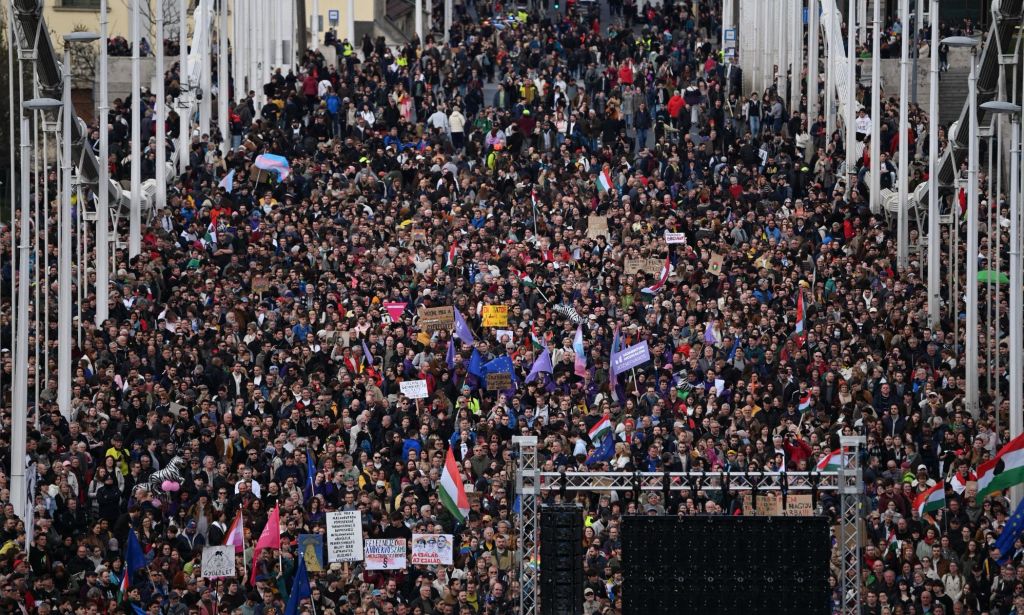
Speaking to France24, a 26-year-old protestor, Emese, said that the protest was about “standing up for the freedom of assembly,” while another protestor, 60-year-old Agice Tothne, said that the “corrupt” government under Viktor Orbán “needs to fall, and people are starting to wake up.”
Hungary’s continued attack on LGBTQ+ rights has even prompted the international community to express its concern over the threat to democracy that the laws could cause.
22 embassies, including France, Germany, and the United Kingdom, signed an open letter expressing significant concern over the Pride march bans, saying that it restricts “on the right of peaceful assembly and the freedom of expression.”
Orbán, who started his second term in 2010, has supported the passing of similarly harmful bills, including one that banned LGBTQ+ topics in schools and in the media. He doubled-down on the bill in 2024, saying “no money in the world” would change his anti-LGBTQ+ views.