
What time is Donald Trump’s ‘Liberation Day’ speech today and what is he expected to announce?
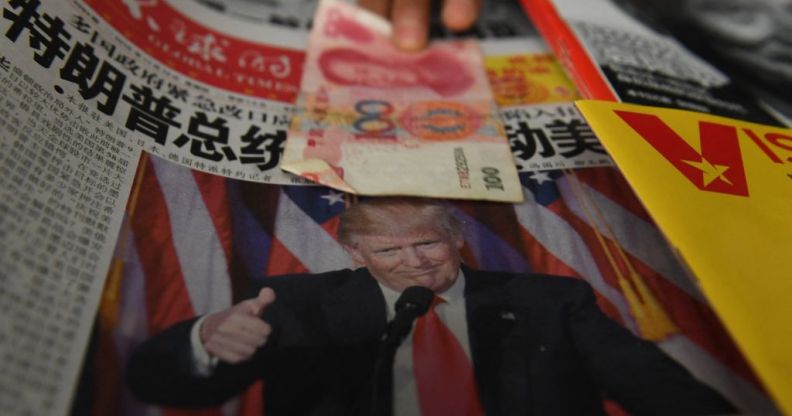
Trump has already imposed tariffs on Chinese imports (Getty)
Since his inauguration on 20 January, Donald Trump’s speeches have been regularly causing confusion and alarm around the world so it’s no surprise that “what time is Trump’s speech today?” is currently trending on social media as people prepare – apprehensively – to tune in.
The president is set to speak at 4pm ET today, which is 9pm in the UK, and he’s expected to announce one of the most sweeping rewrites of US trade policy in history, The Guardian reports.
There are fears that the announcement – which will unveil his latest round of tariffs – could cause a global trade war on what Trump is calling “Liberation Day”.
What are tariffs?
In general terms, tariffs are taxes or duties imposed by a government on imported or exported goods. The goal of tariffs is to help regulate trade by making foreign products more expensive; encouraging consumers to buy domestic goods. The general idea is that by making imports more expensive, tariffs help local businesses compete with foreign companies.
In America, tariffs imposed on imported goods and are collected by US Customs and Border Protection (CBP) at the border or port of entry.
Who pays US tariffs?

The simple answer is: the US firms bringing in the goods will foot the bill initially, especially if the White House starts levying the tariffs “immediately”, as White House spokeswoman Karoline Leavitt suggested on Tuesday.
However, the cost is usually passed on to US consumers and businesses in the form of higher prices.
Essentially, if you can’t obtain a certain product from a domestic supplier and you have no choice other than to import it from elsewhere, or buy an imported product from a retailer, you’re likely to end up paying more.
Also, if companies can’t get the materials that they need to manufacture products domestically and have to import them, the cost of the finished product will go up and consumers will pay more.
Thirdly, there’s nothing to stop domestic companies putting up their prices to match imported products. If, for example, a tariff is introduced on foreign air fryers, domestic air fryer manufacturers may well choose to put up their prices to match the cost of the foreign air fryers, as the competition is now more expensive.
A study by the Peterson Institute for International Economics, has estimated that Trump’s proposed tariffs could cost the average US household between $600 and $1,200 per year due to higher prices on goods.
What has Trump said about tariffs in the past?
In both his current and previous presidency, Trump has been a strong advocate for tariffs, often framing them as a tool to protect American jobs, reduce trade deficits, and counter what he sees as unfair trade practices.
Since he took office, Trump has already raised duties on Chinese imports, as well as steel, aluminium and some goods from Canada and Mexico. Higher levies on cars are due to go into effect this week, the BBC reports.
In 2018, Trump imposed 25% tariffs on Chinese goods, claiming it would punish China for intellectual property theft and unfair trade practices. He tweeted that “trade wars are good, and easy to win” when defending his decision. However, it didn’t go according to plan.
According to an article in East Asia Forum, by Sourabh Gupta, the Senior Fellow at the Institute for China-America Studies in Washington, DC, Trump’s trade war with China in 2018 did lead to a decline in China’s share of US imports, but as a side effect, China’s global trade share and importance to the global economy increased.
What is Donald Trump expected to announce in his speech today?

The New York Times reports that the Trump administration has been weighing several different tariff strategies in recent weeks. One option examined by the White House is a 20 percent flat tariff on all imports.
However, it’s believed advisers have also discussed the idea of assigning different tariff levels to different countries. They have also said that some nations might avoid tariffs entirely by striking trade deals with the US.
The White House press secretary, Karoline Leavitt, has said that Trump had been “huddling” with his trade team to hash out the finer points of an approach meant to end “decades of unfair trade practices.”
She added: “The president has a brilliant team of advisers who have been studying these issues for decades, and we are focused on restoring the golden age of America and making America a manufacturing superpower.”
What time is Trump’s speech today?
At the end of the day, however, we will have to wait until 4pm ET (9pm UK time) to find out more.