
UK Supreme court rules legal definition of a woman excludes trans women
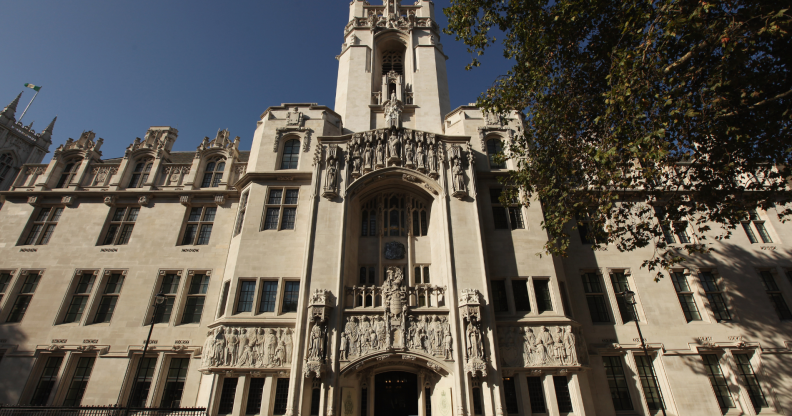
The Supreme Court’s ruling is set to have far-reaching impact on trans people in the UK. (Dan Kitwood/Getty Images)
The UK Supreme Court has ruled the legal definition of a woman excludes trans women, although trans folks are still protected from discrimination under equality law.
Announcing the court’s decision on Wednesday (16 April), Supreme Court judge Lord Hodge said the 2010 Equality Act’s definition of a woman is based on biological sex.
“The unanimous decision of this court is that the terms woman and sex in the Equality Act 2010 refer to a biological woman and biological sex,” he said.
“But we counsel against reading this judgement as a triumph of one or more groups in our society at the expense of another, it is not,” he added, noting that trans people still have protection under the law.
He further said that “the Equality Act 2010 gives transgender people protection, not only against discrimination through the protected characteristic of gender reassignment, but also against direct discrimination, indirect discrimination and harassment in substance in their acquired gender”.
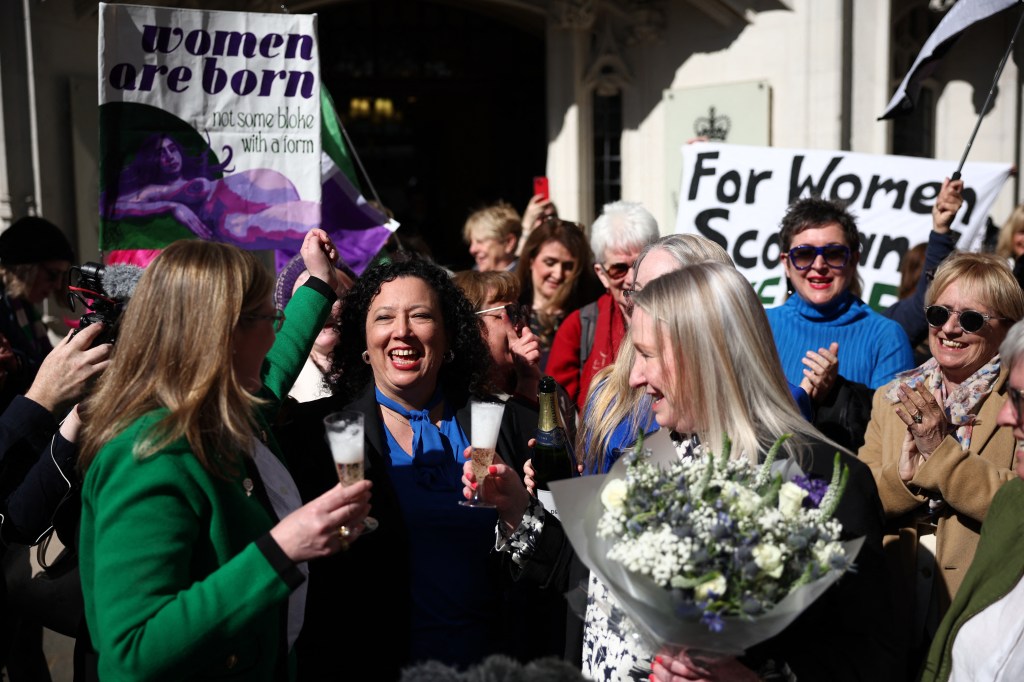
The ruling will have wide-ranging implications for the trans and non-binary community across the country, particularly in how public bodies and organisations operate with regard to issues such as single-sex spaces.
The landmark case was brought forward by gender-critical group For Women Scotland (FWS) against the Scottish government and followed as a direct challenge to a previous ruling, which found that sex is not limited to biology.
FWS, who have been publicly supported by gender critical author JK Rowling, describes itself as a “grassroots women’s group” founded at a time of “growing unease about how women’s rights would be affected by the Scottish government’s plans to reform the Gender Recognition Act (GRA), to allow for self-declaration of sex”.
The group asked the five justices – Lord Reed, Lord Hodge, Lord Lloyd-Jones, Lady Rose and Lady Simler – to consider: “Is a person with a full Gender Recognition Certificate (GRC) which recognises that their gender is female, a ‘woman’ for the 2010 Equality Act?”
Effectively, the judges had to decide if the protected category of ‘sex’ is based solely on the biology a person is born with, such as their reproductive organs and chromosomes, or if it is something that can change based on gender identity and the gender-recognition process.
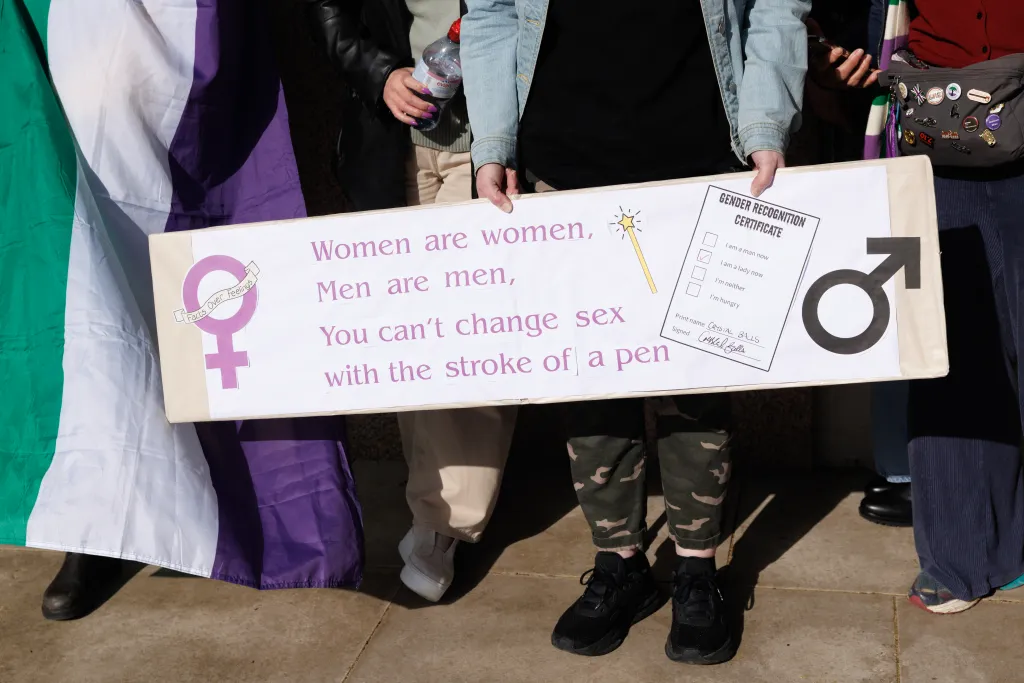
In an 88-page ruling, Lord Hodge, Lady Rose and Lady Simler said the 2010 Equality Act makes “makes clear that the concept of sex is binary” and “a person is either a woman or a man”, even though the word ‘biology’ does not explicitly appear.
The ruling reads: “Persons who share that protected characteristic for the purposes of the group-based rights and protections are persons of the same sex and provisions that refer to protection for women necessarily exclude men.
“Although the word “biological” does not appear in this definition, the ordinary meaning of those plain and unambiguous words corresponds with the biological characteristics that make an individual a man or a woman.
“These are assumed to be self-explanatory and to require no further explanation. Men and women are on the face of the definition only differentiated as a grouping by the biology they share with their group.”
It goes on to say an interpretation in regards to “certificated sex”, as in those who hold a Gender Recognition Certificate (GRC), would “cut across the definition of the protected characteristic of sex in an incoherent way”.
“References to a “woman” and “women” as a group sharing the protected characteristic of sex would include all females of any age (irrespective of any other protected characteristic) and those trans women (biological men) who have the protected characteristic of gender reassignment and a GRC (and who are therefore female as a matter of law),” it reads.
“The same references would necessarily exclude men of any age, but they would also exclude some (biological) women living in the male gender with a GRC (trans men who are legally male).”
The judges continued: “We can identify no good reason why the legislature should have intended that sex-based rights and protections under the EA 2010 should apply to these complex, heterogenous groupings, rather than to the distinct group of (biological) women and girls (or men and boys) with their shared biology leading to shared disadvantage and discrimination faced by them as a distinct group.
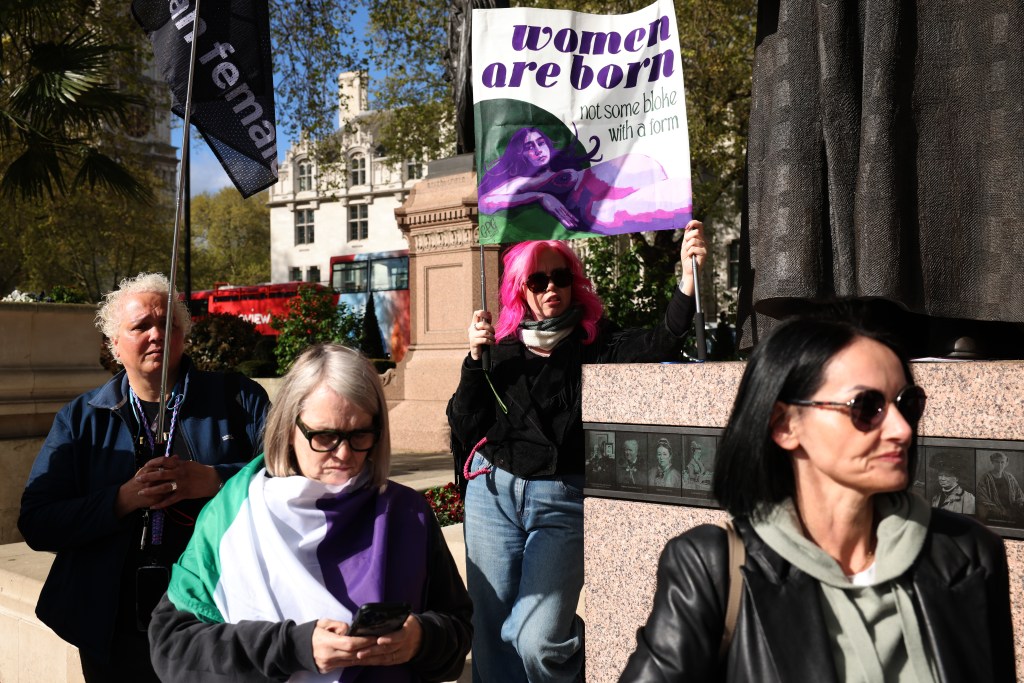
The ruling went on to say that a trans woman will still be able to bring discrimination cases under the protected characteristic of gender reassignment.
“A man who identifies as a woman who is treated less favourably because of the protected characteristic of gender reassignment will be able to claim on that basis,” the judgement reads.
“A man who identifies as a woman who is treated less favourably not because of being trans (the protected characteristic of gender reassignment) but because of being perceived as being a woman will be able to claim for direct sex discrimination on that basis.”
Today’s case was a direct challenge to judge Lady Haldane’s ruling in December 2022 that stated sex is “not limited” to biological sex and the ability of a Gender Recognition Certificate (GRC) to change a person’s legal sex “does not offend against, or give rise to any conflict with, legislation where it is clear that ‘sex’ means biological sex”.
That ruling itself came after a tense legal battle following the Scottish government adding an amendment to a 2018 bill aimed to increase the number of women represented on public boards, with the amendment seeking to alter the definition of women to included trans women with and without GRC’s.
FWS said at the time the amendment set a “dangerous precedent” which would, they claimed, “erode women’s rights in law”.
Although FWS lost the initial challenge, but underwent further appeals.
Whilst the Scottish government dropped the amendment from the the bill, it issued guidance for how the legislation should be interpreted, saying the category of “women” was defined by the Equality Act and the Gender Recognition Act and a person with a full GRC should be considered female “for all purposes”.