
Trump administration removes gender dysphoria from protected list of disabilities
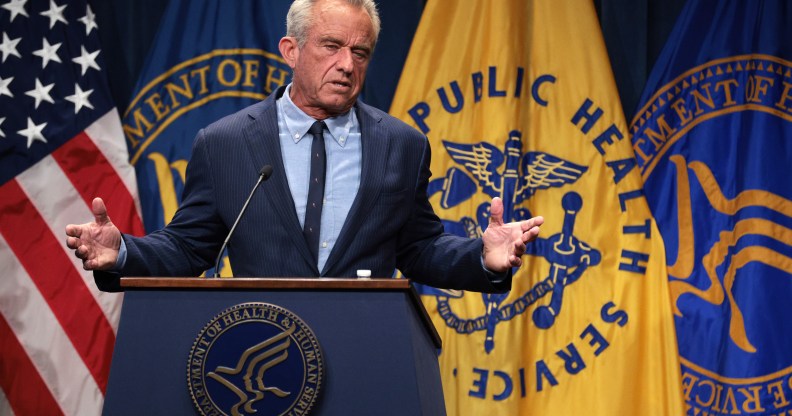
Secretary of Health and Human Services Robert F. Kennedy Jr. signed off the measure. (Photo by Alex Wong/Getty Images)
Gender dysphoria will no longer to be a disability protected under US federal law and won’t be recognised by the Department of Health and Human Services.
The clinical diagnosis has been recognised by the American Psychiatric Association since 2013, when it was included in the fifth edition of its Diagnostic and Statistical Manual (DSM-5), according to Trans Hub.
While the formal recognition was widely considered a step in the right direction, some people assume that all trans and non-binary people have been diagnosed with gender dysphoria at some stage, which is not correct. Requiring trans men and women to undergo a medical diagnosis of gender dysphoria before they can receive gender-affirming care, or be perceived as having a true trans identity, can undermine the transgender experience.
The ruling, signed by secretary of health Robert F Kennedy Jnr, ensured that former president Joe Biden’s adding of gender dysphoria to disability law cannot be enforced.
Last year, Texas attorney general Ken Paxton took the federal government to court after the Biden administration included the gender-identity-related disorder to Section 504 of the 1973 Rehabilitation Act which protects people from discrimination based on disability.
Republican attorney generals from 16 other states – Alaska, Alabama, Arkansas, Florida, Georgia, Indiana, Iowa, Kansas, Louisiana, Missouri, Montana, Nebraska, South Carolina, South Dakota, Utah and West Virginia – joined the Texas vs. Becerra lawsuit.
Disability activists have claimed that parts of the lawsuit ask the court to find the whole of Section 504 unconstitutional, not just that regarding Gender Dysphoria. Advocates worry that this could allow schools, hospitals, workplaces and other organisations to refuse to provide disability support that has been a requirement for the past 50 years.
“The disability community is outraged and scared,” lawyer Charlotte Cravins told Stateline. Her one-year-old son lives with Down’s syndrome and is blind in one eye.
“It would affect so many people that every person in our state – in our country – should be concerned,” Cravins said. “If they can erase protections for disabled children, then who’s next?”
However, Georgia’s attorney general, Chris Carr, denied that the lawsuit would affect existing disability protections. “The constitutionality of 504 was never in question,” he said. “We are fighting one woke policy added by Biden for virtue-signalling.”
Sarah Warbelow, the vice-president of legal at the Human Rights Campaign said: “It is important that folks, whether they are part of the disability community, part of the LGBTQ community, or simply allies of those communities, make their voices heard, advocate with their members of congress, weigh in with the White House, to explain how important section 504 is to people’s lives and for the whole range of conditions that individuals may have,” Teen Vogue reported.
“We have seen this administration reverse course when there has been public outcry, and people still do have significant power when they band together to make their voices heard.”
Paxton is scheduled to file an update with the court on Monday (21 April), when Texas’ stance on the protections should become clearer.
Share your thoughts! Let us know in the comments below, and remember to keep the conversation respectful.