
Eurovision 2025 artists banned from bringing Pride flags on to stage

Eurovision winner Nemo. (Getty)
Artists participating in the Eurovision Song Contest 2025 will only be allowed to bring their country’s official flag to any Eurovision-related event, effectively banning Pride-related flags from the stage.
According to updated flag policy guidance, initially obtained by Danish broadcaster DR and then shared with PinkNews, this year’s contestants and their delegations can only bring the flag of the country they are representing into official Eurovision venues, events or related performances.
This includes during the Eurovision Opening Ceremony, the Eurovision Village Stage, the Green Room and the main Eurovision stage.
It means that this year’s cohort of LGBTQ+ entrants, including some of this year’s favourites – Malta’s Miriana Conte, Austria’s JJ, and Finland’s Erika Vikman – will not be able to display any Pride-related flags during their performances.
Last year, Switzerland’s winner Nemo – who identifies as non-binary – revealed that they were told by Eurovision organisers that they weren’t allowed to bring the non-binary flag onto the stage.
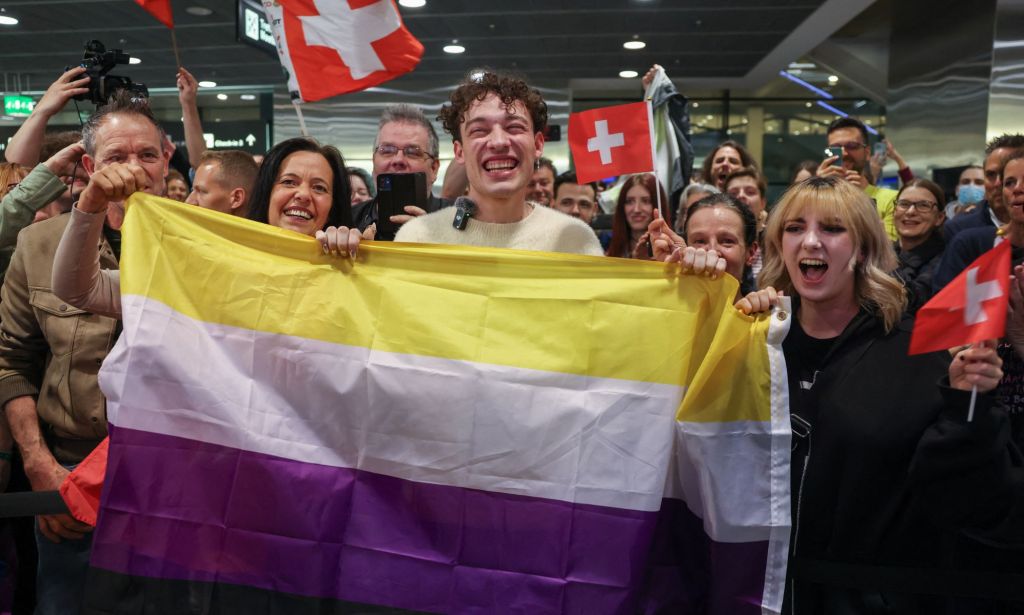
As a result, the performer had to “smuggle” it past security in order to display it during last year’s flag parade.
“I had to smuggle my flag in because Eurosision said no, and I did it anyway. I hope that some other people did that too,” they shared at the time.
This year, participants will only be allowed to bring an official country flag provided by Swiss television station SRG SSR into the flag parade.
Eurovision participants will also not be allowed to hold flags to express solidarity with other countries, such as the Ukraine flag.
There will be “consequences” for participants who flout the new flag rules, but when approached by DR for clarity on these consequences, the European Broadcasting Union, which coordinates Eurovision, did not expand.
Approached by PinkNews for comment, a Eurovision Song Contest spokesperson said: “The official flag policies of the Eurovision Song Contest (ESC) 2025 have been developed by the Swiss host broadcaster SRG SSR with input from the EBU, particularly on official ESC spaces, to provide clarity for audiences and delegations.
“Together we wanted to strike a balance to ensure that our audiences and artists can express their enthusiasm and identities, whilst at the same time provide more clarity for the delegations when it comes to official spaces.
“In line with other international competitive events, the policy for participating broadcasters is that only one national flag can be used in official spaces – these are the Stage, Green Room, Eurovision Village Stage and Turquoise Carpet.
“Outside of these official spaces the flag policy for delegations is the same as for audiences, where all flags permitted under Swiss law can be used, and provides plenty of opportunities for the expression of everyone’s identities.”
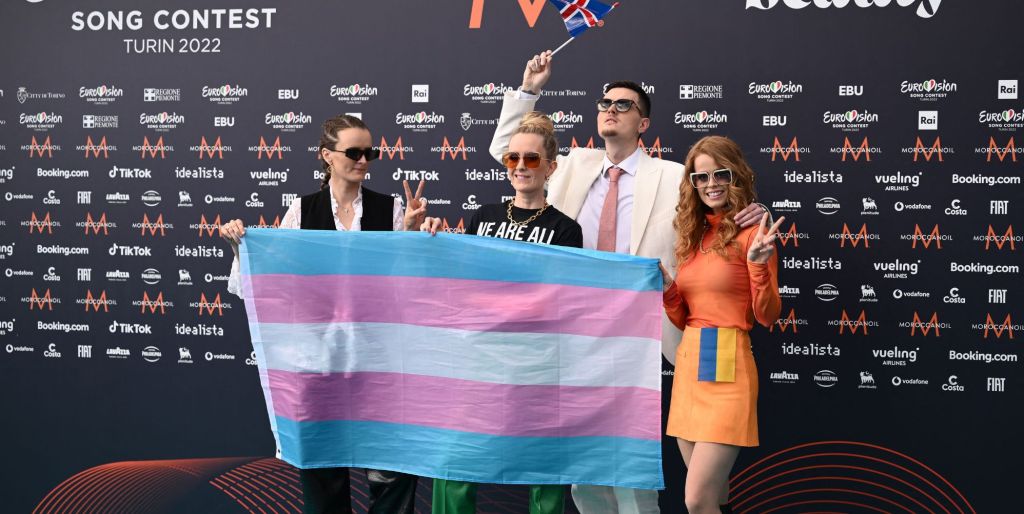
While flag restrictions have been tightened for this year’s participants, they have been relaxed for fans who will be entering official Eurovision events, including the semi-finals and finals at Switzerland’s St. Jakobshalle arena.
Fans will be permitted to take “all flags and banners” into Eurovision events, as long as they do not pose a safety or production risk. Flags must also comply with Swiss law, as this year’s contest is taking place in the county’s city of Basel.
Possible violations of Swiss law include flags featuring racist or discriminatory content or symbols that incite hatred, offense, or defamation. Flags featuring symbols of banned terrorist organisations will also be prohibited.
Flags became a big point of contention at last year’s contest, as Eurovision fans were allowed only to display flags representing the 37 countries participating, or a rainbow Pride flag.
Some Eurovision revellers reported being denied entry into Sweden’s Malmö Arena with Pride flags which represented specific groups in the LGBTQ+ community, while fans with the European Union flag also reported difficulty accessing the arena.
The Palestinian flag was also forbidden during last year’s contest due to the controversial decision to allow Israel to continue competing in Eurovision, despite the ongoing Israel-Gaza war. DR reports that the Palestinian flag will be allowed in the arena during Eurovision 2025.
The Eurovision 2025 semi-finals will take place in Basel, Switzerland, on 13 and 15 May, with the final taking place on 17 May.
Share your thoughts! Let us know in the comments below, and remember to keep the conversation respectful.