
Eli Erlick’s Before Gender offers a vital new perspective on trans history

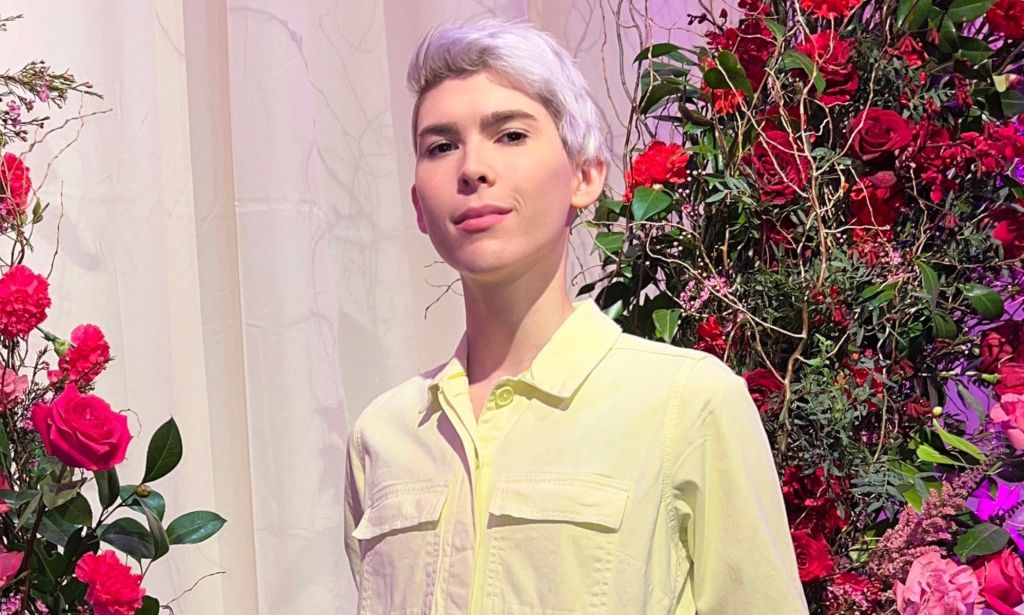
Eli Erlick speaks about her upcoming book, Beyond Gender. (Getty)
Author Eli Erlick’s latest book aims to introduce readers to the lesser-known lives and tribulations of trans people who lived between 1850 and 1950.
Speaking exclusively to PinkNews about Before Gender: Lost Stories from Trans History, as part of Trans+ History Week, activist Erlick says she wanted to move beyond the typical historical anecdotes of white, Western transgender men and women and delve into the trailblazing lives that are rarely discussed.
“In the past decade, there have been at least half-a dozen books on white trans people in Western countries specifically,” she says. “I wanted this book to focus on everyone else.”
Organised into four sections, Before Gender introduces 30 stories of figures who, the author believes, could “transform the discussion” about trans people today.
Among the stories featured are that of two of the first teenagers to access gender-affirming care, a riot 40 years before Stonewall, and one of the greatest female billiards players of the 1910s.
Erlick wanted each story to hold a message that “speaks to something about transgender life”, while showcasing the diversity and prevalence of trans people throughout the period.
‘We’re treating this category very differently and there’s a political reason behind that’
She also wanted the stories to be told authentically and respectfully – a rare thing for LGBTQ+ historical figures whose sexualities and gender identities are often misrepresented.
“In the introduction, I explain a few concepts that I think readers will be very interested in, in terms of how history is tied to modern-day politics and how it’s impacted us,” she says.
“I have a chapter on what I call the Cleopatra problem. Everyone agrees Cleopatra [was] a woman. There’s no debate about this, and there shouldn’t be, it’s set in stone. So why do we have the same debate about trans people?

“In Cleopatra’s time, there were different gender roles and different ways of expressing gender identity. They had different terms. The word woman didn’t exist until the 1100s, so why are we calling her a woman, but not trans women in the 1910s? We’re treating this category differently and I feel there’s a political reason behind that.”
While the book isn’t out until 27 May, critics who received early copies have been singing its praises, which Erlick says has been “rewarding to hear,” especially from other trans people.
“The response has been really wonderful,” she says, “especially from trans people seeing themselves represented, like when I shared the story of [trans booksellers] Mark and David Ferrow online. I had heard from some people who lived in their home town and knew them just as David and Mark, the kindly old booksellers, and had no idea they were trans.
“I think that’s the most powerful element of the book, helping trans families feel supported and helping people feel seen and ultimately helping trans history move forward.”
Research was marred by ‘colonial’ thinking
Research for the book was far from easy, with much of Eli’s work, while fruitful, being marred by systemic erasure or misinformation. By using the Cleopatra problem as a method to uncover stories that had been buried by years of academic confusion, she was able to find fascinating and seldom-told stories.
“I was able to uncover really fascinating stories, like [possibly] the first trans man to legally change their sex, in 1901. He has an extremely supportive family [and] friends. Even the court in Tennessee, of all places, was supportive.
“[Historians] chronically mislabel trans stories as gay or gender-non-conforming or feminist stories. They may also be those things, but often the trans part is erased from conversations. I had to work closely with trans scholars and historians on decoding the language, which is often very offensive. Things like ‘masquerading as female’ were common phrases.”
It wasn’t only misinformation that plagued Erlick’s studies, but also what wasn’t highlighted. Often Western focus on history meant that finding stories outside the US and Europe was more difficult.
“It speaks to how deeply tied the histories of colonialism and imperialism are to anti-trans sentiments. They come together and try to paint transness as this worrying result of, say, Big Pharma, or some menacing forces when, actually, we have really been everywhere throughout time. It’s only now that we’re using this language to describe ourselves.
“I really want to challenge pre-existing beliefs among experts and people who don’t know anything about trans history. Many of my own beliefs were challenged while writing this book.”
Share your thoughts! Let us know in the comments below, and remember to keep the conversation respectful.