
Israel’s Eurovision act met with protests and death threat at contest launch event
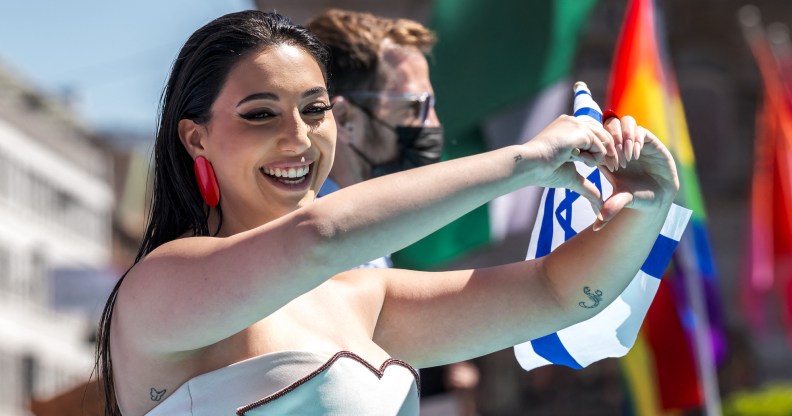
Yuval Raphael will represent Israel at the Eurovision Song Contest in Basel. (Getty)
Israel’s Eurovision contestant Yuval Raphael was met with protestors and death threats as she walked the ‘turquoise carpet’ in Basel, Switzerland over the weekend, prompting Israeli broadcaster Kan to file a complaint with local police.
On Sunday (11 May), the acts representing the 37 countries taking part in the 2025 Eurovision Song Contest walked along its famous turquoise carpet – which this year was the longest ever and stretched for 0.8 miles (1.3km).
24-year-old Raphael, who is representing Israel at the event, was met with boos by protesters in the crowd, while one man allegedly made a threatening gesture.
In footage filmed by a member of the Israeli contest delegation, taken as Raphael walked on the carpet, the unnamed man waves a Palestinian flag and sends a thumbs down gesture her way before sliding his fingers over his throat and spitting.
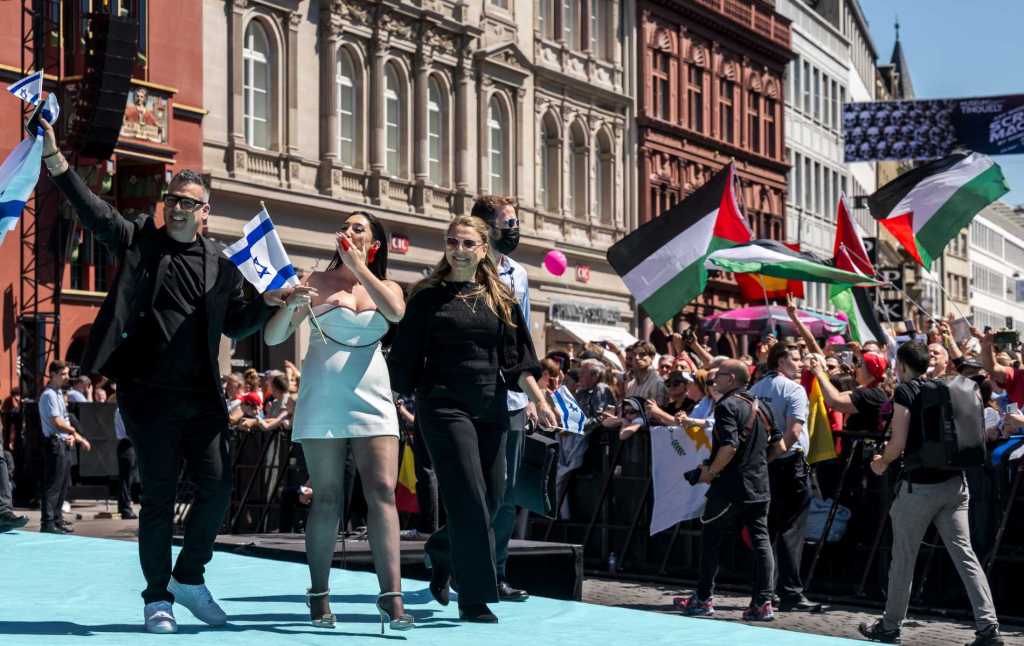
The protest action in Basel comes amid ongoing conflict between the Israeli government and Palestinian nationalist group Hamas.
On 7 October 2023, Hamas undertook an attack on the Nova music festival which left 1,195 people dead and at least 250 Israeli citizens and soldiers taken hostage. Israel’s ensuing bombardment of Gaza has killed in excess of 50,000 people. A peer-reviewed study published in the medical journal The Lancet put the Palestinian death toll considerably higher.
Israel has faced international criticism for its continued military action on Gaza, which include the blockade of humanitarian aid causing food and medical shortages.
Prior to the start of Eurovision 2025, more than 70 former Eurovision contestants – including winners – signed an open letter to the European Broadcasting Union (EBU) calling for Israel to be removed from this year’s competition.
Fans have also called for a second boycott of the competition following a boycott of the show in 2024. Figures released one day after that grand final showed that about 25 per cent fewer Brits watched it year compared with 2023.
Raphael, a survivor of Hamas attack on the Nova music festival, is set to perform in the second semi-final on Thursday evening with hopes of gaining spot Saturday’s sought after grand final.

Following the incident, Israeli broadcaster Kan has lodged a report with local police and Raphael will not undertake interviews with accredited journalists due to safety fears.
In a statement, the EBU said: “We understand the concerns and deeply held views around the current conflict in the Middle East. The EBU is not immune to global events but, together with our members, it is our role to ensure the contest remains, at its heart, a universal event that promotes connections, diversity and inclusion through music.
“We all aspire to keep the Eurovision song contest positive and inclusive and aspire to show the world as it could be, rather than how it necessarily is.”
Last year’s winner, non-binary artist Nemo, said the Eurovision Song Contest’s organisers failed to support contestants embroiled in the controversy around Israel’s participation in the show in 2024.
They told BBC News in October: “There were situations that are still being investigated by the EBU. They told us they would get back to us [but] haven’t yet. It’s a shame that [they are taking] so long, in my opinion.”
Adding: “I sometimes felt very alone with a lot of things, or at least with the other artists, and it took long for [organisers] to get back to artists when they wrote to them.”
Nemo went on to say they hoped the organisers would “have things in place for next year to make sure that part of the contest, especially mentally, gets taken care of”.