
Number of trans youth on NHS waiting lists ‘unacceptably high’ as figures continue to soar
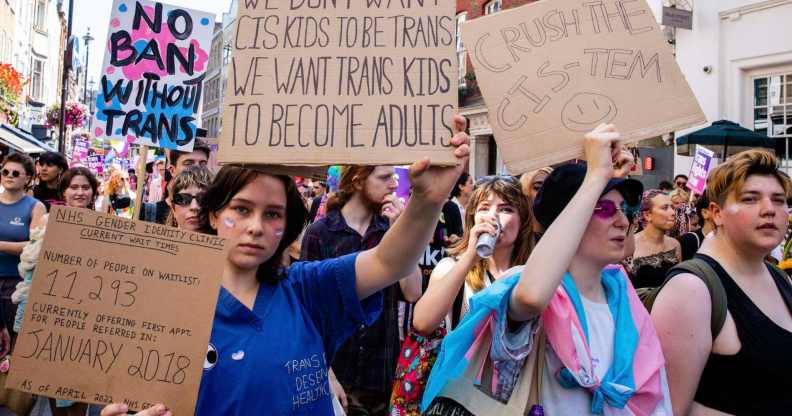
Waiting lists for trans youth have increased in the last year (Mark Kerrison/In Pictures via Getty Images)
The number of trans youngsters on NHS waiting lists for gender affirming care has been condemned as “unacceptably high”, as new figures showed yet another large increase last year.
The number of children on waiting lists for NHS gender services has increased 12 per cent in a year, with 6,225 under-18s on the national waiting list at the end of March. This is up from 5,560 youngsters during the same period a year earlier.
The average time a child will wait to get their first appointment at a specialist NHS clinic has also gone up to an average of 116 weeks – just over two years – compared with an average of 100 weeks in 2024, the figures obtained from a Freedom of Information (FOI) request by the Press Association reveal.
Chay Brown, operations director for TransActual – an organisation which seeks to shares facts about the community and combat anti-trans misinformation – described the length of the waiting lists as “unacceptably high”.

“The majority of people leaving the waiting list at that time will have aged out. Sadly, some will have died whilst waiting – waiting times for NHS gender services have been cited in several prevention of future deaths reports,” Brown said.
In response to the figures, Professor James Palmer – NHS medical director for specialised services – admitted it can be “really difficult” for children and their families who are stuck on waiting lists, stating that is “why it has been so important that we put a new system in place to ensure that, while they’re waiting, they can access mental health support if they need it”.
“The NHS is now almost halfway through its planned expansion of regional services, and we are seeing significantly fewer referrals as children are first assessed by paediatric or mental health experts and provided with care in NHS services that are more appropriate to their needs,” Palmer said.
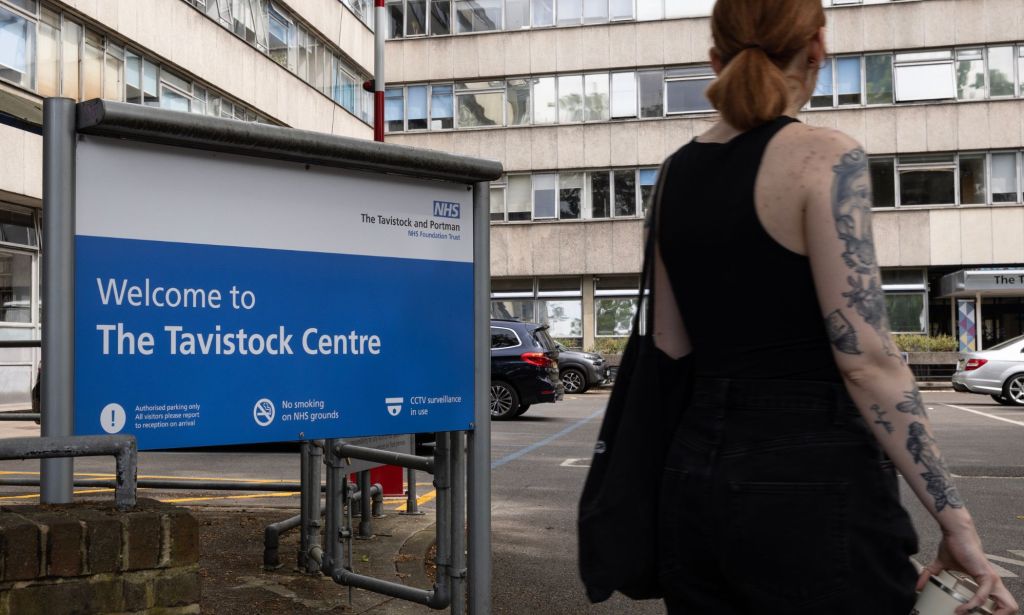
The lengthy waiting lists come despite two new specialist hubs for youth gender care opening in 2024 – at Great Ormond Street Hospital in London, and Alder Hey Children’s Hospital in Liverpool – as replacements for the now closed youth gender clinic (GIDS) at The Tavistock Centre in North London and follow the publication of the controversial Cass Review, which was also made public in April 2024.
The 400-page report, authored by paediatrician Dr Hilary Cass, made upwards of 32 recommendations to restructure the way in which trans youth receive care.
The findings of the report, which urged which urged “extreme caution” when prescribing puberty blockers to trans youth, led the then-Conservative government to introduce a temporary ban on private prescriptions of puberty blockers in May.
After winning the general election in July, Keir Starmer’s Labour government extended the ban – to much criticism and outrage from the trans and wider LGBTQ+ community. In December 2024 it was announced puberty blockers for under-18s with gender dysphoria would be banned indefinitely in the UK because of an apparent “unacceptable safety risk”.
In April of this year, health secretary Wes Streeting said he was “genuinely sorry” for the “fear and anxiety” caused to trans youth by the ban, saying the much-criticised decision was “solely about the clinical advice” he was provided.

“I am very conscious that for lots of people, not just in the trans community, but across the LGBT community – in fact, across wide society – there is real anxiety about the decision that I took.
“I would challenge anyone in my shoes to say, as a politician, that you would overrule clinical advice, especially when it comes to medicines that are challenged on the basis of whether they are safe or not for children.
“I know people disagree with that decision. I know it’s caused real fear and anxiety in our community, and that certainly doesn’t sit easy with me.”
A clinical trial into the use of puberty blockers is currently being planned and is expected to be used to “fill some of the gaps in our knowledge about the outcomes of different interventions and address some of the uncertainty about the impacts and efficacy of puberty-suppressing hormones”.
Puberty blockers are still prescribed to children for a range of other conditions such as precocious puberty, where children enter puberty earlier than usual.
A spokesperson for the Department of Health and Social Care said, as quoted by The Independent: “We are working with NHS England to reform children’s gender services in line with the recommendations from the Cass review, to provide children with timely, holistic support.
“We’ve opened three new children and young people’s gender services, with a fourth anticipated to open later this spring. These new services will increase clinical capacity and reduce waiting times, so patients can be seen sooner and closer to home.”