
Labour postpone women’s conference after Supreme Court trans ruling

Labour deputy leader Angela Rayner spoke at the 2023 event. (Getty)
Labour members have voted to postpone their women’s conference, in the wake of the Supreme Court’s ruling on the definition of “sex”.
Last month, the UK’s top judges decided the legal definition of the protected characteristic of “sex” was based on “biology” and explicitly excluded trans people.
Until the ruling, Labour had allowed people to self-identify as women, meaning trans women could stand for women’s officer roles and attend the annual women’s conference.
Leaked confidential papers, circulated on social media at the start of the week, showed that on Tuesday (20 May) Labour’s National Executive Committee (NEC), the party’s governing body, would be voting on whether to implement a biological interpretation of “sex” across its policies, as well as postpone this year’s women’s conference.
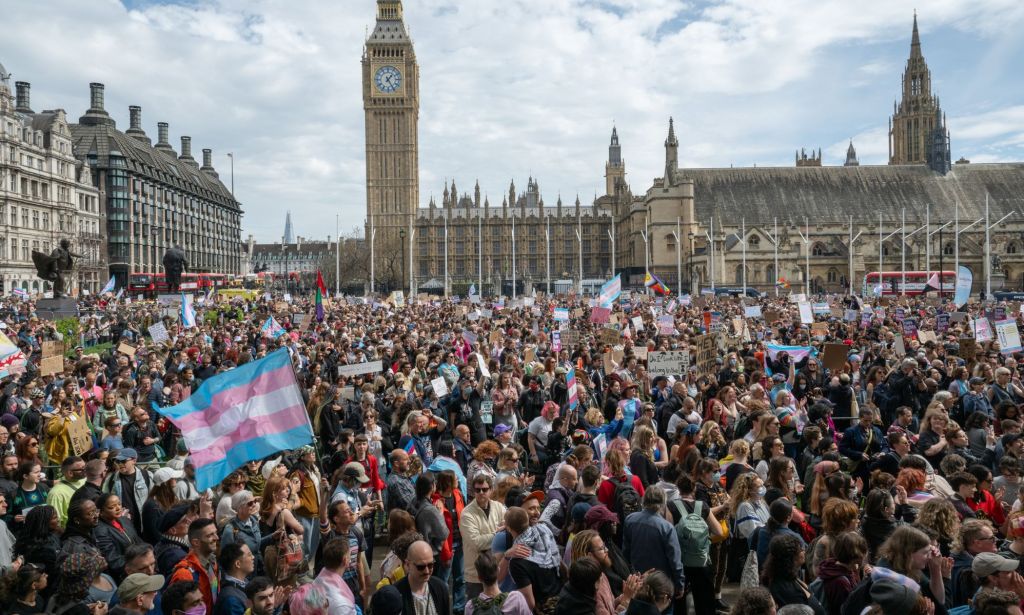
NEC members were urged to vote in favour of using a biological definition to “mitigate the risk of legal challenge” and it was also recommended that the women’s conference be postponed, in “light of the legal and political risks” because “the only legally defensible alternative would be to restrict attendance to delegates who were biologically women at birth (including trans men)”.
Following a vote on Tuesday evening, the NEC decided to postpone the conference.
A party spokesperson told the BBC that they had to ensure procedures “comply with the Supreme Court’s clear ruling”, adding: “Labour is clear that everyone in our society deserves to be treated with dignity and respect.
“The party will work closely with individuals and local parties to implement the necessary changes with sensitivity and care.”
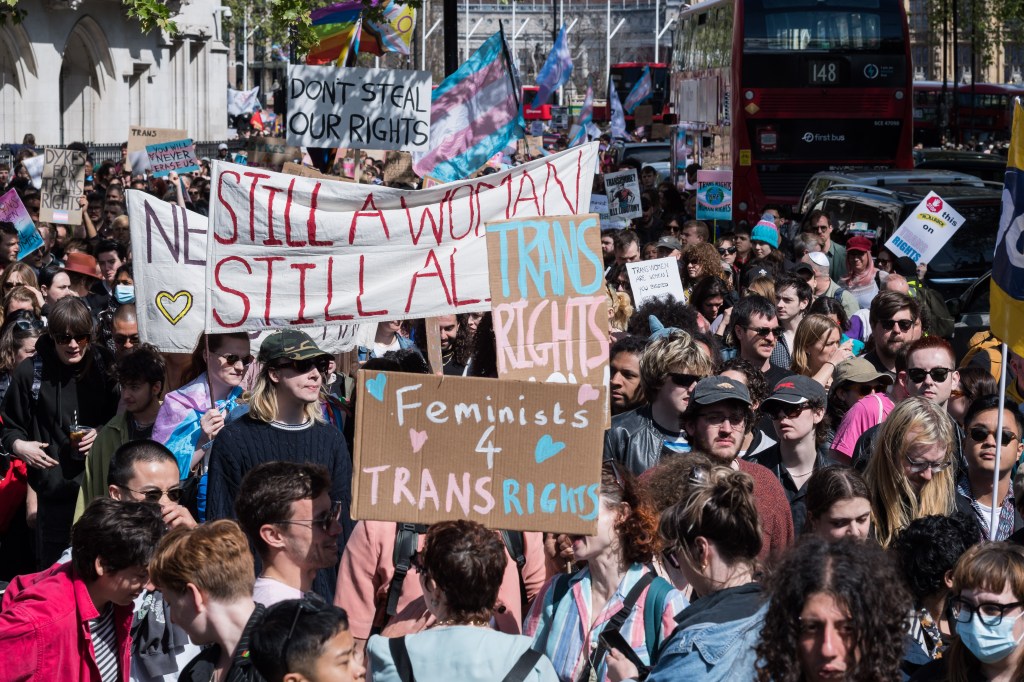
Prior to the vote, the content of the leaked papers was condemned by trans groups within Labour, while gender-critical organisations labelled the decision to postpone the conference a “knee-jerk reaction”.
LGBT+ Labour’s trans officer Georgia Meadows said the changes were “not effective ways to ‘clarify’ anything” and would “restrict trans members’ engagement in internal democratic procedures”.
Meadows went on to say: “We would also question whether the exclusion of trans women from Women’s Conference is a proportionate means to achieve a legitimate aim. Trans issues have come up time and time again during the conference [and] this seems to completely remove trans people from that debate.
“It is a blatant attack on trans rights and is seemingly an attempt to isolate trans people even further within the Labour Party and the movement more widely.”
A spokesperson for gender-critical Labour Women’s Declaration warned against “incendiary action as cancelling the single major policy-making conference of the party which focuses on issues affecting women”.
The Supreme Court decision is expected to have wide-ranging implications for the trans community, as well as organisations, public bodies and services who will seemingly be forced to update their policies on single-sex spaces, inclusion and discrimination. Some, including the Football Association, the England and Wales Cricket Board and the Scottish parliament have already taken steps to bar trans women from female spaces.
Following the court’s verdict, the Equality and Human Rights Commission, the UK’s equalities watchdog, issued interim guidance which said trans people should be banned from using single-sex facilities which match their gender and, in some cases, also from those which match their “biological sex”.
Share your thoughts! Let us know in the comments below, and remember to keep the conversation respectful.