
House of Commons apologises to ‘gender-critical’ pair after trans barrister uses women’s toilets
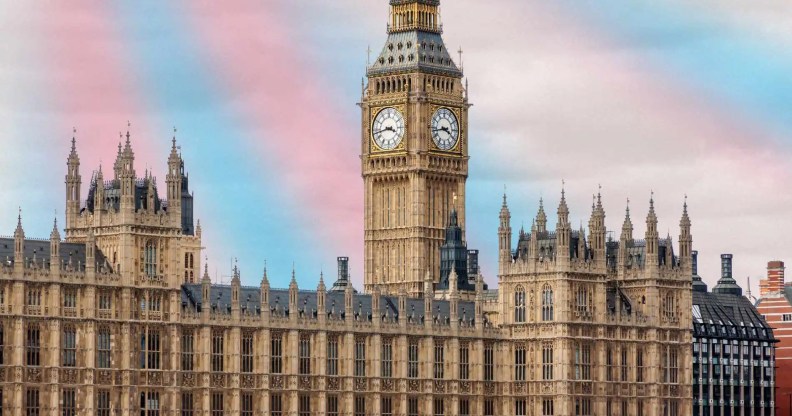
The incident took place in the House of Commons (Canva)
The House of Commons has issued an apology to members of the ‘gender-critical’ movement after a trans woman used the women’s toilets.
Robin Moira White, a leading discrimination and employment law barrister and who is also trans, was at Portcullis House in Westminster on (Wednesday) 11 June to attend a Women and Equalities Committee hearing in which the Equality and Human Rights Commission’s (EHRC) chair gave oral evidence on the work of the equalities watchdog.
The hearing, part of the committee’s regular scrutiny of the EHRC, came two months after the UK Supreme Court issued its controversial ruling that the definition of ‘sex’ as a protected characteristic in the 2010 Equality Act refers solely to “biology” and “biological sex”, therefore excluding trans folks.
In response to the ruling, the EHRC published interim guidance which called for trans people to be banned from public facilities – such as toilets – consistent with their gender identity and, in some circumstances, also from those associated with their birth sex.
Appearing before a parliamentary committee, Baroness Kishwer Falkner said guidance on trans access to single-sex spaces could become law by early next year and a trans person’s right to privacy “doesn’t apply” when it comes to accessing gendered facilities.

Whilst in Portcullis House, and following the end of the committee hearing, White asked to use the women’s toilets and was escorted to the facilities by a member of staff. Outside the loos, she was subsequently questioned by ‘gender-critical’ campaigners Kate Harris and Heather Binning, who had also attended the Women and Equalities Committee hearing.
Harris is the co-founder of LGB Alliance whilst Binning is a Women’s Rights Network director.
In a statement issued by trans advocacy organisation TransLucent recounting the events of the incident, of which White is a member, the group said she was “effectively ambushed” by Harris and Binning and “and an ugly altercation took place”.
“A manager was called by security staff, who informed the members of the [‘gender-critical’ movement] that within parliament, transgender and transsexual people were able to use toilets according to their gender – the members of the GCIM were then escorted from the area,” the statement read.
According to reporting by The Times, Harris in turn said of the incident: “We were in the mother of all parliaments and it was not adhering to the law.
“It was not the fault of staff, who clearly have not been trained in how to deal with these issues.”
In a statement shared on Bluesky on Sunday (15 June), White stated: “Gender-critical ideology Twitter is overrun with folk trying to justify the unpleasantness shown to me last Wednesday, each tweet more desperate-sounding than the last.
“I won’t be rising to the bait, just as I did not on Wednesday.
She added in a second post: “All they are achieving is showing that attempting to ban trans people from gender-appropriate facilities is unnecessary, silly, impractical and cruel in equal measure.”
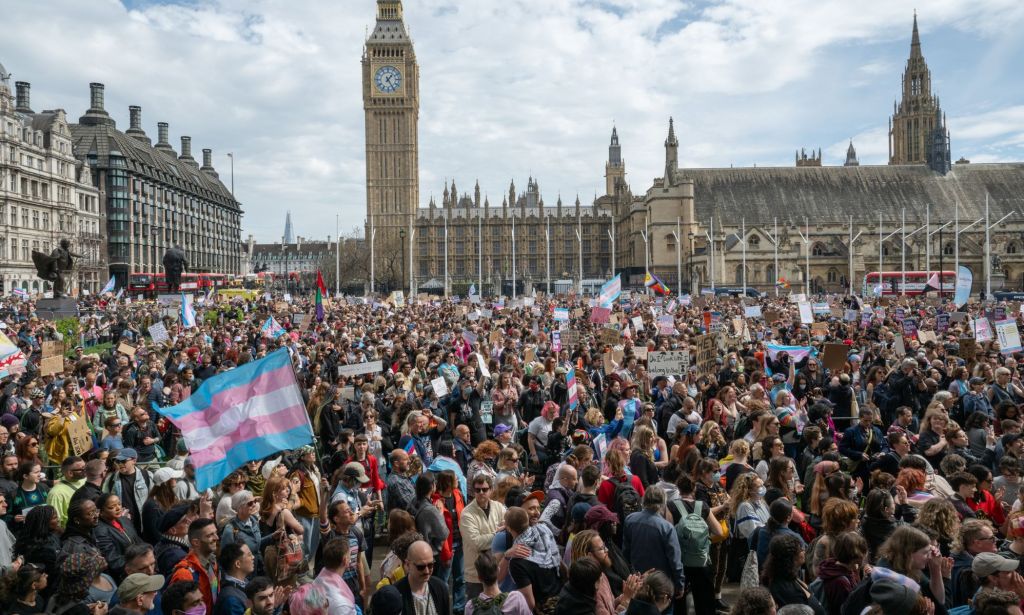
Following the incident, the House of Commons issued an apology to the members of the ‘gender-critical’ movement in an email seen by The Telegraph, which read: “You noted that an individual, understood to be biologically male, had seemingly been directed to the female facilities.
“At this point you made it clear that you were uncomfortable, left the facilities, and reported the matter to members of my team.
“We acknowledge that it is likely the individual you complained about should have not been directed to the female facilities and we apologise for that.”
The email also drew attention to the parliamentary code of conduct which provides “clear guidelines as to how we expect all users of the parliamentary [estate] to interact with each other”.
A House of Commons spokesperson said: “We continue to act in full compliance with the law as set out in the Supreme Court’s judgment and we remain committed to treating all those who work in or visit Parliament with respect, providing support to colleagues where needed.
“Like many organisations, we are awaiting full guidance from the Equality and Human Rights Commission (EHRC) on this issue and are reviewing the facilities that are available on the estate.”
The EHRC is currently holding a six week consultation on changes to its Code of Practice, which aims to “support service providers, public bodies and associations to understand their duties under the Equality Act and put them into practice”.
When the consultation was first announced, which will see it review sections of the Code to incorporate the Supreme Court’s judgment, the EHRC was swiftly criticised for making the consultation period just two weeks. Eventually, after pressure, the equality watchdog extended the time frame to six weeks, running between 19 May and 30 June.
A mass lobby event is set to take place on 25 June, a few days before the end of that deadline, and organisers say they expect it to be the largest LGBTQ+ mass lobby of MPs since the fight against Section 28 and the largest ever by members of the trans+ community.