
‘The US is Nazi Germany right now’: Billy Porter and Harrison David Rivers on vital new production
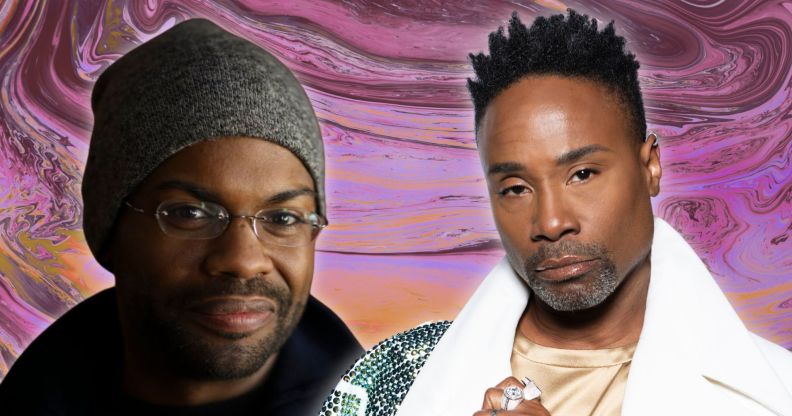
This Bitter Earth is written by Harrison David Rivers (L) and directed by Billy Porter (R). (Supplied/Canva)
Harrison David Rivers had always hoped the play he began writing in 2015, This Bitter Earth, would end up as a history play, the sort where those staging it could look back, reflect, and marvel at how the world has changed.
“But I don’t think that’s the case,” says Rivers today. This Bitter Earth follows Jesse, a pensive Black playwright, who is confronted by his white, privileged boyfriend Neil, a Black Lives Matter activist, about his perceived inaction and political apathy. Neil is outraged at America’s continued assault on Black men, and means well in his attempts to change the world. Jesse doesn’t see discrimination and violence via activism; he experiences discrimination and violence through the fact of being alive.
Over 90 minutes of stage time and three years of story, the couple navigate a relationship shaken by their intensely different social and political realities. The 13th version of the play is being staged at London’s Soho Theatre until 26 July. It’s A Sin and Black Doves star Omari Douglas plays Jesse; Emmerdale and A Night Like This actor Alexander Lincoln is Neil. Pose star Billy Porter is directing.

This Bitter Earth isn’t necessarily about activism: it’s about the strength to love someone against all odds. Yet the play was born from a “slightly unfair prompt” by a theatre company, where Rivers was tasked with detailing what it’s like “to move in the United States in a Black body”.
At the time, the slayings of Black, American teenagers Trayvon Martin, Michael Brown “and countless, countless others” were recent and raw, and Black Lives Matter was a burgeoning movement gaining increasing momentum. “I mean, walking through the world, I was afraid,” the GLAAD Award-winning playwright recalls. “I was thinking a lot more about where I’m going and how I’m getting there than I ever had before. I actually think it’s quite a lovely luxury to not have to think about your body in spaces.”
At the same time, Rivers – much like Jesse in the play – was wrestling with his relationship with the Black Lives Matter movement. The play, which is set between 2012 and 2015, became a space for him to distill his feelings: uncertainty, fear, discomfort, love, anger. “I feel like this play actually confirmed for me that my writing is a part of my activism which, maybe that was already true, but I didn’t know that,” he says. “And so the writing of this play was me going, ‘No, this is how I’m going to speak to this moment. This is how I’m going to stand up.’”
10 years and a dozen plays later, and Rivers is still having to stand up, still having to contend with what it means to move through his country as a Black man. “I mean, my goal is always like, ‘Oh, wouldn’t it be nice if in a couple of years this was no longer an issue, that Black bodies were revered, that Black bodies were sacred… and so we actually maybe don’t need the play anymore, right?”

In the years since This Bitter Earth was first staged in San Francisco in 2017, America has witnessed one-and-a-bit Donald Trump presidencies, the foundations of which have been built on division, the rejuvenation of the Black Lives Matter movement following the murder of George Flloyd in Minneapolis in 2020, and, countless more murders of Black folk.
“There’s a lot of hate out there,” Rivers continues. “I think there’s a lot of misunderstanding and people are not wanting to have a conversation about that, and I think people are hurting as a result of that.”
In This Bitter Earth, those conversations do happen, as painful as they are to speak and to hear. Big questions are posed: what does “solidarity” actually mean? Is it ever possible to understand the experiences of someone with a different lived reality to your own? Can you love each other in spite of those differences?
Porter is striking in his description of the state of America for Black people today. Both he and Rivers are speaking together, via Zoom, from different sides of the Atlantic. Rivers is back home, flying to London the week after we speak; his mother will be making her first international flight from Kansas to see the show when it begins in June. Porter, in a graphic hoodie, black cap and large-framed glasses, appears to be already holed up in a rehearsal room of sorts. He is at the tail end of his run playing Emcee in Cabaret at London’s Kit Kat Club when we talk, a show notorious for its depiction of Berlin’s underground nightlife as Germany is infiltrated by the Nazi Party’s violent antisemitism.
“That was written as a response to Nazi Germany, and it lived in that space for 60 years as a history piece, looking back on something that we have had moved through. And now we’re doing it and America is Nazi Germany,” Porter says plainly. “It’s not going to be Nazi Germany. It’s not becoming Nazi Germany. It’s not in fear of becoming [Nazi Germany]. It is Nazi Germany right now, and the Jews are Black people.”
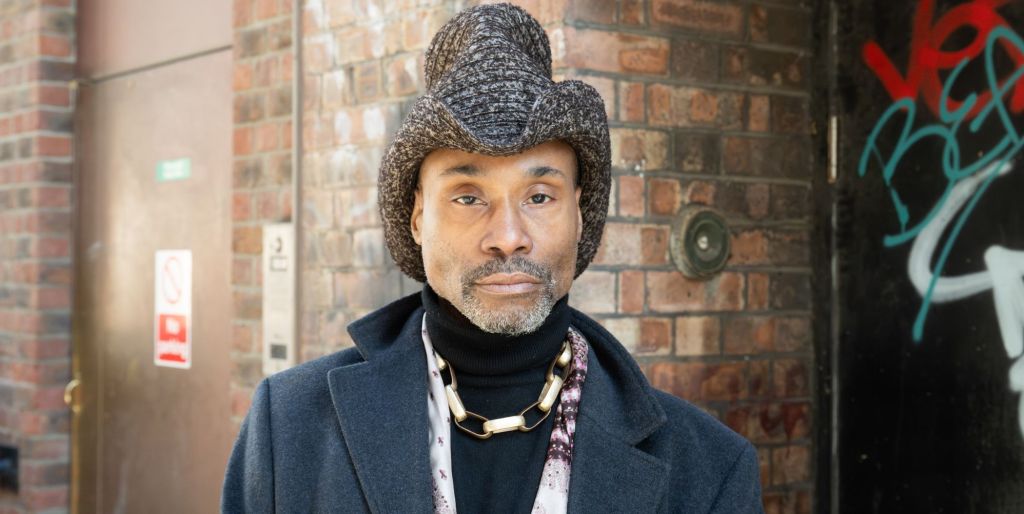
Similar to Rivers, Porter says his own activism exists in the art he puts out in the world. “That’s where my politics is. That’s how I express the things that bring me joy and the things that f**king terrify me,” he says, adding that early on in his career, which began when he was 21 in 1991, such intentional cherry-picking wasn’t possible. Over the past 15 years in particular, Porter has leaned into work which hones in on particular facets of the Black, queer experience, be it in his Tony and Grammy Award-winning role as drag queen Lola in Broadway’s Kinky Boots, his Emmy-winning turn as New York City ballroom host Pray Tell in Pose, or as the director of trans rom com Anything’s Possible. “I was not seen as a person and an artist that carried weight like that,” Porter says. “I searched for it, I worked for it, I fought for it.”
This Bitter Earth is his West End directorial debut – not his overall directorial debut, he reminds me sternly, when I slip on my words – but his theatre muscle is “very taut”, and so the meagre 16 days of rehearsal time with Douglas and Lincoln doesn’t remotely bother him. He knows the duo will work together because, simply, they’re good actors.
The duo are buoyed by Porter who, Harrison says, has an “innate understanding” of the relationship Jessie and Neil find themselves in, and the political context of the time period. As a 55-year-old queer, African-American man, Porter has seen the fluidity of social progress through the decades, and the tough conversations between communities that have occurred in tangent.
“His lived experience, I think, is incredibly valuable in interpreting the text and I think also [in] relaying information to the actors, setting a scene for the actors, and really challenging the actors to show up emotionally,” Rivers explains. “Because he knows that time period, he knows that world, he is able to sort of translate that in a beautiful way.”
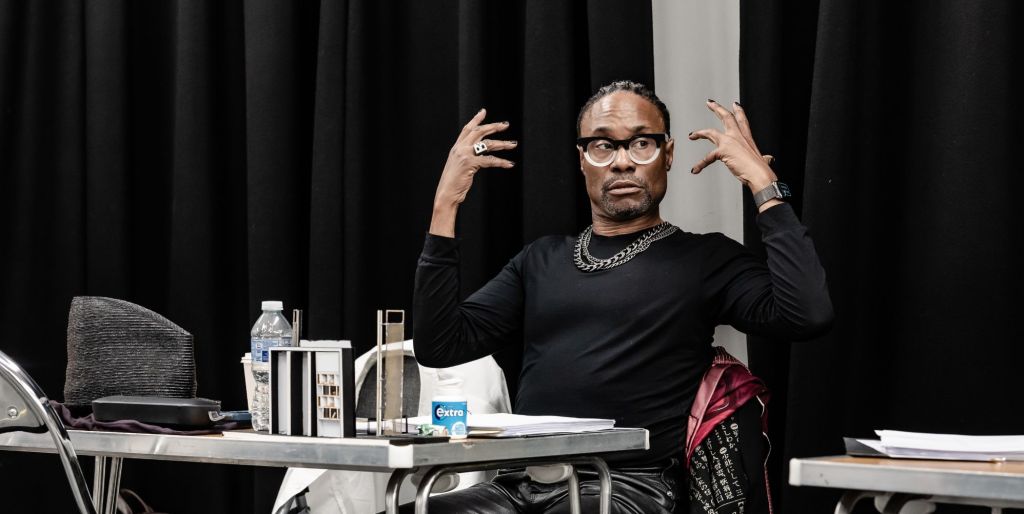
Porter is an expert at directing, Rivers continues, due to his ability to take a historical piece and bring it into the present. Not by changing the factual context or timeline of the material, but by his ability to see what it is about a text that will connect with today’s audience.
“Billy’s presence is ever-felt and so being in a room looking at a text with Billy, whether it’s set five years ago, 10 years ago, 60 years ago, you’re going to find the now in that piece,” Rivers says. “Because that’s the thing that changes people. That’s what wakes people up. That’s what gets people excited. That’s what makes people look at things in a different way, is that hand reaching out past a certain time period and grabbing you in the now. That has been the gift of looking at that piece with Billy’s presentness.”
Audiences of today, Rivers hopes, will see This Bitter Earth as a bit of jumping off point for truly honest conversations, “and also for them to leave feeling like they’ve been hugged a little bit, [to] feel like they just received a little bit of a little something extra to get them through the day.”
“Art has the power to heal,” Porter adds. “That’s my focus and that’s my energy, period. Like Harrison said, he wants people to feel like they’ve been hugged. I love that. I want them to be called to act as well.”
This Bitter Earth is at London’s Soho Theatre until 26 July.
Share your thoughts! Let us know in the comments below, and remember to keep the conversation respectful.