
Trans woman overcomes ‘hateful’ attacks to make election history in New Hampshire

Billie Butler won the New Hampshire seat earlier this week. (Screenshot/Instagram)
New Hampshire has become the latest state to appoint its first trans representative.
Democrat Billie Butler beat Republican Ken Hilton in the special election on Tuesday (24 June), by 964 votes to 774, to represent Somersworth and Rollinsfield in the state House of Representatives. The seat was left vacant after Democrat Dawn Evans resigned to move district.
Following her historic victory, the trans politician said she was humbled by the support she had received and vowed to help “balance the legislature” in New Hampshire.
Although Kamala Harris won New Hampshire in the presidential election, the Granite State has a Republican governor and the party has a majority in the House of Representative and the Senate.
“I would like to see more people run who do not have divisive agendas but who really love New Hampshire,” Butler said in her victory speech. “I’m ready to offer what I have to give. I’m also ready to bring some art and culture back to the state house.”
During the election campaign, Republicans were criticised for targeting Butler through an anti-LGBTQ+ website.
“It’s hateful, but worse: it completely misrepresents me and my values,” Butler said of the website.
Asked about the website, Hilton said he had not seen it and did not want to.
Trans representation in US politics on the rise, study finds
Butler’s election victory is another landmark moment for trans representation in US politics.
According to a recent study, trans, non-binary and gender-non-conforming representation in public office has soared by 1,800 per cent since 2017.
The Out for America report, published on the LGBTQ+ Victory Institute’s website, showed that there were more than 1,330 out LGBTQ+ people in public office in the US as of 5 May, an increase of 2.4 per cent compared with last year. Since 2017, overall queer representation swelled by 198 per cent.
The number of non-binary politician has grown by 3,900 per cent since 2017, and there has been a 350 per cent increase of trans men and 875 per cent of trans women in politics.
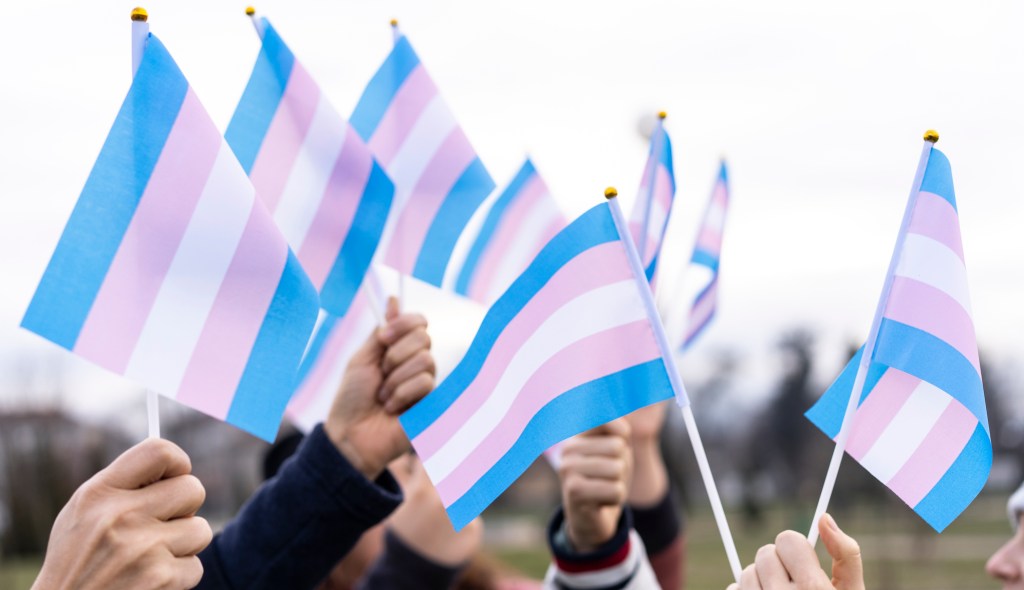
Evan Low, the LGBTQ+ Victory Institute’s president and chief executive, said the increase stood in stark contrast to the “hateful rhetoric plaguing the 2024 election cycle”, adding: “These exceptionally talented public servants are exactly what we need as the antidote to combat the anti-equality virus in our halls of power.”
Among them is Montana trans representative Zooey Zephyr, who refused to back down after being censured by colleagues in 2023. Speaking to PinkNews at the time, she said Republican attacks on the LGBTQ+ community were an attempt to “drum up a bogeyman” to distract from their “inadequate solutions to major crises in our state”.
Share your thoughts! Let us know in the comments below, and remember to keep the conversation respectful.