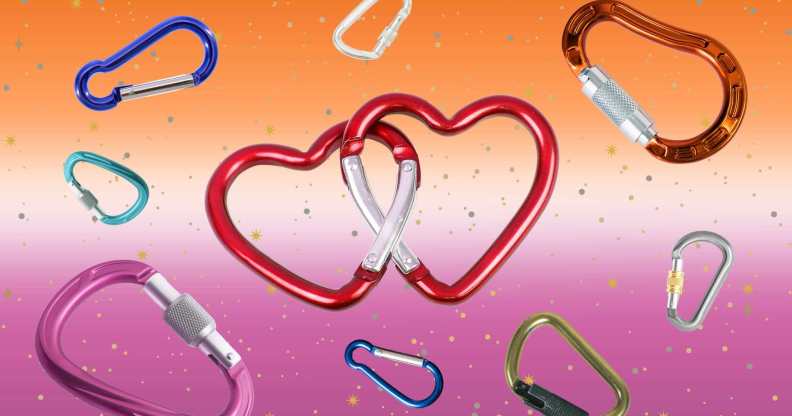
Carabiners have a long history in the lesbian community (Canva)
Why are carabiners the unofficial accessory for every lesbian night out – and what is their meaning for LGBT people?
Today, for many queer women, wearing a carabiner isn’t just about holding keys: it’s a nod to history, a statement of identity and a way to connect with others in the know. But what is the carabiner code and what’s the history behind this sapphic symbol?
A carabiner is a small metal clip, usually made of aluminium or steel, with a spring-loaded gate, and is commonly used in activities such as rock climbing. However, the accessory also has a history entangled with LGBTQ+ culture.
One of the first public nods to its history came from cartoonist Alison Bechdel, famous for Dykes to Watch Out For, who immortalised it through the “Ring of Keys” moment in her memoir Fun Home, where a young Bechdel recognises another queer woman – not by what she says but by what she’s wearing: a carabiner.
Why are carabiners the unofficial accessory of every sapphic night out? Today, for many queer women, wearing a carabiner isn’t just about holding keys – it’s a nod to history, a statement of identity, and a way to connect with others in the know. But what is the ‘carabiner code’ and what’s the history behind this sapphic symbol? Let’s get into it. A carabiner is a small metal clip, usually made of aluminum or steel, with a spring-loaded gate, and is commonly used in activities like rock climbing. However, this accessory also has a history of being deeply entangled with LGBTQ+ culture. One of the first public nods to its meaning came from legendary cartoonist Alison Bechdel, who immortalised it in her memoir through the now-iconic “Ring of Keys” moment. In that scene, a young Bechdel recognises another queer woman—not by what she says, but by what she’s wearing: a carabiner. Though Bechdel helped highlight its cultural significance, the carabiner’s history goes deeper. The carabiner first gained significance among butch lesbians working blue-collar jobs – roles typically reserved for men. With fewer traditional options and no male partners to rely on financially, many lesbians took on manual labour where a carabiner was both practical and essential. Over time, the tool evolved into something more – part function, part identity. As women’s job opportunities expanded, the carabiner remained, becoming a quiet symbol of queer resilience, butch style, and community within the wider WLW world. In some lesbian circles, carabiners have worked like a hanky code – where placement matters. Clipped on the left, they can signal someone being a “bottom”; on the right, a “top”. It’s a low-key way to signal preferences, often flying under the radar of straight onlookers. So, the next time you spot a carabiner at the club, on the street, or in a café, remember – it’s not just an accessory. It’s a nod to the past, a wink to the present, and a silent pledge to the future of sapphic culture. #carabiner#sapphics#queertiktok#wlwcouple#carabinercode#lgbtqia#Adoteumhabitinho
But the carabiner first gained significance earlier – among butch lesbians in blue-collar jobs, roles typically reserved for men.
With fewer traditional options and no male partners to rely on financially, many lesbians took on manual labour where a carabiner was both practical and essential. Over time, it evolved into something more: part function, part identity.
As women’s job opportunities expanded, the carabiner remained, becoming a quiet symbol of queer resilience, butch style, and community within the wider WLW world. In some lesbian circles, carabiners have worked like the gay men’s hanky code, where placement matters.
Clipped on the left, they can signal someone being a “bottom”, on the right, you’re a “top”. It’s a low-key way to signal preferences, often flying under the radar of straight onlookers.
So, the next time you spot a carabiner at the club, on the street, or in a café, remember: it’s not just an accessory. It’s a nod to the past, a wink to the present and a silent pledge to the future of lesbian culture.
Share your thoughts! Let us know in the comments below, and remember to keep the conversation respectful.