
Is equal marriage under threat 10 years after historic US Supreme Court ruling?
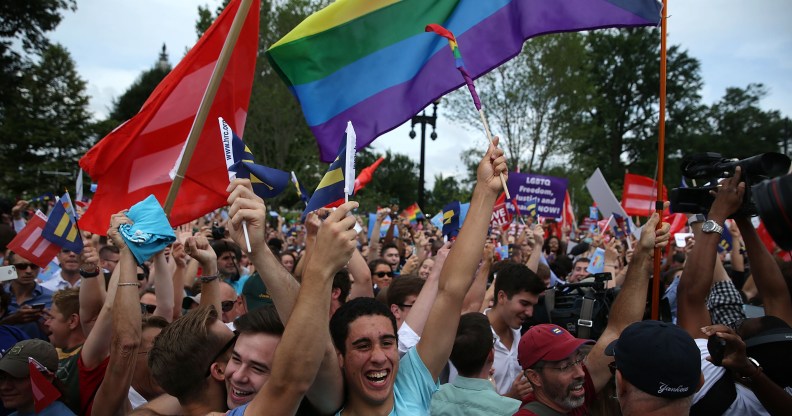
Same-sex marriage was legalised across the US in 2015 (Alex Wong/Getty Images)
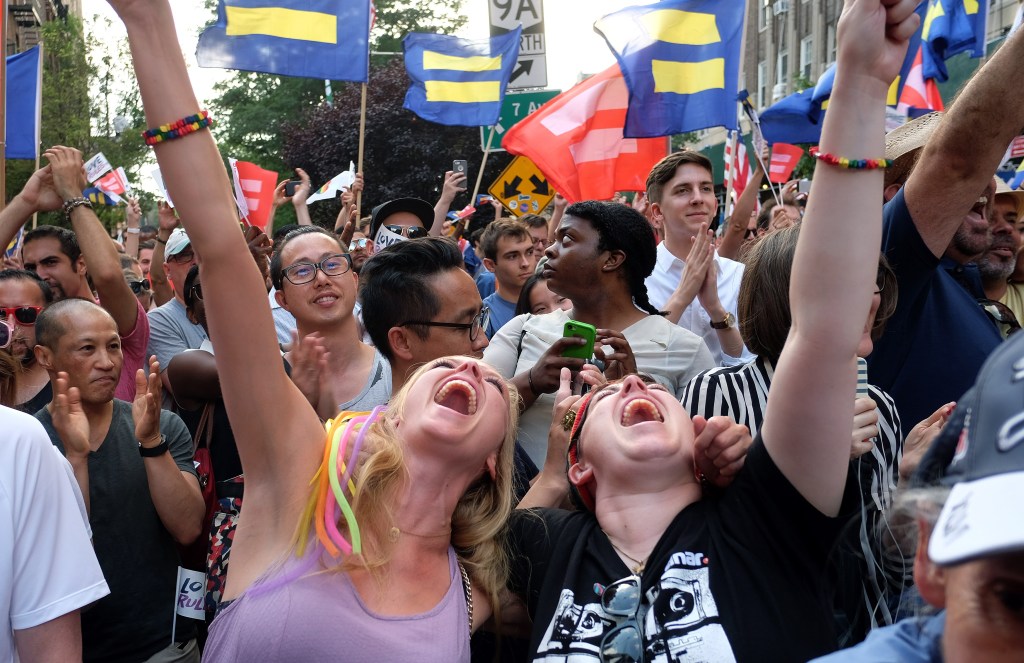
On 26 June, 2015 – equal marriage was legalised across the entirety of the United States.
The ruling came from highest court in the US, the Supreme Court, after hearing the case of Obergefell vs Hodges.
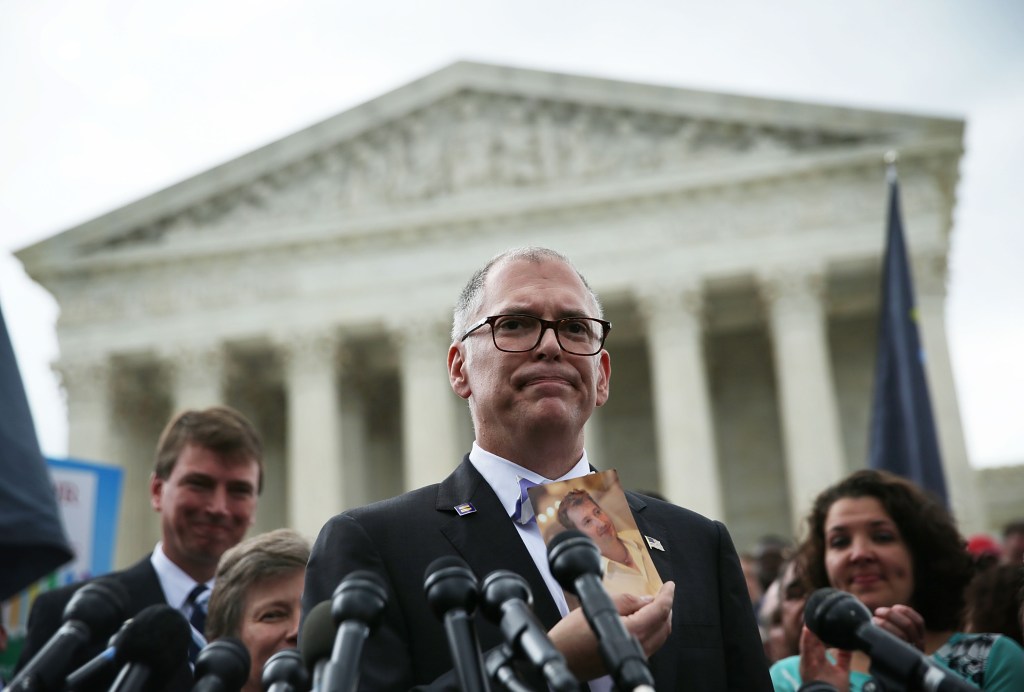
The lead plaintiff in the case was LGBTQ+ rights activist Jim Obergefell, whose legal battle was launched by the unfair treatment of his own relationship in his home state of Ohio.
In 2013, Obergefell and his longtime partner John Arthur decided to marry in the state of Maryland – which had legalised same-sex marriage on 1 January, 2013 – after Arthur was diagnosed with terminal ALS.
After they were wed, they were informed that Obergefell could not be listed as Arthur’s surviving spouse on his death certificate due to Ohio’s ban on same-sex marriage, despite them being legally married out of state.
The pair filed a lawsuit to challenge the discrimination against them as a same-sex wedded couple and the judge in the case, which became known as Obergefell v. Kasich, ruled in their favour. However, the state of Ohio appealed the decision in a higher court and won, leading Obergefell to appeal to the Supreme Court.
The case of Obergefell vs Hodges consolidated not just Obergefell and Arthur’s legal dispute but other cases from other states where same-sex couples were treated differently to opposite sex couples on the basis of them not being heterosexual.
The result of the case saw the Supreme Court’s justices issue a 5-4 vote, ruling that both that same-sex marriage is a constitutional right and that states are required to recognise marriages from elsewhere.
At the time, Justice Anthony Kennedy wrote the majority opinion, stating: “They ask for equal dignity in the eyes of the law. The Constitution grants them that right.”
The result for Obergefell was bittersweet though, as Arthur died before the Supreme Court’s decision was handed down.
A decade on, there are more than 800,000 same-sex married couples in the US, more than double the number in June 2015.
Ahead of the anniversary of the ruling, the Williams Institute at the UCLA School of Law published a report detailing the impact of the verdict, including the number of same-sex couples who have married, the geographic spread of queer couples across the country and the economic benefits of the verdict.
The report also noted that 31 states still have dormant statutes and/or constitutional amendments in place that ban marriage equality, with around 433,000 married same-sex couples and 305,000 unmarried same-sex couples living in those areas. These are the bans that were ruled as unconstitutional in by the Obergefell verdict, whereby the legislation cannot be enforced.
It is these couples, the study highlighted, that would be most vulnerable if the Supreme Court ruling were to be overturned.
Concerns about same-sex marriage being reversed have grown since Donald Trump returned to the White House in January, with a number of Republican politicians – emboldened by Trump – already having introduced bills aimed at encouraging the Supreme Court to strike down the ruling.
If equal marriage were to be overturned, same-sex marriage rights would once again be decided on a state-by-state basis. However, protections were strengthened in 2022 when president Joe Biden signed the Respect for Marriage Act into law.
The act “requires that interracial and same-sex marriage must be recognised as legal in every state in the nation”, but it does not require states to perform same-sex marriage ceremonies.
This means that any state that elected to no longer perform same-sex marriages would still have to recognise a queer couple’s union as legal if they were legally married elsewhere.
Speaking on the anniversary of the Supreme Court ruling, as worries about the reversal of the decision grow, Obergefell expressed his own concerns.
“Ten years later, I certainly wasn’t expecting to be talking about the threats to marriage equality, the potential for Obergefell to be overturned,” he told NBC.
“Marriage is a right, and it shouldn’t depend on where you live,” Obergefell said. “Why is queer marriage any different than interracial marriage or any other marriage?”