
‘Mice with two dads having babies isn’t a gay victory – it’s performative science and animal abuse’
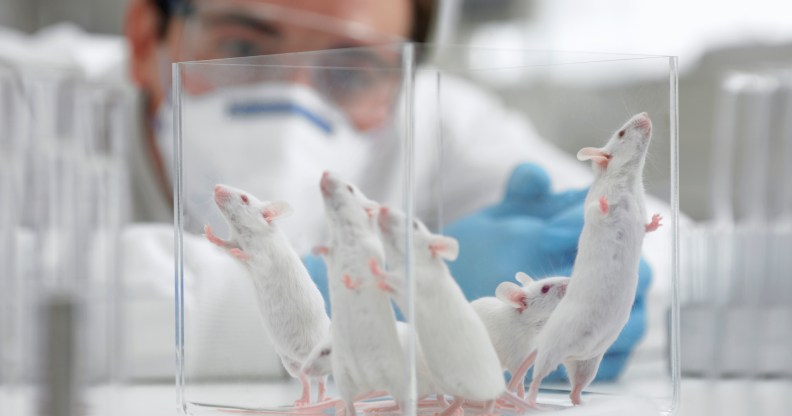
PETA’s Jeffrey Brown argues that research that involves animal testing shouldn’t be celebrated. (Getty)
As a scientist and a gay dad, I suppose I’m expected to throw my hat in the air, celebrating the news that the offspring of two male mice has had their own pups, but I’m actually disgusted. Not, of course, by the notion of same-sex couples building families, but by the invasive pseudoscience that brought about this result, and the rainbow-washing that’s gone into convincing the public that cruelty to animals is somehow a win for equality.
To understand why the story currently making headlines is nothing to cheer about, you have to understand what goes on in laboratories where animals are treated like test tubes with tails, instead of the sensitive individuals they are. Every single year in Great Britain, around 2.6 million animals are force-fed chemicals, have electrodes inserted into their brains, are sliced open, or infected with diseases, before being killed, dissected, and disposed of like a used glove.
In this experiment specifically, mice were injected with pregnant mare serum gonadotropin (a hormone produced in the placenta of pregnant horses and cruelly extracted via their blood) to produce an excess of eggs. This practice of creating a surplus of ova, embryos, or fully formed baby animals is common in vivisection. Animals are viewed as fodder, and “wastage” is business as usual, as sentient beings are created, used, and discarded.
The eggs were then surgically removed. The study doesn’t detail how sperm cells were extracted from the donor mice, but this usually happens surgically or post-mortem. Foster mothers were then mated by males to induce false pregnancy, and the embryos were surgically implanted. The live pups were then removed from the pregnant females via autopsy.
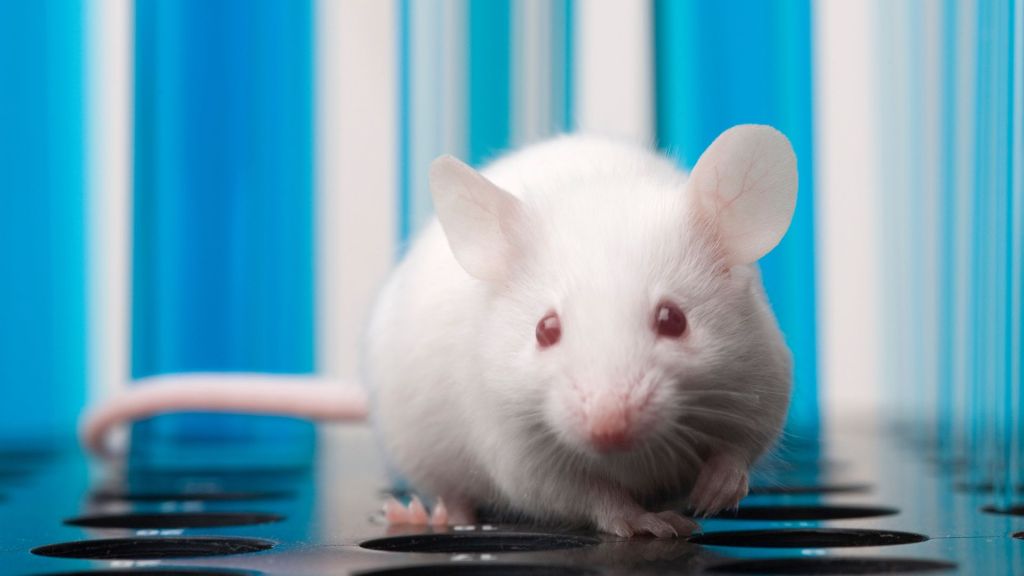
The idea of mice languishing in barren cages, having their reproductive organs manipulated, dying, and having babies extracted from their corpses is like a plot from a horror film. But, like so many disingenuously named “breakthroughs” borne of animal use, this study was given a positive PR spin and sold as a feel-good news story. Well, I’ve worked in research science since the 90s, and I can assure you it’s anything but. In fact, my work has left me with zero confidence in using animals in experiments designed to inform human health.
Take cancer, for example. It’s been almost 30 years since Richard Klausner, then director of the National Cancer Institute in the USA, admitted that we have been curing cancer in mice for decades, but still cannot cure it in humans. Even today, the failure rate of potential new cancer therapies is over 96 per cent. The current paradigm for developing and testing drugs and getting them to market has serious problems.
The story’s the same for other conditions: strokes affect over 100,000 people and cost the UK £26 billion ($36.6 billion) a year, yet none of the compounds that reached clinical trials – more than a thousand were tested on rodents – actually improved stroke outcome in humans. That’s despite the fact that many did help the animals whose brains were deliberately damaged to test them.
Animal use has hobbled the treatment of sepsis, Alzheimer’s Disease, mental health disorders and countless other conditions, all at the cost of lives and public funds. The common barrier to success is clear – while animals are like us in their ability to feel pain and emotions, they’re too unlike us for their use to yield any meaningful scientific advancement.
The LGBTQ+ movement must keep equity at its core, and it boils my blood to hear scientists justify the use of archaic, painful animal torture by wrapping it in a pride flag. Only by redirecting resources toward non-animal, human-relevant methods such as those laid out in PETA’s Research Modernisation Deal will we make real progress.
One day, animal-free methods will better help gay and straight people become parents. In the meantime, many children in need of loving families already exist. Let’s not be beguiled by cruelty masquerading as pride but rather extend to all species the equality and compassion we demand for ourselves.
Jeffrey Brown is a Science Advisor for People for the Ethical Treatment of Animals, PETA