
Patsy Stevenson on re-allocating legal funds to trans cases: ‘Women’s and transgender rights are not mutually exclusive’
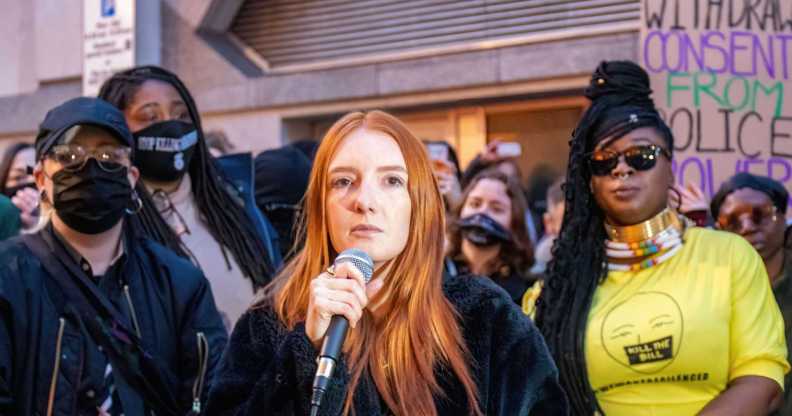
Patsy Stevenson has reallocated funds to the Good Law Project (Lucy North/SOPA Images/LightRocket via Getty Images)
Gender equality campaigner and Harper’s Bazaar Woman of the Year 2023 Patsy Stevenson has re-allocated funds from her legal case, after being arrested at a protest, to The Good Law Project, to help in the fight for trans rights. In an exclusive piece for PinkNews, she explains why.
The recent UK Supreme Court ruling on the legal definition of “woman” has had dangerous consequences for transgender individuals, gender-non-conforming people and cisgender women. Although the verdict was intended as guidance, its real-world application has already raised serious concerns about privacy, safety and systemic discrimination.
One of the first and most-alarming reported outcomes was a directive to permit cisgender male officers in the transport police to conduct strip searches of transgender women. This has been criticised by activists, who argue it demonstrates a fundamental misunderstanding of both trans rights and basic dignity.
It also fails to account for transgender men and could endanger both trans and cisgender women, the critics say.
Legal experts and activists have pointed out that the degrading policy could be exploited, with officers potentially justifying searches of cisgender women by claiming they “believed” the individual was trans. As gender-critical campaigners continue to insist that such measures are designed to protect the rights and safety of cis women, the actual implications suggest they have not fully considered the ramifications.
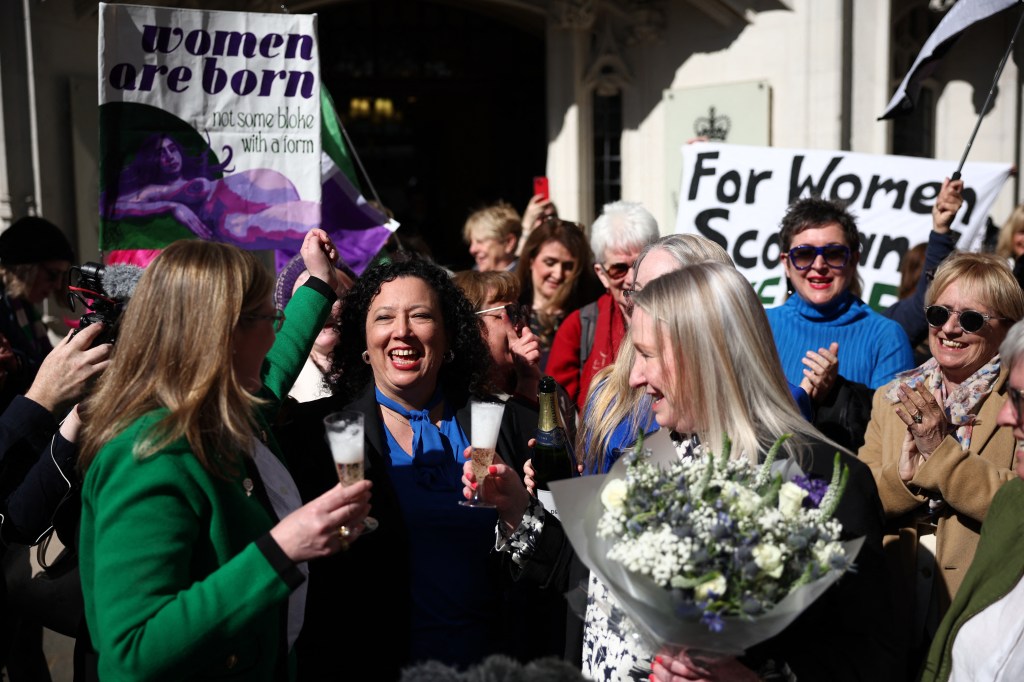
The ruling has also intensified scrutiny over access to toilets. Transgender and gender-non-conforming individuals report being denied entry to facilities matching their gender identity, forcing them to out themselves, face potential violence or simply go without basic amenities. Meanwhile, cisgender women who do not conform to narrow societal views of femininity say they, too, have faced harassment or questioning.
This discourse has escalated further following comments by JK Rowling, who encouraged social media users to photograph individuals in toilets whom they suspected of being transgender. The author donated £70,000 (approximately $94,000) to For Women Scotland, the organisation that brought the case to “challenge the definition of gender” under the 2010 Equality Act at the Supreme Court. Her comments have been condemned, with activists and campaigners warning they could lead to harassment and violence.
The Equality and Human Rights Commission (EHRC) has faced mounting criticism not only for its stance on the Supreme Court ruling but also for trying to secure an injunction against trans rights activists. Comments from attributed to Kishwer Falkner, the EHRC’s chairwoman, and lawyer Akua Reindorf, included calls for transgender women to “not be permitted to use women’s facilities” in workplaces or public-facing services such as shops and hospitals. These statements have deepened concerns that the equalities watchdog is undermining, rather than upholding, protections for trans individuals.
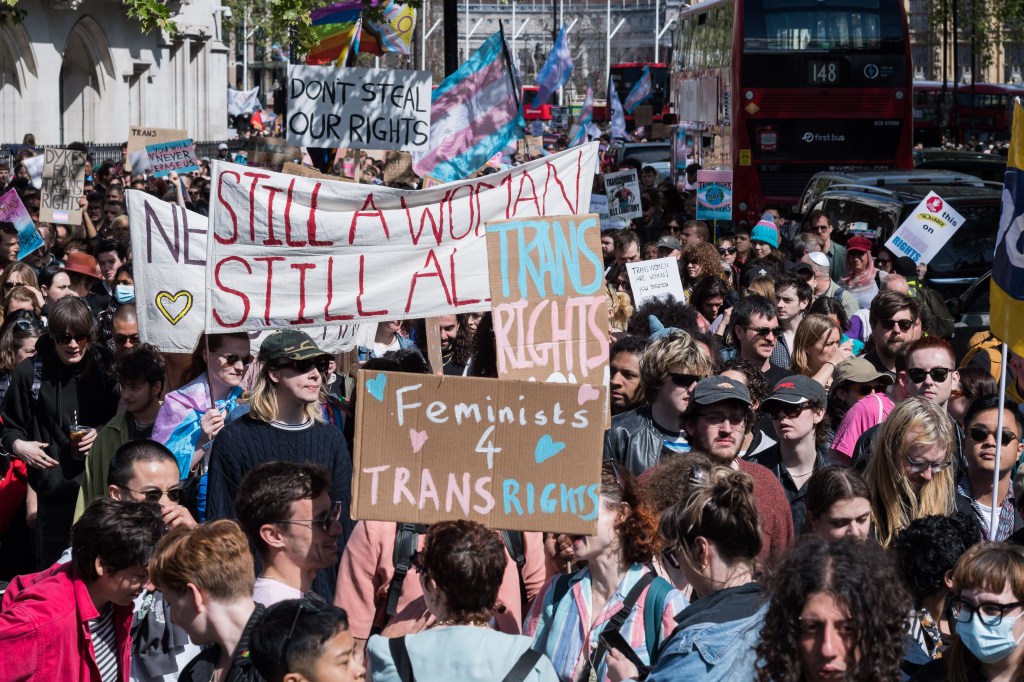
Following the court ruling, activists gathered outside EHRC headquarters. Members of Trans Kids Deserve Better said: “Trans youth have begun an occupation outside the EHRC’s London offices, intending to stay there overnight, to protest against the upcoming release of the EHRC’s guidance about the Supreme Court’s ruling that ‘sex’, within the Equality Act, refers to birth sex.”
The activists attached a banner reading Listen To Us to bollards in front of the building.
They wanted to be given a voice in the guidance. In response, the landlord of the EHRC offices in Vauxhall tried to secure an injunction to prevent the protests. Although The Good Law did not act directly for Trans Kids Deserve Better, they intervened to resist the legal proceedings.
The court refused to grant the injunction and there has been no appeal.
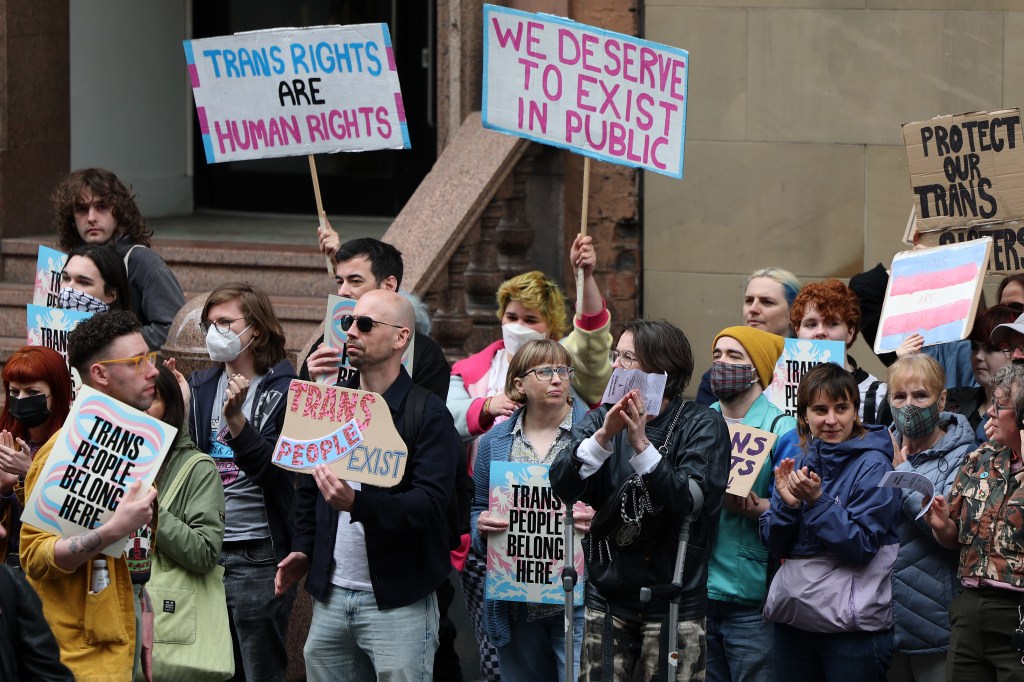
The ongoing debate around gender rights often falsely frame women’s rights and trans rights as mutually exclusive, pitting them against each other as if they were competing interests rather than interconnected struggles. But they are not separate battles, they all exist under patriarchal standards.
The gathering outside the EHRC shows why protest rights matter for all marginalised groups.
Protest has long been a tool for social progress. In 2021, I was arrested at the vigil for Sarah Everard, the woman murdered by a serving police office earlier that year. I raised thousands of pounds for my legal fees to challenge the Metropolitan Police. Not all the money was needed, so I was able to re-allocate all of it. I chose to give the funds to the Good Law Project.
Feminism at its best has always been inclusive. The idea that protecting trans rights somehow diminishes women’s rights is a false dichotomy that serves only those who oppose gender equality.
Jolyon Maugham, the founder of the Good Law Project, has said: “The parallels, a protest against the failure of an institution to protect those it should, and responding by attacking the protestors, could hardly be more striking. Those outside the shrinking class of people [whom] English institutions deem worthy of protection, know they have to band together to look after one another. We’re really grateful to Patsy.”
Share your thoughts! Let us know in the comments below, and remember to keep the conversation respectful.