
Pupils must be not be taught about gender identity ‘as fact’, says new guidance

The government has published its statutory guidance on relationships education, relationships and sex and health education (RSHE) (Jeff J Mitchell/Getty Images)
The UK government’s latest relationships, sex and health education (RSHE) guidance calls on schools to be “mindful” that there is “significant debate” about transgender identities, and staff “should be careful not to endorse any particular view or teach it as fact”.
The Department for Education (DfE) finally published its long-awaited, updated statutory guidance on RSHE on Tuesday (15 July), as well as its response to the consultation held on proposed changes to it.
A statutory review of RSHE guidance was announced by the former Conservative government under Rishi Sunak in March 2023, after the DfE said it had received “disturbing” reports of “inappropriate material” being taught in some schools. Education secretary Gillian Keegan, who supported outing trans pupils to parents, said the review was needed to “make sure all children are protected from inappropriate content”.
The revised guidelines will come into force from 1 September 2026, replacing the previous guidance, and sets out the legal duties schools must comply with when teaching RSHE.
Within the 42-page document, points 67 to 72 – equal to around a page in length – outline guidance in relation to “gay, lesbian, bisexual and transgender content”.
The word “transgender” does not appear anywhere else in the document.

There was concern last year, two months before the Tories were ousted from government, that schools in England would be banned from teaching children about gender identity and trans issues under the new guidance.
At the time, the BBC said it heard from a government source that if asked by a pupil about so called gender ideology, the guidance would force teachers to say it was a contested area and to insist that there are only two biological sexes.
The plans were criticised by politicians, activists and experts and branded the “new Section 28” – a reference to the Thatcher-era legislation that banned the “promotion” of homosexuality in classrooms in England and Wales from 1988 until 2003 (it was repealed in Scotland in 2000).
In the government consultation, 14,196 people were asked if they supported the proposed changes to gender identity and gender reassignment in the guidance. 62 per cent – 8,785 respondents – said no.
“Comments include that you cannot teach about gender reassignment without teaching about gender identity, while teaching about gender identity does not lead children to question their gender but rather promotes respect and tolerance, and that not teaching about it is harmful to those students experiencing gender dysphoria,” the government noted regarding the consultation’s findings.
“Some respondents expressed concerns about how to teach about gender identity while complying with duties in the Education Act to be politically impartial.”
The government’s statement went on to say: “We recognise in the guidance that, beyond the facts and the law about gender reassignment, there is significant public debate. The guidance continues to advise schools that they should teach the facts and law in this area but should be careful not to endorse any particular view or teach it as fact.
“The guidance also reflects the effect of the recent decision of the Supreme Court… that the terms ‘sex’, ‘man’ and ‘woman’ in the Equality Act refer to a person’s biological sex.”

Pupils should be taught “the facts and the law about biological sex and gender reassignment”, the updated guidance says, and they should “recognise that people have legal rights by virtue of their biological sex which are different from the rights of those of the opposite sex with the protected characteristic of gender reassignment”.
They should also learn to recognise that people with the protected characteristic of gender reassignment, as with the other protected characteristics, have protection from discrimination and should be treated with respect and dignity.”
State schools should be “mindful” that “beyond the facts and the law about biological sex and gender reassignment there is significant debate” and “should be careful not to endorse any particular view or teach it as fact”. The guidance goes on to give a specific example that schools should not “teach as fact that all people have a gender identity”.
It is also important to be “mindful to avoid any suggestion that social transition is a simple solution to feelings of distress or discomfort”, the guidance goes on to warn, and materials that could “encourage pupils to question their gender” should be avoided.
Beyond trans issues, the guidance states all pupils should learn the “importance of equality and respect
throughout their education” and about protected characteristics under the 2010 Equality Act. Primary schools are encouraged to teach children about “healthy loving relationships” and include “same-sex parents… when discussing families”.
Secondary-school pupils should be given equal opportunities to explore the features of stable and healthy same-sex relationships, and this content should be integrated into RSHE programmes of study rather than delivered as a standalone unit or lesson.
Schools should ensure that they cover all the facts about sexual health, including STIs (sexually transmitted infections), in a way that is relevant for all pupils, including those who are lesbian, gay, bisexual and/or gender questioning, the guidance insists.
Non-binary author and the founder of the Trans Kids Deserve To Grow Up campaign, Dee Whitnell, expressed deep concern in response to the guidance, noting the removal of the word “transgender” was “sadly not shocking, but deeply worrying”.
The activist went on to say: “What’s further worrying is the notion that ‘all people have a gender identity’ is considered a viewpoint that cannot be ‘endorsed’.
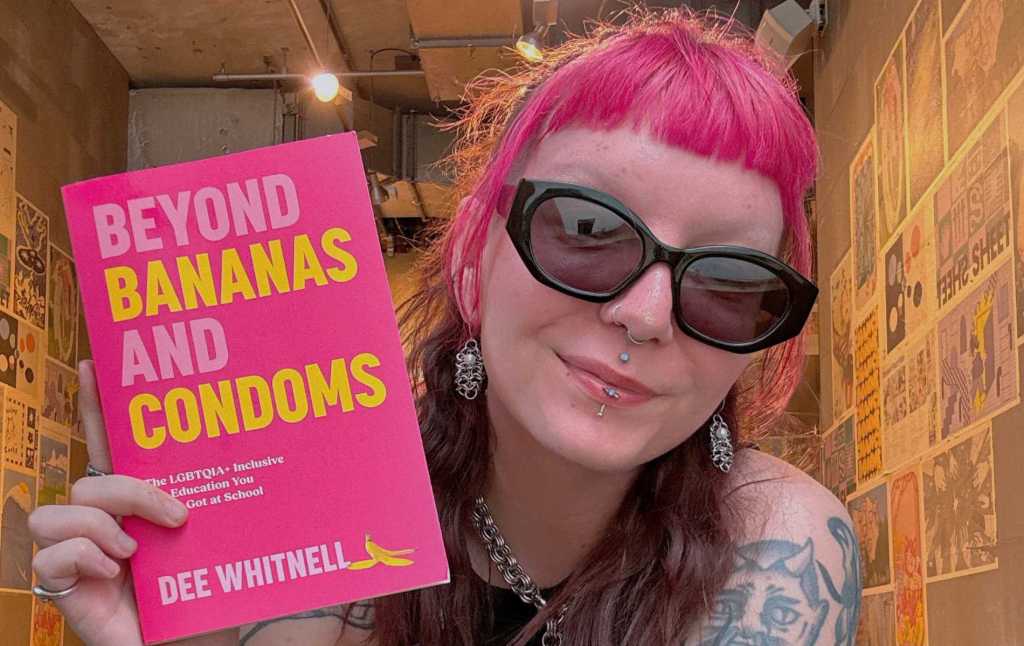
“Another concern is that students will be taught ‘laws and facts’ about biological sex, meaning aligning these facts with the Supreme Court ruling, which has been criticised globally.
“As a trans sex educator, I am worried about how I can, not only deliver inclusive RSE under this new guidance, but how I exist within this space. Will mentioning my non-binary title, Mx, or my pronouns, they/them, be contradicting the guidance of endorsing a viewpoint that is considered inappropriate?”
However, Whitnell was grateful for the inclusion of the risks of AI and fake intimacy, deepfakes, vaping and sub-cultures such as “incels” in the published guidance.
“These are topics students have personally asked me about within the classroom,” Whitnell said. “Knowing that schools will be ensuring that young people have resources covering these topics is a small glimmer of hope within this guidance, but the lack of trans inclusion is its greatest downfall.”
Share your thoughts! Let us know in the comments below, and remember to keep the conversation respectful.