
University of Reading students ‘scared’ to use toilets under new trans-exclusive policy

The University of Reading implemented its policy in June. (Wikimedia Commons)
University of Reading students have said they are “scared” to use the institution’s toilets after officials updated a policy to exclude trans people from single-sex facilities.
Students and staff told PinkNews that they feel “unsafe” using campus facilities following the introduction of a policy forcing individuals to use facilities consistent with their “biological sex.”
In an internal memo sent to faculty and students on 11 June, University of Reading officials argued that the university’s previous policy allowing trans people to use spaces consistent with their gender identity is “not compatible” with a Supreme Court ruling in the For Women Scotland v The Scottish Minister case.
Handed down in April, the ruling argued that the 2010 Equality Act’s definition of sex relates only to “biological sex.” In the ruling opinion, Supreme Court judge Lord Patrick Hodge said it should not be seen “as a triumph of one or more groups in our society at the expense of another.”

The University of Reading wrote that it believed it was its “legal duty” to review policies following the ruling, “in compliance with the law.”
“In order to ensure that there is adequate provision for all members of our community, we are currently carrying out an audit of some of our campus facilities,” the memo continued. “This is being done to give a clear understanding of whether we have adequate provision of single-sex and unisex facilities across our campuses.”
The university said it plans to follow guidance set out by the Equality and Human Rights Commission (EHRC), the UK’s equalities watchdog, upon its publication in the future.
The regulator, which has received criticism for its exclusionary stance on trans issues, published interim guidance in April recommending trans people be banned from facilities consistent with their gender and, in some cases, their birth sex.
Several of the university’s equality policies are now under review, according to officials, including its Bully and Harassment statement and its Equal Opportunities Policy.
Reading University trans policy ‘transphobic’, local groups argue
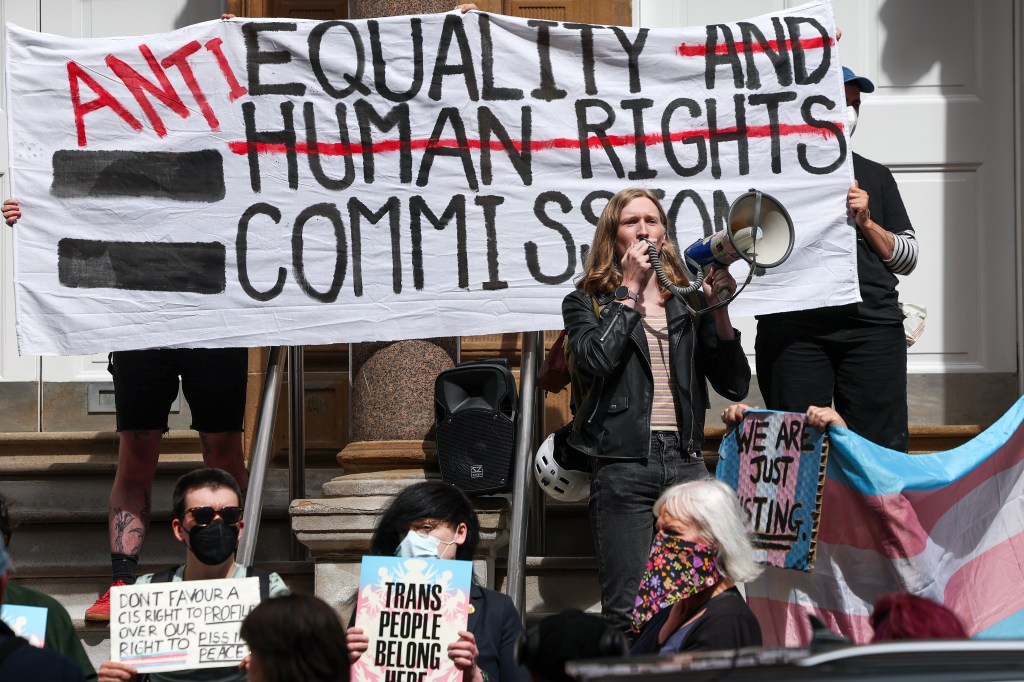
The new policy was condemned by local LGBTQ+ groups, including the Reading Trans Movement and UoR Trans Rights, who branded its provisions as “transphobic.”
The Reading Trans Movement noted that, despite the University of Reading’s claims, the EHRC’s guidance is not “legally binding” and the Supreme Court case is not law, nor does it ban trans people from single-sex facilities.
Following a campus protest during the university’s open day, organised by a combination of student groups in opposition to the policy, the University of Reading Executive Board refused to drop the new rules, saying the “legal advice we have received is unequivocal.”
It argued that the policy, based on the non-statutory guidance, was vital to ensure the organisation was “not in breach of the law.”
“As a charity, and because of our duty to protect freedom of speech, we must remain institutionally neutral on contested matters. However, neutrality does not mean indifference,” the statement reads. “We recognise the increased risk of marginalisation faced by this group and are committed to strengthening the support we offer, while acting within the boundaries of the law.”
New policy makes staff and students ‘less safe’
Several students told PinkNews that, since the policy had been implemented, they feel “uncomfortable” on campus, with one student saying they “haven’t been onto campus since the change as I feel unsafe.”
“This makes all of the LGBTQIA+ students on campus feel unsafe in a world that is already become very unsafe for us,” another wrote. “The university pretending to be our allies and then doing this proves they don’t care.”
Members of staff also criticised the move, saying they feel “disillusioned” with the university’s goals now that the policy has passed.
“As a cisgender lesbian, I am aware of ‘gender-policing’ occurring which will question women’s femininity and whether they are allowed to use a single-sex spaces. This makes me feel less safe on campus using toilet facilities and that I may be scrutinised based on my appearance,” one member of staff told PinkNews.

In a statement to PinkNews, a spokesperson for UoR Trans Rights said it was “dismayed and distressed” by the Executive Board’s refusal to back down, accusing them of having “jumped the gun.”
“The EHRC guidance has no statutory force, it has already had to be ‘clarified’ in some areas and was under consultation at the time,” they continued.
The group further accused the university of failing to engage with trans students and staff and alleged it had not undertaken an Equality Impact Assessment before making the decision.
An open letter urged officials to “stop the harm” by reversing the decision and awaiting for further legal advice.
It recommended that officials withdraw the policy, issue a public apology, publish a full Equality Impact and Health & Safety assessment, seek and publish legal advice, consult with trans members of the university, and ensure a safe, sufficient and inclusive environment across campus.
Guidance issued by the University and College Union recommends that universities wait for statutory guidance before making changes to its trans inclusion policies, while also consulting with its trans and non-binary members.
In a statement to PinkNews, the University of Reading said: “All three of our campuses have unisex toilet facilities, and while a small number of buildings currently lack this provision, we are addressing this through a building-by-building review.
“While we cannot ignore legal obligations, our inclusive values remain core to who we are. We will continue supporting our trans, non-binary, and gender non-conforming colleagues and students while ensuring every University member belongs and feels respected, heard, and safe.”