
A very trans travel guide to your LGBTQ+ friendly stay in Madrid

Amelia Hansford writes about her experience travelling to Madrid during Madrid Pride as a trans woman (Supplied)
Writing an LGBTQ+ travel guide to Madrid is like writing a kids’ guide to the candy store.
Every self-respecting travelling queer should have Spain’s very own villa y corte (“Town and Court”) on their bucket list, particularly during Pride season when the city becomes a rainbow-clad beacon of LGBTQ+ joy.
If the gorgeous weather or good food isn’t enough to suit your fancy, the city hosts an array of museums, venues, and leisure centres that immerse you not just in Madrid’s fascinating history, but also in a cultural underbelly that defines every street corner or avenue you tread.
Madrid’s cultural and historical influences run deep; scattered through the city’s nooks and crannies like veins that bring to life a societal living organism that ebbs and flows. The LGBTQ+ community, which remains prominent in the city, is a vital component of this living, breathing cultural centre-point.

There’s a reason Madrid is host to the biggest Pride in Europe. Diversity isn’t simply a buzzword knocked around when June passes by; it’s an ethos built into the city, as immovable and timeless as the Plaza Mayor or the Almudena Cathedral.
While locals have their own opinions on the direction Pride has taken, the bigoted belief that it doesn’t belong is seldom given a seat at the table; the debate of Pride comes from the passion the city feels for it, rather than a question over whether it belongs. Madrid locals are as passionate about the sanctity of Pride as they are about their city as a whole.
What’s around in Madrid?
Spain’s capital city has practically bursting at the seams with activities and amenities, as anyone who has had the pleasure of traversing its sun-soaked streets will be aware. Whether you’re looking for an introspective tour of some of Europe’s most enthralling galleries or want a memorable night out across the many bars and clubs, Madrid has it all.
Travellers who want to experience a taste of Spanish culture would do well to visit the Atocha district. Buried deep in the region’s many shops and restaurants is the Paseo del Prado boulevard – a gorgeous part of southern Madrid home to the Golden Triangle of Art.

There, you can find a set of museums known as the “big three;” the Prado Museum – Spain’s national art museum – the Thyssen-Bornemisza National Museum – once the second largest private art collection, it features over 1,600 paintings and counting – and the Reina Sofia Museum – Spain’s national museum of 20th century art and home to Pablo Picasso’s Guernica.
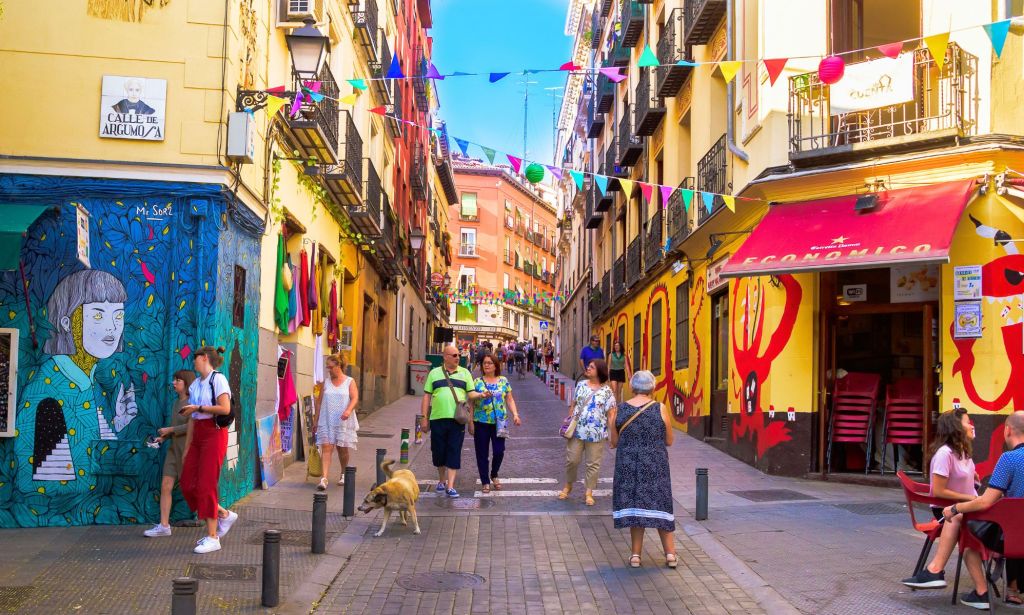
In the mood for some retail therapy? Shopaholics shouldn’t miss the el Rastro flea market in the heart of the vibrant Lavapiés district. Madrid’s largest market, the streets come to life every Sunday and on public holidays with a variety of unique independent stalls and shops selling anything from handmade knitwear to antique silverware.
After you’ve finished your shopping spree, be sure to explore the array of cafes and restaurants in Lavapiés. Whether you’re in the mood for a quick bite to eat or want to sit down for a good, full meal, the district has a mix of local, Asian, Mediterranean, or American cuisine on offer.
For those in the mood to uncover the rich LGBTQ+ history and culture spread across Madrid, there’s no better stop than Chueca; the city’s very own gay village filled to the brim with a rich tapestry of LGBTQ+ attractions, clubs, and shops to keep any self-respecting queer occupied for days on end.
A local taxi driver even told me the district renamed a well-known square in the neighbourhood in 2015 in honour of politician and LGBTQ+ rights activist, Pedro Zerolo, who died in June that year of pancreatic cancer.
As the beating sun sets on Spain’s el foro, the residents of Chuecha pour into its many LGBTQ+ clubs and bars.
Be sure to make your way to the LL Bar or El 12 CLUB to experience an unforgettable night out. Be warned – when it comes to raw energy and character, Spanish drag queens are a step above the rest. Spanish drag shows aren’t for the faint-hearted!
What to know before travelling to Madrid
Now, before you jump in and grab that flight to the Adolfo Suárez Madrid–Barajas Airport, there are a few things you should know before planting your feet on the ground in Madrid. Because it is so jam-packed, most travel guides recommend you spend at least three days or more in the city to fully take in what it has to offer and to give yourself some much-needed downtime too.
Madrid is a big city, and while it’s generally preferable and possible to get where you’re going on foot, the Metro can serve as a quick and cheap alternative for those in a hurry. Refrain from entering Madrid from the airport via the Metro, as it can get incredibly busy, especially if you’re carrying luggage.
As I’m sure most readers of this guide will be aware, the weather in Spain, Madrid included, is no joke.
During my stay, the temperature reached a high of 36°C (96.8°F). The highest recorded temperature in Madrid in 2024 was just shy of 40°C (104°F). Thankfully, Madrid infrastructure is built for the heat and air conditioning is abundant, but it is still incredibly important you bring sunscreen and stay hydrated.

There are plenty of lovely and relatively cheap places to stay in Madrid. Those looking for an affordable spot to keep their things might check out The Hat, the Room Mate Alicia or the Ibis Aeropuerto Barajas. Tourists looking to spend a little extra cash for luxury and amenities such as a swimming pool or gym might want to check out the Radisson RED, the Hard Rock Hotel, or the Hyatt Centric Gran Via.
While tourists should stay safe anywhere they travel, many Madrid tourism guides recommend keeping your belongings particularly safe while travelling through Madrid due to a prevalence of pickpockets in the area, particularly in the Metro. Madrid is predominantly a very friendly city full to the brim with friendly people, but crime still does happen.
It is also worth noting that Spain is currently facing anti-tourism protests across the country, including Madrid. In April, over 150,000 people marched to condemn the effect tourism is having on the nation’s housing crisis.