
Labour members split on trans rights, new poll shows
(Leon Neal/Getty Images)
Members of the Labour Party are evenly split on the government’s approach to trans rights following the Supreme Court’s controversial gender ruling, a new poll has revealed.
The research carried about Survation – which polled 1,304 Labour members who read LabourList and has been released in partnership with Metro – found nearly half (43 per cent) of those surveyed believe the government was correct in saying trans women should be excluded from single-sex spaces following the Supreme Court decision. Just slightly less, 40 per cent, disagreed with the government’s stance.
The Supreme Court ruling in April asserted that the legal definition of the protected characteristic of ‘sex’ in the 2010 Equality Act is based on ‘biology’ and excludes trans people.
The case, For Women Scotland Ltd v Scottish Ministers, was the conclusion of years of legal back and forth between the gender critical group and Scottish government and is already having wide-ranging implications for the trans community, as well as organisations, public bodies and services who are updating policies on single-sex spaces, inclusion and discrimination to align with the court’s decision.
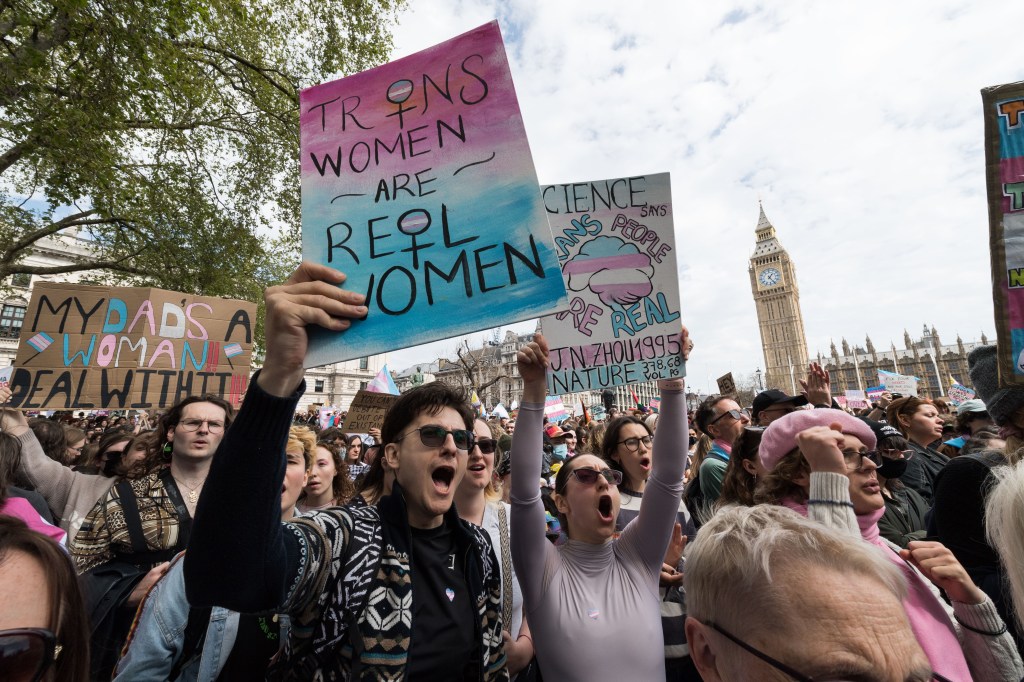
Several organisations have already taken steps to exclude trans people from single-sex spaces and services, including the Football Association, the England and Wales Cricket Board and the Scottish parliament building.
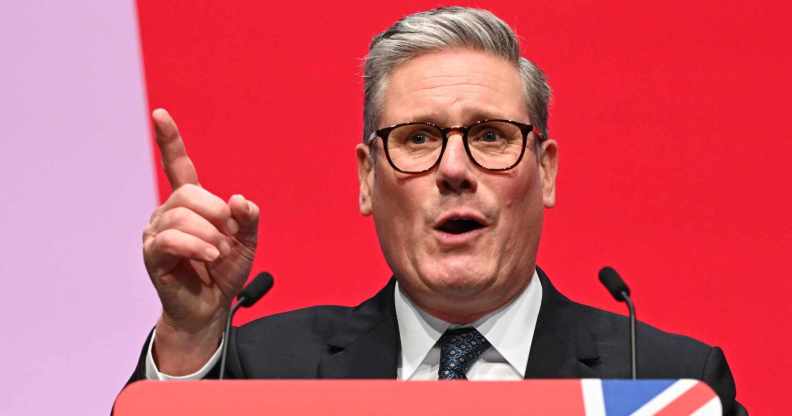
Following the ruling, Starmer – who has consistently flip-flopped on trans rights – said he “welcomed” the Supreme Court’s decision, saying it had “given us much-needed clarity” and “it’s a much clearer position”.
“I’m really pleased the court has clarified the position. We can move on from there and that’s very helpful. I welcome that,” he told the BBC.
Subsequently, when asked by BBC News if the prime minister still believes that transgender women are women, the prime minister’s official spokesman said: “No, the Supreme Court judgment has made clear that when looking at the Equality Act, a woman is a biological woman,” adding: “That is set out clearly by the court judgment.”

The three per cent difference between those for and against the government’s approach falls within the poll’s margin of error, meaning members of the party are split directly down the middle on the matter.
The poll further revealed that greater support for the government’s stance was among female Labour members, with a margin of 45 per cent to 38 per cent. By comparison, male Labour members were marginally opposed (42 per cent to 41 per cent).
Strongest opposition was amongst those aged 25 and 34 (66 per cent) whilst greatest support was among those aged 65 and over (51 per cent).
In a comment given to Labour List, Alex Charilaou – co-chair of the campaign group Labour for Trans Rights – said it was encouraging to see high levels of support for the trans community in younger members.
“The fact that the membership as a whole is split down the middle on the issue speaks to the divisive way the leadership has handled trans rights, and the fact that so many trans and ally members have felt so compelled to resign from the Labour Party,” Charilaou said.
Georgia Meadows, LGBT+ Labour’s trans officer, said a majority of Labour’s membership is “trans-supportive, or at the least, neutral on the issue”.
“Very few are overtly transphobic, who are loud and well-funded,” Meadows said.