Trans playwright Rose Coogan’s first Edinburgh Fringe show has a message that everyone needs to hear
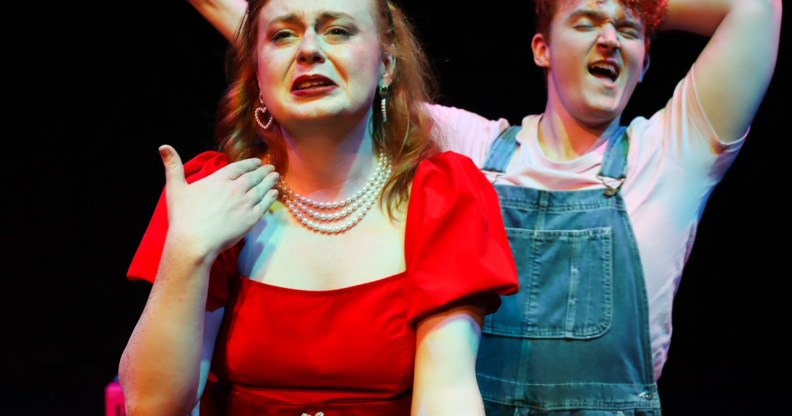
Rose Coogan and Conor Cupples in Rose+Bud (Amanda Doherty)
“Basically, at the end of the day I want queer people to walk out of my show and say: “F**k, I can just be me, and that’s more than enough,” says Rose Coogan, a wise-beyond-her-years trans comedian and playwright from Northern Ireland.
Rose has brought her funny and moving two-person play Rose + Bud to the Edinburgh Festival Fringe, and she took some time to sit down with PinkNews to discuss how she came up with the idea to portray herself in “two halves” on stage, and what a therapeutic experience it’s been.
“Rose + Bud started as a piece of stand up, a one-person show.” She explains. “The idea to bring Conor (Cupples) on board – who plays my younger, pre-transition self – developed after I started reading a lot of other plays at the time. One that resonated with me was Philadelphia Here I Come by Irish dramatist Brian Friel.
“The main character struggles with the idealised version of who he wants to be when he leaves his small town, and Brian portrays these selves as two separate people.
“I thought it would be fun to work with these concepts of duality: who I wanted to be and who I was at that time, when I left home at 18, were opposite ends of the spectrum. I’d experienced a lot of severe bullying growing up and I basically retreated for some of my teen years, I think a lot of queer people trapped in rural situations tend to almost disassociate until they turn 18.”
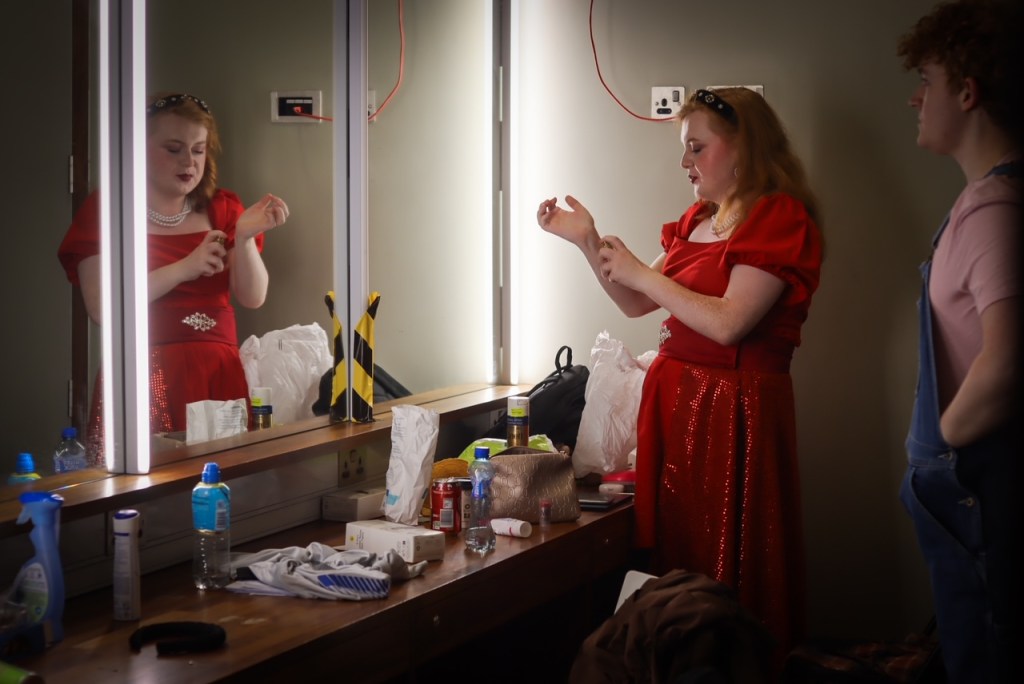
Rose grew up in a small town in rural Northern Ireland, where, she explains, there were “no real opportunities for young people.”
She continues: “It can feel very isolating being queer in Northern Ireland, as it’s already a small population, and then you’re an even smaller demographic within that, but I was very fortunate that I had support within my family. My brother and I were born just one year apart: he’s a trans man and I’m a trans woman. There’s probably a sitcom in that!”
“I had to leave though,” she adds, more seriously. “I found that my existence was enough to provoke people. It just wasn’t safe for me to be there anymore. But I’m OK. I lived, I’m here at the Fringe. I’m a lot luckier than a lot of other trans people.”
Rose says that, thankfully, she’s not had any particularly negative experiences in Edinburgh so far, but the timing of her play has been a bit of an issue.
“What’s been a bit challenging is the fact we’re an LGBTQ+ show that’s on at 1pm, approximately two hours before most queer people get out of bed, so when I go out flyering before the performance it’s a much older crowd than I’m used to. Handing flyers for my play to people over 60 is quite an experience; I do love a 12pm microaggression,” she jokes.
“But the ones who do show up, OK, for example, they might be very confused at times and have no idea what twink means, but they eventually do come onside.”
Reaching the type of people who wouldn’t usually go to see an hour-long performance about coming out as a trans woman is important, Rose says.
“At the moment, trans people are being treated as a scapegoat in the UK”
“There’s a statistic that everyone’s opinion about trans people tends to drastically improve after just coming into contact with one of us. I’m not suggesting that the onus should be on every trans person to bridge the divide between us and the rest of the world, but I’m happy to try.
“At the moment, trans people are being treated as a convenient scapegoat in the UK. There’s a handful of us compared to cis people, but by torturing a small subset of the population it can deflect from the fact that Keir Starmer isn’t polling well: going after us won’t affect Labour’s voting numbers, and for years we’ve been stock archetype characters to make fun of – think of Little Britain, for example – so it’s relatively easy to target us and turn us into some kind of bogeyman to distract from their failures.”
Rose says that the play’s message is, at its core, a universal one.
“I would dream about who I was going to be when I was finally ‘free’, and when I went to university and got away from my small town I got the chance to actualise and become that person, but I was very ill equipped. But in the show I try to show both versions of myself in a loving way. After all, the previous versions of yourself also deserve compassion and kindness.
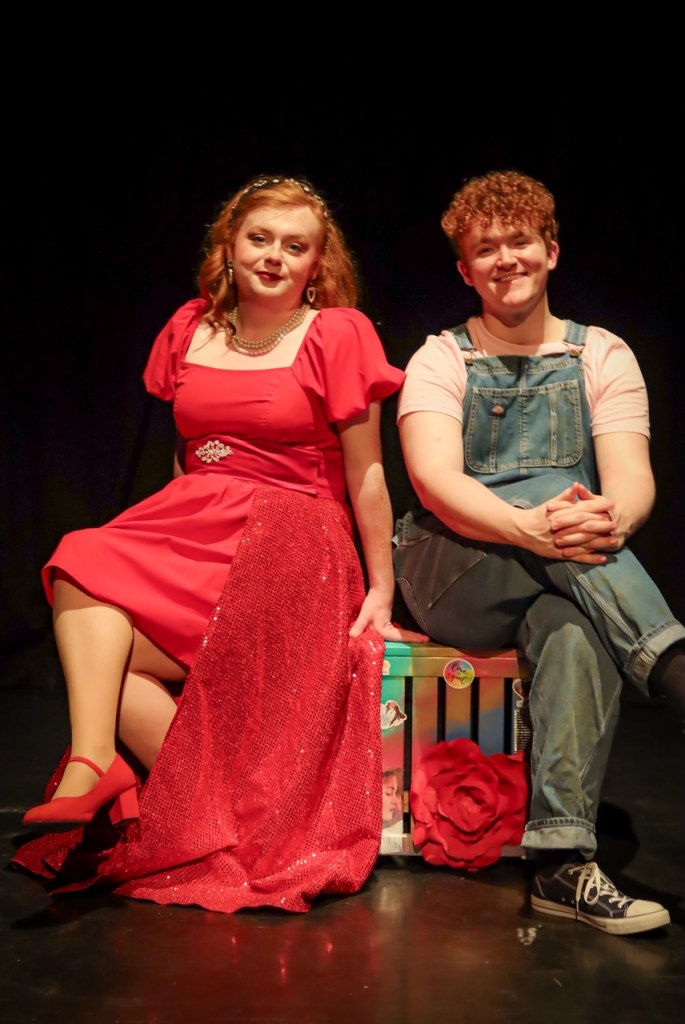
“Rose + Bud isn’t just a ‘trans play, it’s a universal message: it’s a coming of age story that shows the light and warmth and joy and inner strength you can find if you don’t try and erase your past self. I want people to walk away feeling like they can forgive and love their younger selves and not feel like you need to constantly cringe and shy away from who you used to be.”
She’s extremely pleased with the reaction to the play so far; with audience members waiting for her after the performance to say how much they’d related to her experiences.
“Sometimes you do a show so many times that it can be hard to be subjective about your own work, so it’s so helpful when people come and say what parts of the story resonated with them,” she says, clearly pleased that her work is striking a chord with so many people.
“From my point of view, all of the things in the play are parts of my life: things that are very normal. For example, people seem to really love the character of my mum, who is a very typical chain-smoking, paranoid Northern Irish mother, who’s very over-protective of her (at the time) gay son and learning to accept him as her daughter. People do seem to like that: also I like making people cry unexpectedly in a comedy too! I like to twist a few heartstrings.
“Writing and performing the play with Connor has been incredibly therapeutic for me. It was written in the last couple of years when I reemerged from lockdown in Belfast, and I was lucky to have a rich group of other queer people in my life all at different stages of their journey.
“I saw traits in them that I used to dislike in myself that, seeing them in people I loved, I now found endearing and sympathetic. It helped me learn to treat myself with more compassion. It’s why I wanted to make Rose and Bud two different people. Conor is a deeply supportive co-star. He’s a queer non-binary person from Belfast and his portrayal of Bud has also helped me to become much more sympathetic to that past version of myself.”
Just as the show itself blends comedy with ‘heartstring-tugging’ moments, Rose’s final message to people thinking of coming along to see it is equal parts serious and light-hearted:
“One important message that I want LGBTQ+ people to take away from my play is that, in this political climate, we have no room for in-fighting. We need each other more than ever and we need to treat each other with kindness and warmth.
“Also, if you like Derry Girls there’s plenty of strong Northern Irish women in my show and I play most of them, so you should come and see it.”
Rose + Bud is produced by Commedia of Errors in Association with the Lyric Theatre Belfast & ENP Pleasance and is being performed daily at the Edinburgh Festival Fringe at 1pm until Monday 25 August.