
What happens if marriage equality is overturned by the US Supreme Court?
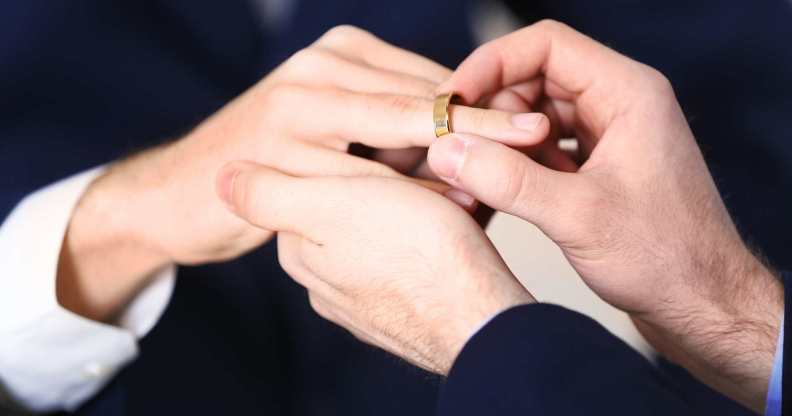
Marriage equality in the US could be under threat. (Canva)
More than a decade on from the US Supreme Court’s landmark ruling that marriage was a constitutional right for all Americans, the justices are considering whether or not to take up a case which seeks to overturn that decision.
Same-sex marriage was legalised in the US on 26 June 2015 when the court voted 5-4 vote in the case of Obergefell vs. Hodges. The verdict covered legislation in all 50 states.
Prior to the ruling, some states allowed same-sex unions while others did not. The Supreme Court ruling meant laws in dissenting states were overruled. However, the laws themselves were not scrapped and remain dormant.
Jim Obergefell, the lead plaintiff in the case, began a legal battle that would lead to a law change for all queer Americans in 2013, after his home state of Ohio refused to recognise his marriage to his terminally ill partner, John Arthur.
The couple decided to get married in Maryland, which had legalised same-sex marriage at the beginning of that year. However, when they returned to Ohio the couple were told Obergefell could not be listed as Arthur’s surviving spouse on his death certificate because of Ohio’s ban on same-sex marriage.
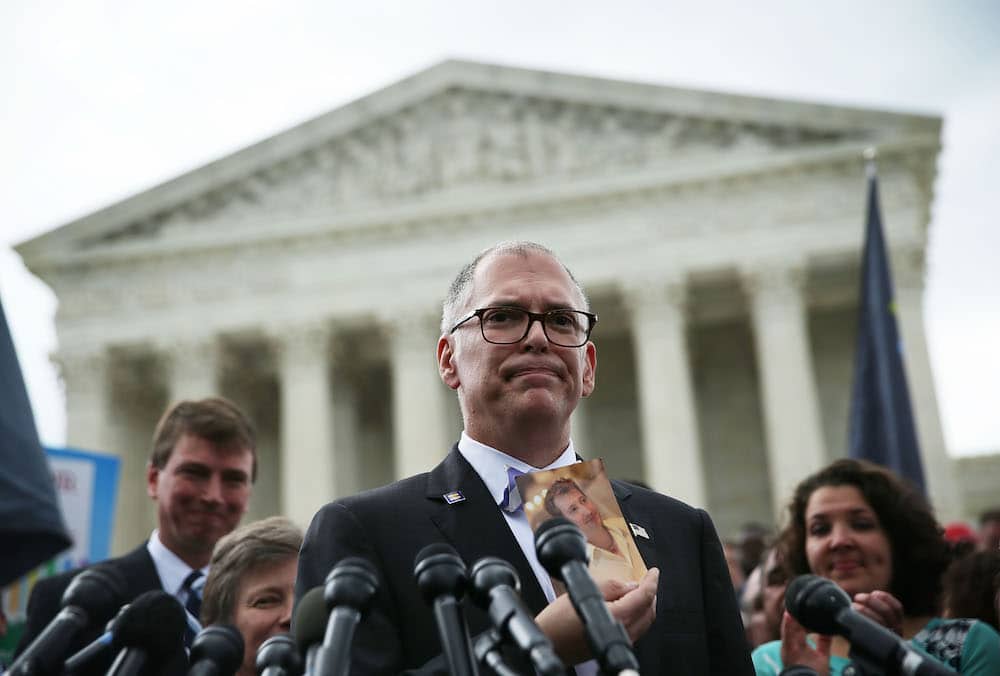
Because they had got legally married out of state, Obergefell and Arthur filed a lawsuit and the judge in the case – which became known as Obergefell vs. Kasich – ruled in their favour.
However, Ohio officials lodged an appeal and won, forcing Obergefell to take the case up to the Supreme Court.
Associate justice Anthony Kennedy, writing in the majority opinion at the time of the Supreme Court’s decision, said: “They ask for equal dignity in the eyes of the law. The constitution grants them that right.”
Obergefell’s victory was sadly bittersweet though, as Arthur died before the decision was delivered.
To mark ten years of same-sex marriage, the Williams Institute at the UCLA School of Law published a report in June which showed that there are now more than 800,000 same-sex married couples in the US, double the number in 2015.
However, the study highlighted that 31 states still have dormant statutes and/or constitutional amendments in place that ban marriage equality, with around 433,000 married same-sex couples and 305,000 unmarried same-sex couples living in those areas.
It was these laws which were ruled unconstitutional by the Supreme Court, so currently cannot be enforced. However, it is couples in these areas who would be most vulnerable if the Supreme Court ruling was reversed.
Why could same-sex marriage be overturned?
Ever since same-sex marriage was passed into law, those opposed to LGBTQ+ equality have sought to reverse and undermine the law.
A fierce opponent of same-sex marriage, former Kentucky county clerk Kim Davis – who infamously refused to issue marriage licenses to LGBTQ+ couples on religious grounds in 2015 and spent time in jail for it – is appealing a $100,000 jury verdict for emotional damages as well as $260,000 for attorneys’ fees.
In March 2022, District judge David Bunning ruled that Davis had violated the couples’ constitutional rights by refusing to give a gay couple marriage licences back in 2015 following the Supreme Court ruling.
Some 18 months later, Ermold and Moore were both awarded $50,00 (approximately £62,000 at the time), and in January 2024 Davis was ordered to pay more than $260,000 (then close to £333,000) for the men’s legal fees and expenses.
If case is considered by the Supreme Court, it could represent a threat to federal protections for same-sex marriage.
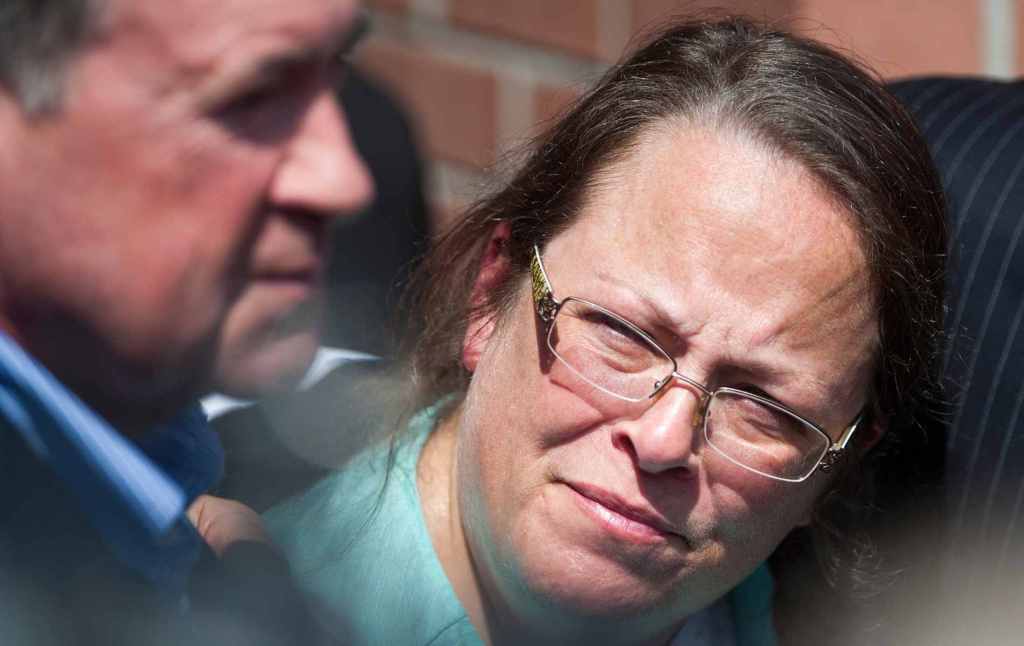
In a petition filed with the Supreme Court last month, her lawyer Mat Staver said: “Obergefell was egregiously wrong, deeply damaging, far outside the bound of any reasonable interpretation of the various constitutional provisions to which it vaguely pointed [and set out] on a collision course with the constitution from the day it was decided.
“This flawed opinion has produced disastrous results, leaving individuals like Davis find[ing] it increasingly difficult to participate in society without running [foul] of Obergefell and its effect on other anti-discrimination laws, and, until the court revisits its ‘creation of atextual constitutional rights,’ Obergefell will continue to have ruinous consequences for religious liberty.”
The petition states Davis’ case “presents the ideal opportunity to revisit substantive due process that ‘lacks any basis in the Constitution’”.
Speaking to Newsweek, Staver said it was time to “re-evaluate [Obergefell vs. Hodges] and overturn it”. He went on to claim he original ruling was “weak on shaky ground”.
The Supreme Court did already deny a similar appeal filed by Davis in 2020, but that is not to say the now conservative-majority justices will refuse to hear her case a second time.
What would happen if same-sex marriage is overturned?
If the the court decides to hear the case and votes to overturn same-sex marriage then equal marriage would very likely return to how it was Obergefell vs. Hodges – whereby the legality of same-sex marriage was decided on a state-by-state basis.
Prior to the 2015 ruling, there were a patchwork of different laws and court orders cross the US dictating whether same-sex marriages could be performed or recognised. Equal marriage was legal in 37 states and the District of Columbia the day before the Supreme Court ruling, and in all 50 as soon as the decision was issued.
Same-sex marriage laws once again being decided on a state-by-state basis would be similar to what happened in the case of Roe v Wade, a landmark 1973 ruling which legalised abortion across the US and which was overturned in 2022.
Since the decision to overturn Roe vs Wade, a number of Republican states have made their own laws, which heavily restricted access to abortion.
A reversal of Obergefell vs. Hodges would likely see similar action, with conservative states banning same0sex marriages outright. The dormant, or “zombie”, laws would likely be used to reinstate bans.
However, whilst several states could seek to halt same-sex unions within their own borders, the Respect for Marriage Act – signed by Joe Biden in 2022 – requires “interracial and same-sex marriage must be recognised as legal in every state in the nation”. Effectively this means, for example, if one state were to outlaw same-sex marriage it would have to recognise same-sex unions from other states where they are legal.
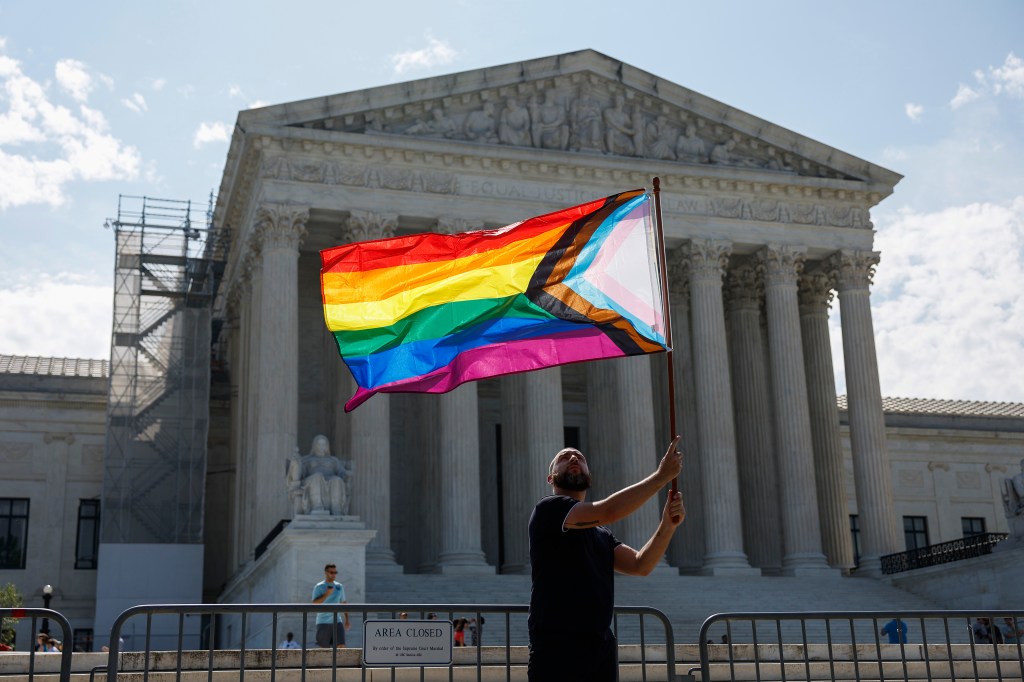
Before Davis’ action was lodged, and following Trump’s return to the White House, nine states have already this year been trying to overturn the court ruling.
According to NBC News in February, the states which have introduced measures explicitly seeking to reverse Obergefell v Hodges are Idaho, Michigan, Montana, North Dakota, and South Dakota.
Lawmakers in Missouri, Oklahoma, Tennessee and Texas have also introduced similar bills on equal marriage. Whilst these do not specifically reference Obergefell v Hodges, they would seek to create a category for marriage called “covenant marriage” which would be only for one man and one woman.
Polling by Gallup has also found support for marriage equality in America has dropped slightly, from 71 per cent in 2023, to 69 per cent last year.
Such moves to roll back marriage equality come as Jim Obergefell himself expressed concern about the future of same-sex marriage in the United States, saying those who think equal marriage rights are totally safe are “fooling themselves”.
“It could unravel very quickly. The Supreme Court could decide ‘we’ve got these petitions from these states asking us to overturn it, we think they’re right’,” Obergefell said to i News.