
UK Supreme Court trans ruling based on ‘significant errors’, legal expert argues

The Supreme Court’s ruling has ‘significant errors’, a legal expert has argued. (Getty)
The UK Supreme Court’s April ruling on trans rights was based on an “incorrect understanding” of equality law, a legal expert has argued.
A recently-published analysis of the FWS v Scottish Ministers ruling argued that Supreme Court justices were “unduly optimistic” in assuming that its judgement wouldn’t cause problems for trans people.
Issued in April, the judgement argued that the 2010 Equality Act’s definition of sex referred to ‘biological sex’ and its definition of women referred to ‘biological women’ only, excluding transgender women.
In the controversial, unanimous ruling opinion, Supreme Court judge Lord Patrick Hodge said its interpretation of the law should not read “as a triumph of one or more groups in our society at the expense of another.”
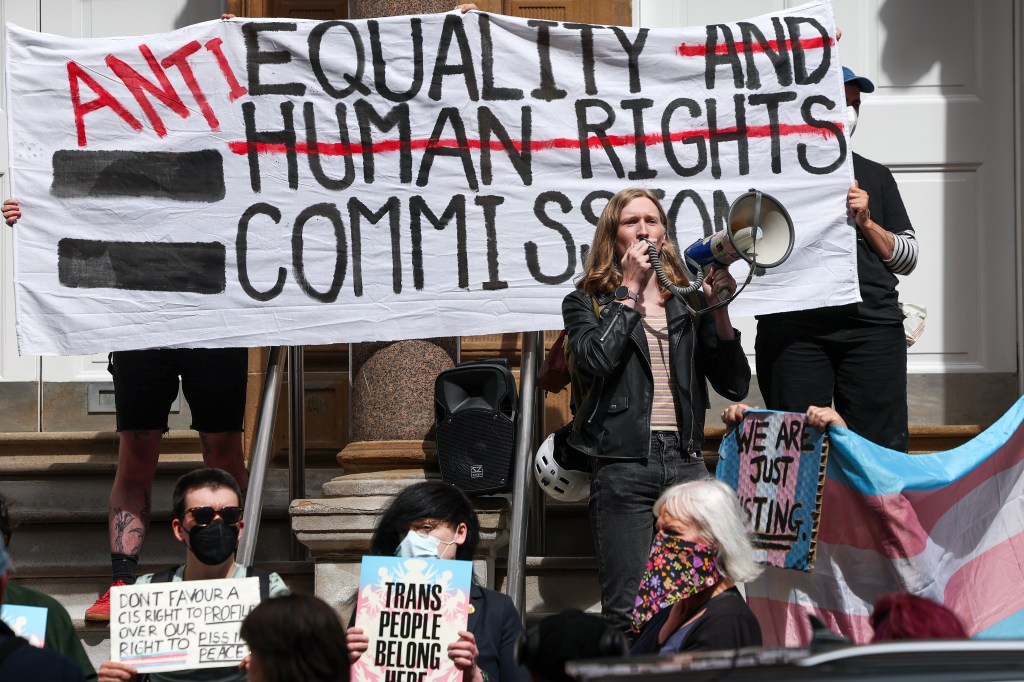
Despite this, the judgement has since been used by a variety of groups and institutions, including the Equality and Human Rights Commission (EHRC), to recommend that trans people be excluded from various public spaces including ‘single-sex’ public toilets and changing rooms.
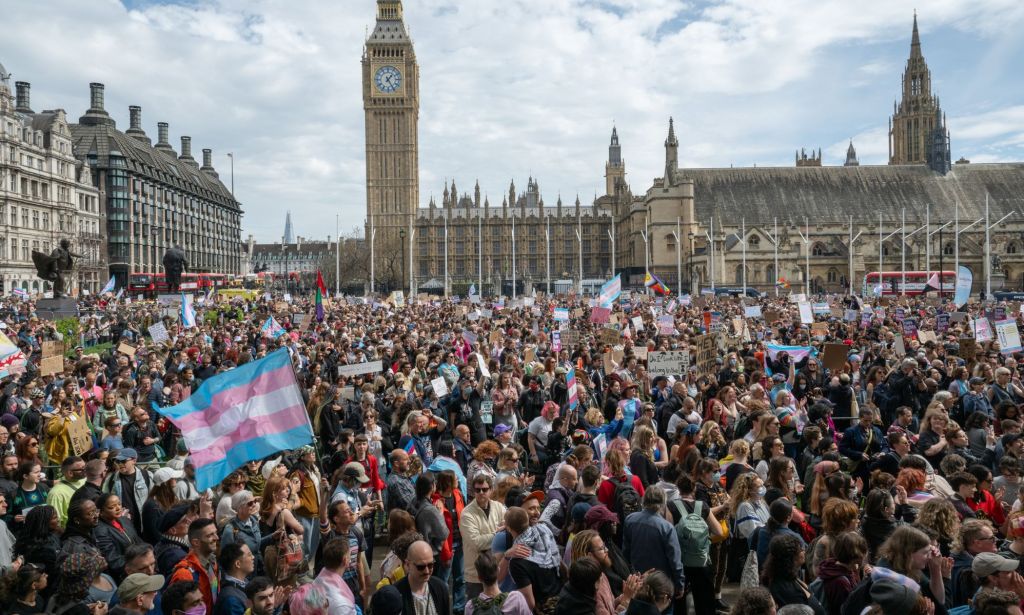
The EHRC’s draft guidance faced significant backlash from across the country in April, who came together for an emergency demonstration in London and beyond.
In her analysis of the ruling, Claire Bradley, managing director of the European Law Monitor, argued that the Supreme Court panel had misinterpreted elements of the 2010 Equality Act, as well as general equality law in the UK, to come to its conclusion.
Published on Tuesday (12 August), Bradley’s research argues that the Supreme Court wrongly considered the Sex Discrimination Act 1975, an anti-discrimination law that used the terms “men” and “women” to define its clauses, in its conclusion.
She noted that the legislation had been amended in light of the 2004 Gender Directive, a legal directive which amends equality law to use gender-neutral terms rather than sex-based definitions. Following the passing of the 2010 Equality Act, the Sex Discrimination Act 1975 was repealed entirely.
At the time, the government had planned to implement the Gender Directive’s changes with the passage of the Equality Act. However, given that it wouldn’t pass for several years, officials were forced instead to amend the Sex Discrimination Act 1975 by passing the Sex Discrimination Regulations 2008.
Due to the amendments, Bradley argues, the Supreme Court should have “interpreted the Equality Act in light of the Gender Directive, not the Sex Discrimination Act 1975.”
“It gives every indication of being wrongly decided”
The Supreme Court had previously shown its understanding of the amendments in its ruling opinion on the R. v Hackney LBC case in 2020, writing that the amendments became the “forerunner” for several of the 2010 Equality Act’s anti-discrimination sections.
Bradley argued that, when considering FWS v Scottish Ministers, the panel should have led with its understanding of the Gender Directive, as well as case law examples from the Court of Justice of the European Union (CJEU) which enforce legal protections based on “gender reassignment.”
“There is no excuse for the fact that they did not do so, given that the Equality Act is a rights-enhancing piece of legislation, the majority of which is required to implement the UK’s obligations under EU Law,” she continued.
Bradley argued the ruling was based on “significant errors of fact and law,” suggesting it could put the UK in breach of its human rights obligations.
“It gives every indication of being wrongly decided and should not, in our view, be relied upon by organisations as justification for excluding trans people from public life.”
Supreme Court ruling ‘wholly excluded’ trans people
Other legal experts have criticised the Supreme Court’s judgement, as well as the response to its ruling opinion.
Former judge, Dr Victoria McCloud – the UK’s only out trans judge in history – argued the ruling allowed institutions to make trans people feel “contained and segregated.“
She claimed the ruling had failed to consider vital human-rights arguments and explicitly violated hers and others’ “fundamental human rights.”
She further criticised the panel for having “wholly excluded” trans people from providing evidence on the case.
“[The Court] heard no material going to the question of the proportionality and the impact on trans people,” she said. “It didn’t hear evidence from us.”

The UK’s first female Supreme Court judge, Baroness Brenda Hale of Richmond, respectively blasted reactions to the case from groups and institutions intent on excluding trans people from public life.
“There’s nothing in this judgement that says you can’t have gender neutral loos,” she said. “Despite the fact that there are people saying you can’t do that.”
She said during a live panel in May that medical experts had told her there is “no such thing” as biological sex, arguing that the judgement says “nothing about that.”
While she didn’t want to “undermine the court,” Baroness Hale said she was more than happy to criticise the government response after prime minister, Sir Keir Starmer, used the ruling to declare that trans women aren’t women and trans men aren’t men.