
Police ‘drop’ Graham Linehan bail condition days after he appeared to violate it
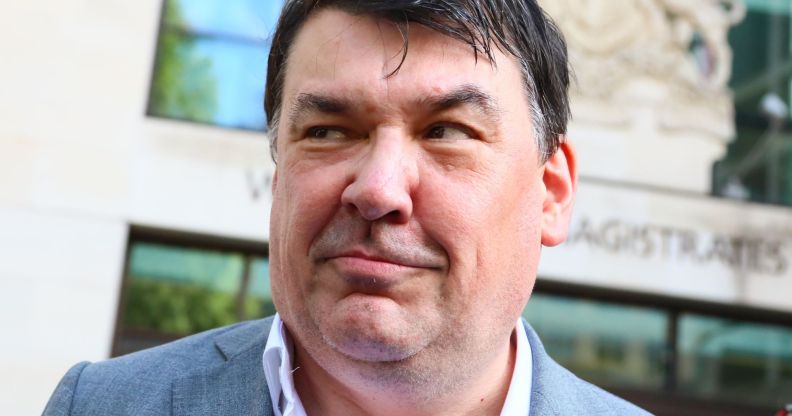
The Met Police have allegedly dropped the bail condition. (Getty)
The Metropolitan Police appear to have dropped a bail condition that prevented Graham Linehan using X/Twitter.
The gender-critical pundit was instructed not to use the social media site after he was arrested by armed police at Heathrow airport on 1 September.
The Met police confirmed that a man in his fifties was questioned on suspicion of “inciting violence” through his social media posts. PinkNews reported that, as part of his bail conditions, Linehan was instructed not to post on X, pending further investigation.
Just days later, the Father Ted co-creator appeared to have violated the condition by thanking a supportive X user in a reply posted at 11.44 pm on Thursday (4 September). Police refused to comment after being asked whether that constituted a violation of the bail conditions.

Under the 1976 Bail Act, the police do not need a warrant to arrest anyone suspected of violating pre-charge bail. Anyone found guilty can be jailed for up to 12 months.
Three days after appearing to violate his bail condition, Linehan claimed in a post that the condition had been removed, following conversations between his lawyers, the Free Speech Union and the Met.
The police refused to comment on when these conversations took place or the reason behind any change in bail conditions. PinkNews has contacted the Free Speech Union to confirm whether it was involved in the discussions.
Met commissioner says police should not be ‘policing toxic culture-war debates’
Claims that the bail condition had been waived came after Met commissioner Sir Mark Rowley commented on Linehan’s arrest, saying officers should not be “policing toxic culture-war debates”.
In a statement on Wednesday (3 September), the man known as the country’s top cop said he had made suggestions to the Home Office on “where the law and policy should be clarified,” claiming there was “ambiguity in terms of intent and harm” in what he described as “lesser cases”.
In a blog post following his arrest, Linehan cited three tweets that officers questioned him about. In one of them he called for trans women who entered a “female-only space” to be punched “in the balls”.
In another, he posted an image of a pro-trans rally, describing it as: “A photo you can smell.” In a follow-up, which he said was the third tweet, he wrote: “I hate them. Misogynists and homophobes. F**k ’em.”

Commenting on the posts, Rowley said the decision to investigate was made “within existing legislation,” adding that he understood “the concern caused by such incidents, given differing perspectives on the balance between free speech and the risks of inciting violence in the real world”.
He went on to say that greater clarity and common sense would enable officers to focus on threats in the real world and limit resources dedicated to tackling online statements.
“If agreed, we could be ready to test new approaches quickly,” Rowley said. “I hope to see this happen without delay so policing’s focus can be squarely on tackling priority issues like street crime and serious violence.”
Since claiming he was allowed to use X again, Linehan has reshared a post accusing Rowley of being “completely captured by woke leftism” and calling for him to be fired.