
LGBTQ+ people more likely to go hungry, report finds
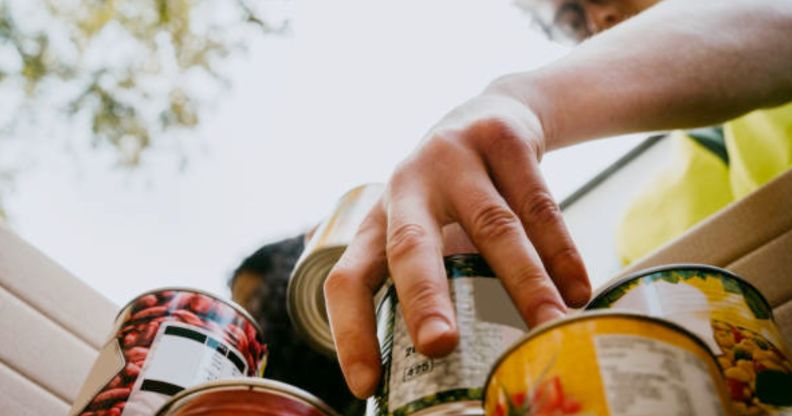
LGBTQ+ people are far more likely to go hungry than non-LGBTQ+ people, an eye-opening report has found. (Getty)
LGBTQ+ people in the UK are far more likely to go hungry, food insecurity data suggests.
Newly published data on hunger in the UK found that a shocking 34 per cent of LGBTQ+ people experienced food insecurity in 2024, while just 16 per cent used charitable food provisions after going hungry.
Comparatively, 15 per cent of non-LGBTQ+ people experienced food insecurity last year, with 6 per cent using food provisions.
At least 14.1 million people faced food insecurity in the UK in 2024, according to the new report from the Trussell Trust, a nonprofit aiming to combat food inequality.
The statistic marks a sharp rise in food inequality compared to previous years, with 11.6 million people reportedly going hungry in 2022.

Food inequality, the charity notes, is far more likely to affect LGBTQ+ people. It found that, of the people referred to food banks in 2024, 8 per cent were LGBTQ+.
Queer women were even more likely to be affected by food inequality, with 34 per cent of LGBTQ+ women experiencing food insecurity compared to 17 per cent of LGBTQ+ men.
The Trussell Trust noted that the data resonates with existing research that suggests the LGBTQ+ community are more likely to be impacted by societal or systemic barriers, such as mental health support or unemployment.
Helen Barnard, director of policy, research and impact at Trussell, called on the government to ensure that all groups in society don’t go hungry by supporting provisions such as food banks.
“Hunger and hardship are increasingly seen as a normal part of every day life in the UK,” she said. This is not an inevitable trend, but the result of systems that urgently need updating.
“It isn’t right that millions of people from all walks of life – including pensioners, disabled people, working families, and carers – are struggling to make ends meet. Nobody in the UK should face hunger.”
Research also found that three in ten people referred to food banks are from working-class households, while more than one in four children live in households that are food insecure.
A survey conducted by Ipsos found that, among the 3.8 million children living in food-insecure housing, the majority are under the age of five.
Alarmingly, the report also noted that having paid work isn’t enough to combat hunger anymore, with 30 per cent of people referred to food banks coming from homes where someone is in work.
A survey of people using food banks found that 17 per cent of all UK households are left with an average of just £104 a week after housing costs to cover all living expenses, including food, utilities, travel for work or school, and toiletries.