
‘I went to a Pride march above the Arctic Circle – it changed my perspective on what Pride means’

Senja Pride has taken place in Senja, Norway, since 2023. (Vetle Agledahl/visitnorway.com)
Timing is everything on Senja, Norway’s second largest – but still relatively untouched – island.
Come in winter, and the only light you’ll see is that which reflects off the blankets of snow covering every surface, or the Northern Lights, which are then at their most vibrant. Arrive during the island’s summertime (basically, just July), and you won’t find consistent Mediterranean heat, but you’ll still get beach lounging: Ersforden beach, lined by cloud-scraping mountains, is one the island’s hotspots.
Or, come in late August like me, and you might just stumble upon the local Pride march, one of the world’s only Pride events to take place above the Arctic Circle. If you’re used to Pride in London or Brighton Pride, Senja Pride will come as a culture shock. There’s no Mariah Carey performance or gaggle of corporate sponsors, but there is a sweet community spirit, and a heartwarming reminder of why Pride is needed everywhere, but more crucially in small, rural areas.
“There has not always been acceptance for queer people,” Beate Moeggen, the organiser of Senja Pride, tells me. She’s spent the past few days butting heads with a small group of angry locals on social media, who are incensed that the group has been awarded 38,000 NOK – less than £3,0000 – by the municipality. Senja Pride started in 2023, yet pushback remains. “It’s getting better. That’s one of the reasons why we have Senja Pride: to make it better.”
One of the first Pride events above the Arctic Circle, Barents Pride, took place in 2017 in Kirkenes, along the Norwegian-Russian border. The ground-breaking event, which featured Russian LGBTQ+ activists, was in defiance of Russia’s 2013 anti-LGBTQ+ propaganda law which still prohibits promotion of “non-traditional sexual relations”.
Norway is typically seen as one of the world’s most LGBTQ-friendly countries but, like in much of Europe, its right-wing parties are increasingly popular, as evidenced by the country’s recent election, and opposition to Pride flags in child-friendly settings is getting louder.
It’s the afternoon by the time I get to chat with 52-year-old Moeggen, who has spent the drizzly Saturday morning hitching up gazebos under which Pride flags and badges will be sold to locals, and herding rainbow-clad volunteers about Finnsnes town square, which can’t be bigger than a school hall.
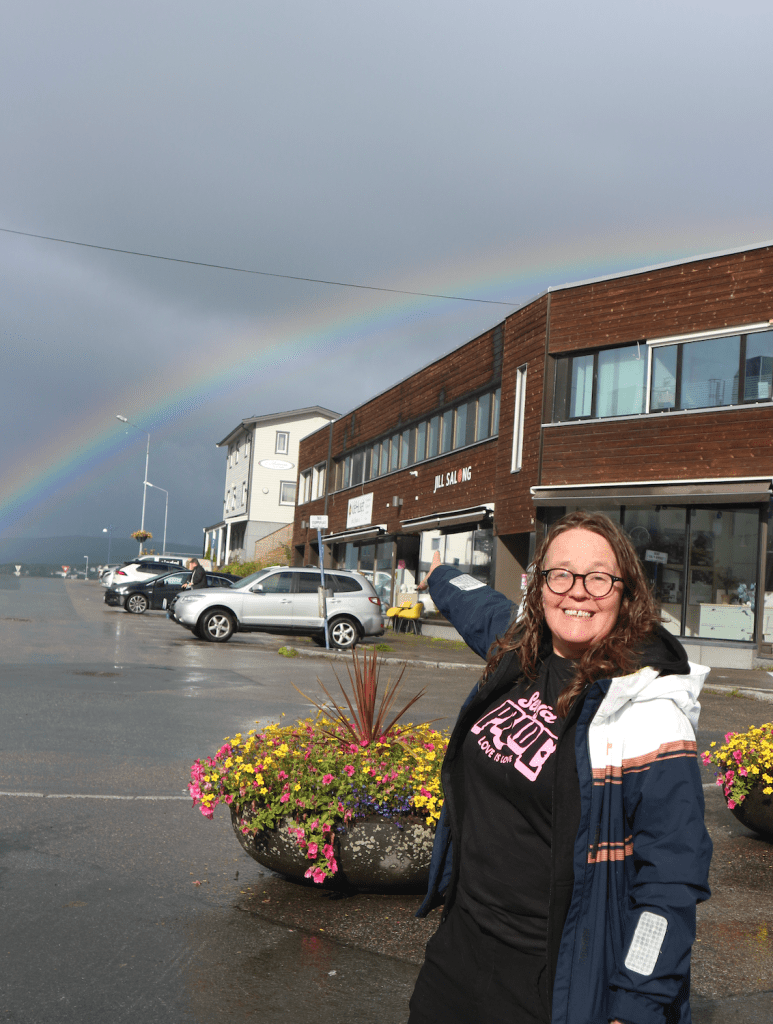
The set-up for the day is simple. Norway’s major political parties from across the spectrum are handing out cakes and pens, there’s a sodden stage on which Senja’s mayor will later make a speech, and a swift but mighty march through Finnsnes. The rain comes, but soon passes, giving way to the world’s most conveniently timed rainbow.
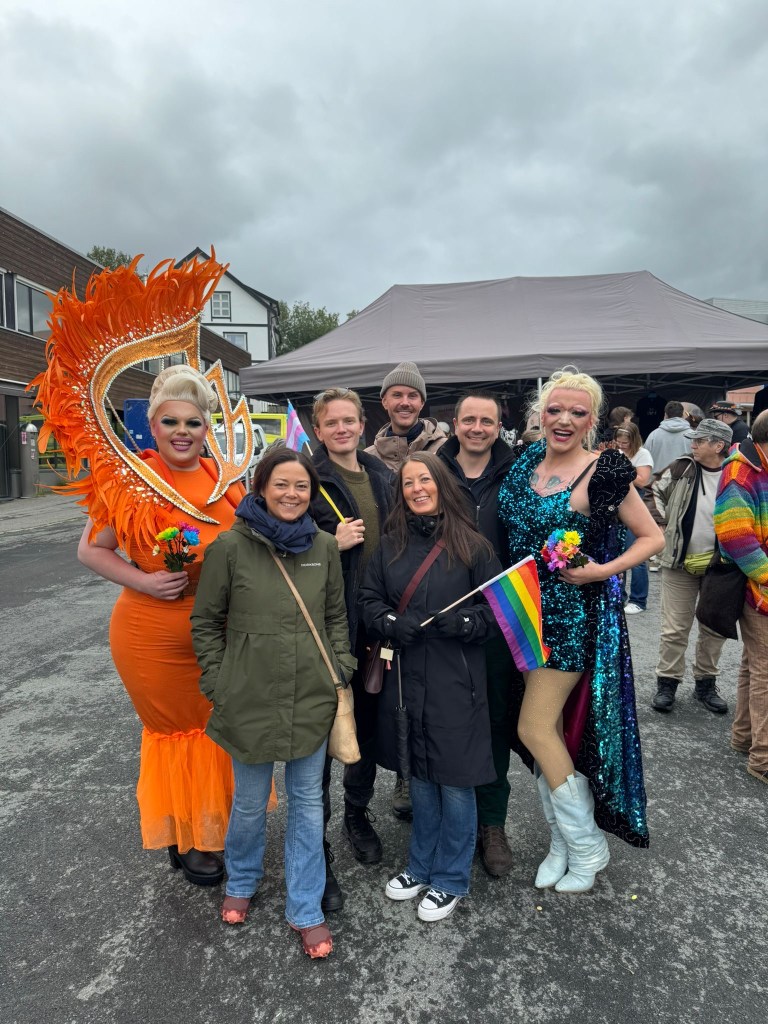
About 150 people have shown up, some carrying banners demanding better healthcare for trans people, others wearing rainbow suits and socks. Some marchers have travelled from across Norway; one flew from Germany. Two drag queens lead the parade, brandishing umbrellas above their bejewelled shoulder pieces. One marcher pushes a speaker in a wheelbarrow to blast out gay anthems. Dozens of slightly awe-struck residents line the streets. Being visibly, proudly queer in Senja doesn’t feel risky, but it does feel precious.
Here, the day after Pride isn’t for lazing about hungover on sofas, buried under takeaway wrappers. “We are actually able to raise the rainbow flag outside the church,” Moeggen beams. There will be a nearby church service, as there has been since 2023, led by three priests. Last year, “it was so moving that actually everyone cried,” Moeggen says proudly. Other community events over the long weekend include stand-up, drag bingo, and a family-friendly bowling session.



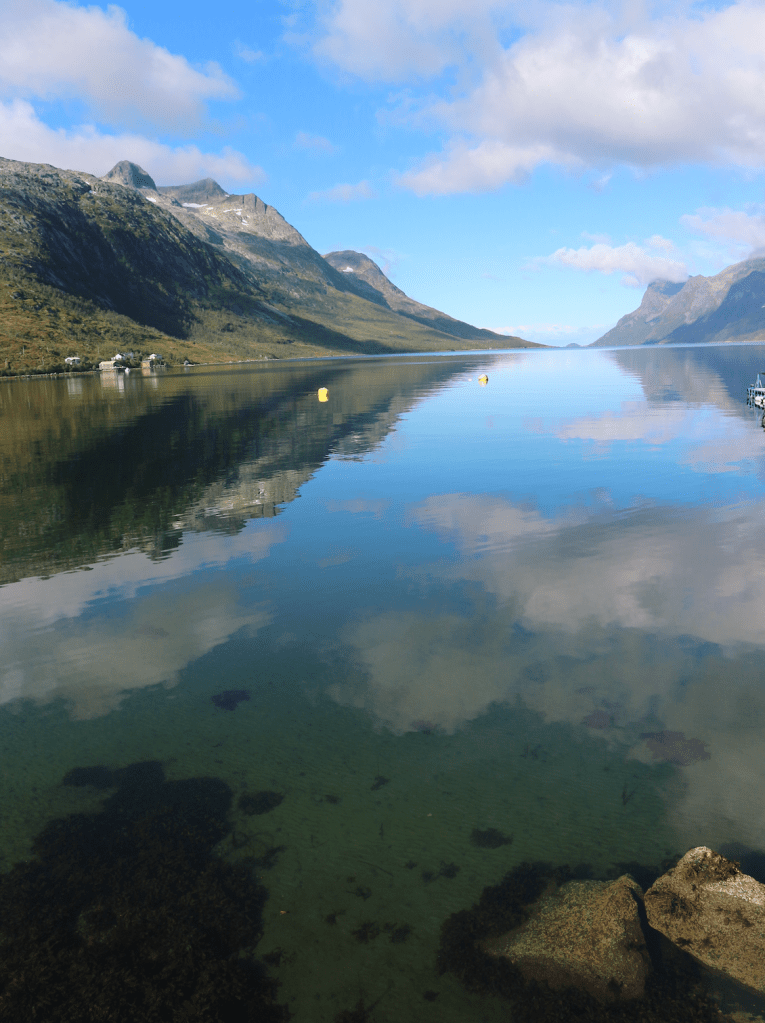
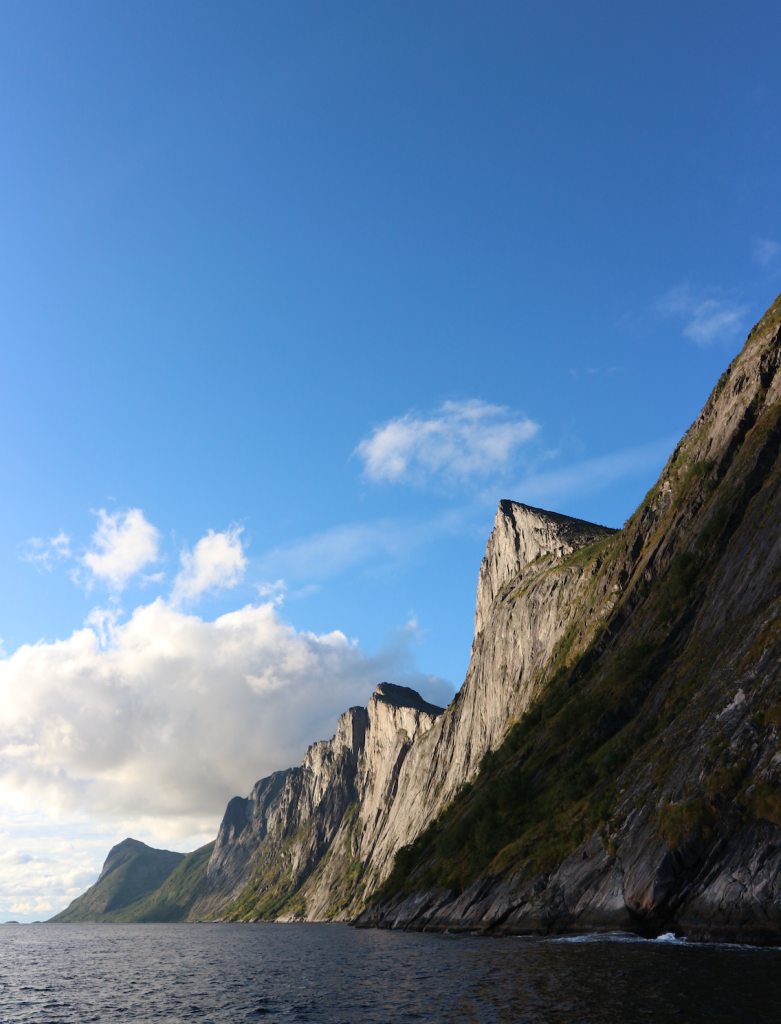
The very best things to do in Senja, though, are all organised by the land. The day before Senja Pride, I careered along the island’s government-officiated scenic route. I passed fjords so smooth they looked like sheets of glass, and mountains, including the famous Okshornan and Segla mountains with snow still in their dimples, so imposing I was left slack-jawed. My eyes buzzed as I scanned the greenery for reindeer (I finally spotted one en route back to Tromsø Airport), the fjords for orcas (winter is the best time for whale-watching), and the mountaintops for Senja’s legendary trolls (no such luck).
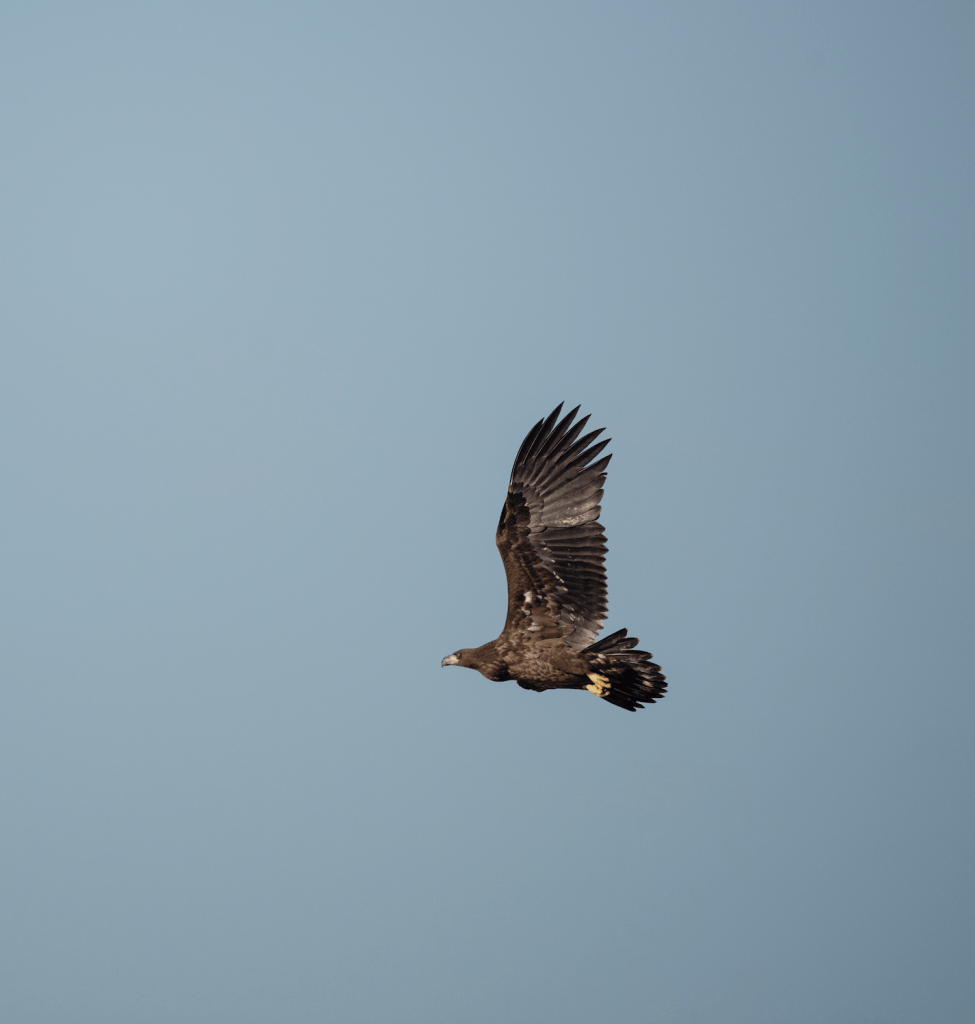
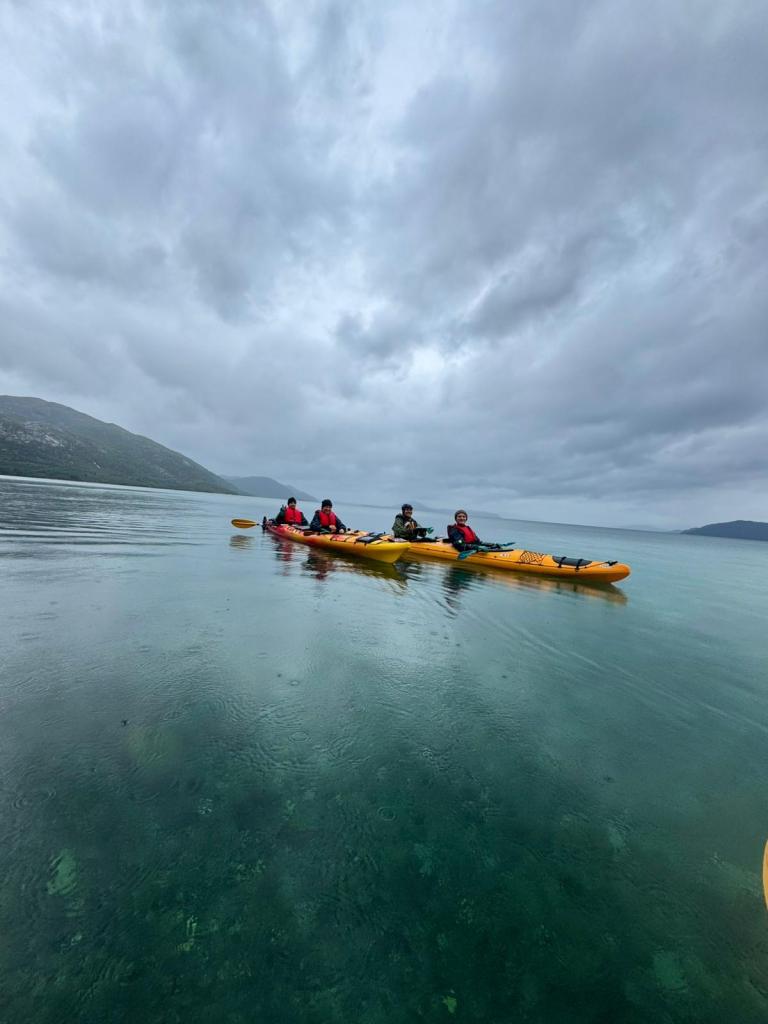
The standout moment in my highlights reel was kayaking out in the Norwegian Sea from the tiny village of Stonglandseidet, spotting springing jellyfish trailing our boat and an eagle pirouetting between islets. “This is Norway! This is how it should be,” Rune, my instructor, yelled as the animals swept around us. It’s the closest I’ve felt to earth in its rawest form, everything around me all jagged, wet and sprouting.
For a long time, Senja was fairly untouched, but it hasn’t escaped the post-pandemic, TikTok-induced tourist obsession with the ‘hidden gem’. Since 2020, tourism has hit an all-time high each year; it’s now its fifth largest industry (unsurprisingly, fishing is its first).
For an island of roughly 7,000 inhabitants – plus 15,000 or so in the Senja Municipality – the influx of more than 120,000 mountain-ascending adventurers in 2024 was a strain, albeit a welcome one. In some areas, locals think tourism has increased too much; in others, it’s invited with open arms, so long as the municipality’s infrastructure catches up. For now, restaurants and hotels are few, but that is very slowly changing.
Besides, you don’t come to Senja necessarily for the food and hotels, even though the Norwegian waffles and Senja Handbryggeri beers I guzzled were divine. You come for friluftsliv, a Norwegian concept which essentially means ‘free-air life’ and a profound connection with nature. You head to Senja for the proper outdoors, come sun, snow, or, if it’s Pride time, rainbow.
How to get here
Flight from London Gatwick to Tromsø via Oslo (fly direct in winter season). Approx. two and a half hours by car from Tromsø to Senja.
Where to stay
Storm Hotel Senja, Husøy.
Mefjord Brygge, Mefjordvær.
Finsnes Gaard, Finnsnes.
What to eat and drink
Bryggejentene, Ersfjord.
Mefjord Brygge, Mefjordvær.
Storm Hotel Senja, Husøy.
Skreien Spiseri, Finnsnes.
Tiger Sushi, Finnsnes.
What to do
Drive along the Norwegian Scenic Route.
Kayaking with Natural North.
Art at Studio Dampskipskaia Fjordgård.
Beer tasting at brewery, Senja Håndbryggeri.
More information
Share your thoughts! Let us know in the comments below, and remember to keep the conversation respectful.