
Teachers in Scotland say trans pupils are ‘limiting food and drink’ to avoid school toilets
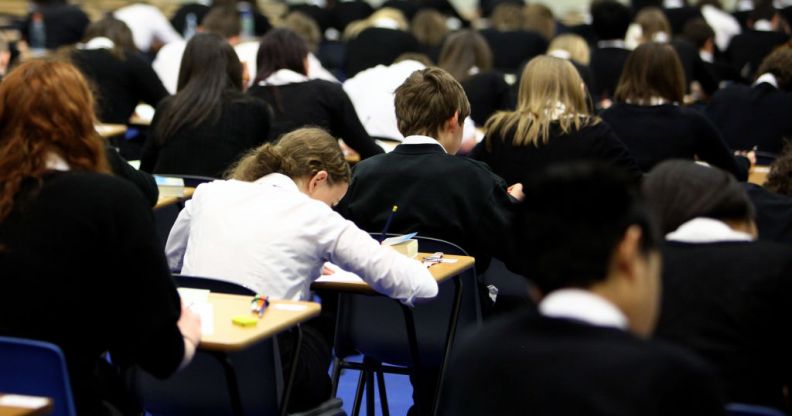
Scotland’s teaching union has criticised Holyrood’s new guidance (Getty)
Teachers in Scotland have reported that transgender pupils are limiting the amount of food and drink they consume to avoid going to the toilet, where they risk being outed.
The Educational Institute of Scotland (EIS), which represents more than 80 per cent of Scotland’s teaching staff, said on Wednesday (1 October) whilst it welcomed the Scottish government’s revised guidance for supporting trans pupils, it does not believe it protects their rights
The union stated the guidance “falls short of providing clarity and reassurance that the rights of transgender and non-binary pupils will be preserved in the current legal context, and how schools and teachers can continue to balance competing statutory obligations”.
In the new guidance issued by Holyrood, published on Monday (29 September), called for all schools in the devolved nation to have separate facilities, including toilets and changing rooms, for boys and girls which are “on the basis of biological sex”.
In the guidance, “biological sex” is “used to mean sex recorded at birth”.
Cabinet secretary for education and skills Jenny Gilruth said the update was to bring Scotland’s trans guidance for schools in-line with the UK Supreme Court ruling made in April – which decided the legal definitions of “sex” and “woman” in the 2010 Equality Act refer to “biological sex” and “biological women” only – as well as the subsequent interim single-sex spaces guidance published Equality and Human Rights Commission (EHRC).
“The Scottish Government respects the rights of everybody. I want every pupil to be able to reach their potential and every pupil deserves our support to do that. Our guidance means that all of their individual needs will be respected,” Gilruth said.
“In addition, the guidance makes clear that councils should give careful consideration to the individual needs of transgender pupils in light of the school context and school community.”

In response to the new guidance, general secretary of the EIS, Andrea Bradley, said: “The Scottish Government’s revisions to their guidance on Supporting Transgender Pupils in Schools provide a welcome acknowledgement that inclusion and wellbeing remain a priority in principle.
“It stresses the right of all young people to experience privacy, safety, dignity and respect and is clear that education authorities and schools should consider the needs of transgender pupils and consult with them and their families to plan any changes – including seeking legal advice where there are any proposed changes to existing arrangements for individual learners.
“It is vital that education authorities also involve trade unions in discussions of any updates to policies, in particular drawing on the skills of trained Equality Representatives.”
“Transgender learners are limiting their food and liquid intake”
Bradley went on to say following the end of the summer holidays the EIS received several reports of the “significant detrimental impact of policy changes”.
“In schools where changes to access arrangements for toilets had been mooted, the EIS heard of transgender learners limiting their food and liquid intake so as to not risk having to use the facilities at school and thereby risk being ‘outed’,” Bradley said.
The EIS noted whilst the updated guidance provides some suggestions to mitigate against the risk of ‘outing’, the union remains concerned these interventions can create a “state of exceptionalism for transgender students, potentially resulting in isolation and a differential educational experience from their peers”.
“Unfortunately, the guidance falls short of providing the clarity schools, teachers, parents and young people so urgently need,” Bradley said.
“Decisions will be left up to individual local authorities and schools while the guidance fails to address how significant concerns about the health, safety and wellbeing of transgender pupils will be addressed if pupils cannot use facilities in accordance with their gender identity.”
Trans people avoiding food and drink so they do not have to use the toilet and risk being outed, questioned or threatened with physical violence are nothing new.
Back in 2017 a survey by National Center for Transgender Equality of 1,500 trans people found that one in three took such measures.