
‘I’m sure non-binary people existed in Victorian England’: Rob Madge on queering a stage classic
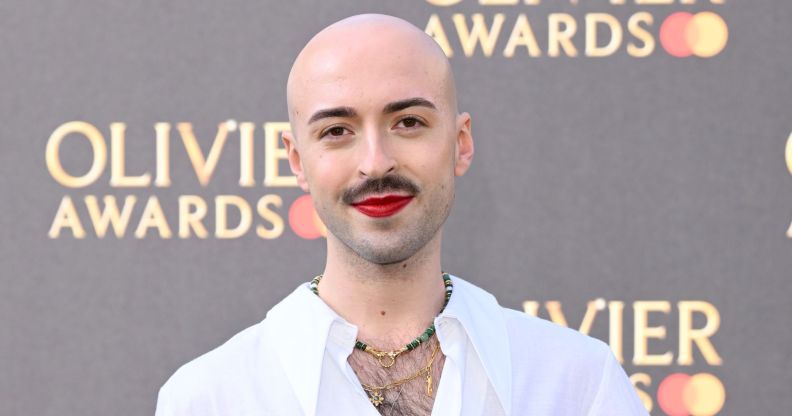
Rob Madge is adding a ‘fresh’ queer twist to historical farce ‘Charley’s Aunt’. (Getty)
“Why can’t boys that go to Oxford in 1890 talk about potentially getting the ick?” asks Rob Madge, face and voice twinkling with mischief.
As far as Madge is concerned, they absolutely can. The Coventry-born musical theatre actor and writer has brashly and boldly brought Charley’s Aunt, Brandon Thomas’s fabulously absurd 1892 farce play, hooting and hollering so far into the modern age that the addition of a little 2025 patter is child’s play.
We’re meeting to talk about their adaptation, on stage at the Watermill Theatre in Newbury, in the regal setting of a games room in a London townhouse. Madge and the show’s director Sophie Drake, who has worked with Ian McKellan and Imelda Staunton, are placed on chairs in the room’s centre, like a two-person X Factor panel. The townhouse is Georgian, but all chat today is strictly Victorian.
As far as farce goes, Charley’s Aunt is as gargantuan as they come. It proved so immensely popular following its 1892 stage debut that it transferred the following year to The Globe, shattering the global record at the time for the longest-running play, racking up almost 1,500 performances. Numerous film, radio and multilingual stage adaptations have come since, proving its sticking power.

In 2025 though, a question lingers over its very Victorian plot. To boil it down significantly: Oxford students Jack and Charley invite their potential sweethearts Kitty and Amy over to declare their love for them, as Charley’s affluent and unacquainted aunt Donna Lucia is coming to visit too, and can act as their lady chaperone (young girls of the era required one). Jack’s father, suddenly financially rinsed, plans to marry Donna Lucia for the cash; so too does Amy’s uncle Spettigue. When Donna Lucia is delayed, Jack and Charley beg male pal Babbs to pretend to be her. Thus, the comedy begins: a man pretending to be a woman! Men deceiving women! Oh, the fraudulence and confusion!
Watermill Theatre was keen on reviving the play, but Drake wasn’t entirely sure whether its premise would sit right in 2025. “One of the main things actually that came up was: how do we make this central concept funny now? And that [felt] like a sticking point for me,” she says. Drake, a fan of the “extremely funny” Madge and particularly their Olivier-nominated biographical comedy play My Son’s a Queer, thought of them “immediately” as the right person to give it a “fresh twist”.
Rob Madge’s version remains set in the Victorian age, with “all of the joy of the original,” they say. The farcical tropes and biting wit are all still, but Madge “wanted to see whether actually, the thing that might frighten people from doing this play again, we could actually really embrace,” they explain. “Rather than it being, ‘a person dresses as a woman and is scared by it’ – rather than that being the point of the comedy, which it used to be – [it’s] now ‘a person dresses as a woman and really kind of looooves it and there’s something quite exciting and scaaaandalous about it,” Madge says, underscoring each word with playful melodrama. That’s scandalous in the supremely camp sense, then.
In this adaptation, Babbs is played by non-binary Fangirls actor Max Gill. “What if there were a, for want of a better term, non-binary person in Victorian England, and [they] didn’t care what people thought?” I’m sure those people existed, we’re not new or trendy,” says Madge, who also identifies as non-binary.
There are other ways Charley’s Aunt is being shunted into the 21st century, with “the odd pop banger here and there” and the play’s women having “a hell of a lot more agency than they did,” says Madge. “They were sort of props for the blokes to be funny. We actually thought: wouldn’t it be interesting if it was the girls who were leading with this crazy idea before they were sort of pawns in the boys’ chess game, and now the boys sort of inadvertently become pawns in the women’s chess game.” As in the original though, it’s confusion galore: everyone, really, is being played.
“The Victorian era had such punishing rules and restrictions around gender,” says Drake. “Coming at it from a 2025 lens it’s been interesting firstly to see how far we’ve come but also how far we can go.” Madge’s adaptation uses the absurdity of those gender confines – women requiring a chaperon, et cetera – to fuel the funny. “That adds a layer of comedy because they truly believed in these rules,” Madge adds. “They’re so strict and they’re so harsh, but as an audience watching that now, we find that ridiculous. It heightens the comedy.”
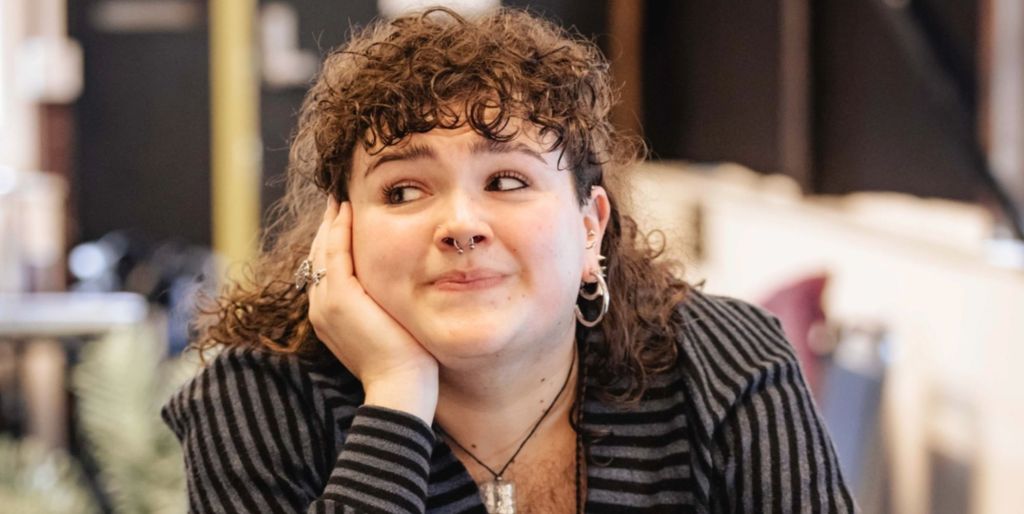
It’s also a Trojan Horse of sorts, pressing the audience to consider the possibility that perhaps the policing of gender today is equally as asinine and archaic as those 1890 confines. “In 100 years time, there’ll probably be a play exposing how ridiculous those laws were,” Madge predicts. Drake interjects with a laugh: “Someone will adapt your adaptation!”
This duo accept that there are theatre buffs who are inveterate in their purist beliefs about altering work as renowned as Charley’s Aunt. But Madge, who in person is just like their writing – funny, sharp and briskly efficient – counters the argument with ease. “I think people are fearful point blank period these days,” they say, adding that such uproar has excelled to “to the point where you’re even scared of Disney remaking an animated classic. People get really angry that Snow White is being remade. It doesn’t delete the 1937 Snow White from Disney+. That remains. We’re simply offering another one. More Charley’s Aunt for everybody!”
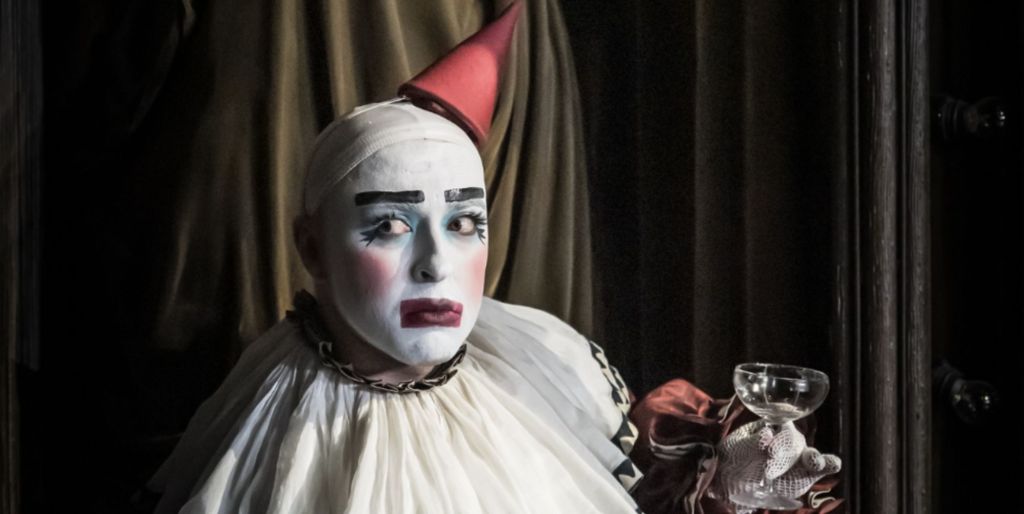
Sprucing up old texts can welcome new and underserved audiences, and provides historical context for today’s world. In their acting capacity – Madge first appeared on the West End aged nine – they most recently starred as Emcee in the immersive West End revival of Cabaret, a show about the insidious rise of Nazism in the 1930s. Performing it felt more “urgent” given ballooning fascism in the US and political polarisation elsewhere, and Madge felt they had “a job to do, to hold up a mirror and remind people that we can’t replicate these atrocities, because we’re at that turning point now.”
When they saw the show earlier this year, before taking over as Emcee, Madge sat through it sobbing. “It was a totally different visceral response, because I wasn’t thinking ‘gosh wasn’t that awful,’ I was thinking, ‘isn’t this frightening?’” Madge could feel that energy “ripple through the audience” while they performed it, too.
Such is the impact of good theatre on people, whether it addresses terrifying authoritarianism or the euphoria of putting on a dress. “You make them feel safe, you make them feel welcome, you make them feel comfortable, and then you flip it on its head slightly,” Madge says. “There’s no preaching, there’s no battering people over the head with a hammer, standing on a pedestal. But that’s what good theatre can do.”
Charley’s Aunt is at Watermill Theatre until 15 November.
Share your thoughts! Let us know in the comments below, and remember to keep the conversation respectful.