
US Supreme Court indicates it could rule against conversion therapy bans

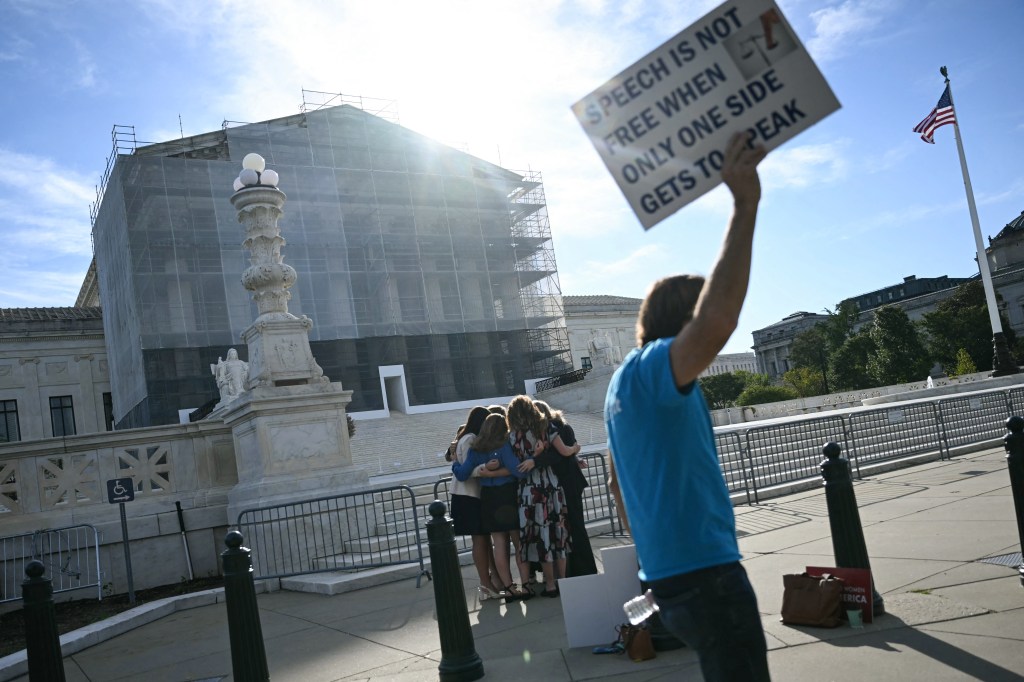
Demonstrators protest against conversion therapy outside the US Supreme Court as the Court hears oral arguments in Chiles v. Salazar – a landmark case on conversion therapy. (ANDREW CABALLERO-REYNOLDS/AFP via Getty Images)
The Conservative-led US Supreme Court looks set to rule against Colorado’s conversion therapy ban.
Colorado’s 2019 law states that therapists licensed by the state are not allowed to “eliminate or reduce” same-sex attraction or change a person’s “behaviours or gender expression,” with each violation punishable by a fine of up to $5,000 and potential loss of license. The law adds that therapists may provide “acceptance, support, and understanding.”
The case of Chiles vs Salazar will determine the legality of state and federal laws that bar medical professionals from subjecting people under the age of 18 to practices that can supposedly change their sexuality or gender identity.
The case was brought to the Supreme Court in March after Christian mental-health counsellor Kaley Chiles, who is backed by president Donald Trump’s administration in the dispute and represented by the Alliance Defending Freedom, sued the state of Colorado over the protective law, claiming it violated her right to free speech. Chiles has said she “believes that people flourish when they live consistently with God’s design, including their biological sex”.
On Tuesday (7 October), the US Supreme Court, where conservative justices hold a 6-3 majority, appeared ready to rule against Colorado’s protective law.
As reported by Reuters, conservative justices signalled sympathy toward Chiles, but liberal justices stood their ground in arguing that Colorado has a duty to ban a healthcare practice it considers “unsafe” and “ineffective”.
Colorado solicitor general Shannon Stevenson, who highlighted that the practice has “no record of success”, told justices that the law regulates conduct, not speech, arguing that the power to regulate safety in healthcare should not be changed “just because they are using words”.
Conservative chief justice John Roberts hit back, stating: “Just because they’re engaged in conduct doesn’t mean that their words aren’t protected.”
Conservative justice Samuel Alito also seemed to side with Chiles’ claim, telling Stevenson: “It seems to me your statute dictates opposite results in those two situations. Looks like blatant viewpoint discrimination.”
James Campbell, a lawyer for Chiles, told the justices that the law prohibits counsellors like Chiles from “helping minors pursue state-disfavored goals on issues of gender and sexuality.”
“This law prophylactically bans voluntary conversations, censoring widely held views on debated moral, religious and scientific questions,” Campbell added.
Conversion practices can involve traumatic behaviour modification and aversion therapy rooted in the outdated belief that LGBTQ+ people can be “cured”. Those subjected to them often develop mental-health issues such as depression, anxiety and suicidal ideation.
The Supreme Court’s ruling is expected by the end of June 2026.
Share your thoughts! Let us know in the comments below, and remember to keep the conversation respectful.