Cait Jacobs on the power of BookTok and queer rep in fantasy books
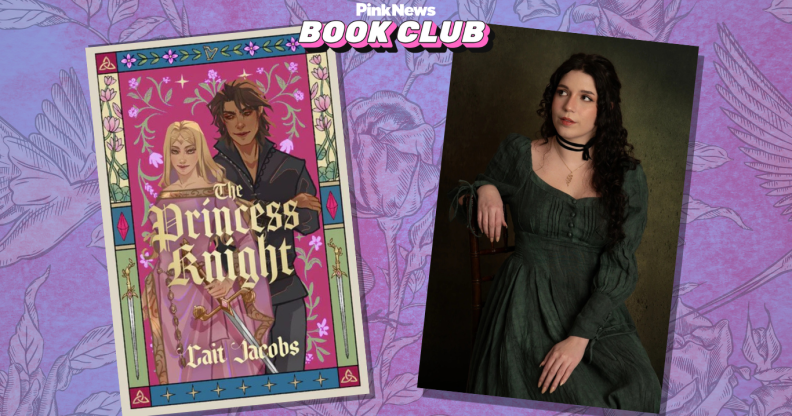
Cait Jacobs is one of the founders of BookTok and their debut novel is now available. (Credit: Harper Collins/ Cait Jacobs/ Canva)
Cait Jacobs is one of the founders of BookTok, which has now taken the world by storm. People sharing their love of books on TikTok has created a worldwide community and shaken up the publishing world. It has also created a space where marginalised communities can find authentic representation and stories that inspire them.
Cait Jacobs started talking about books on TikTok in 2019 and now has over 310,000 followers. In that time, they have seen the power of the BookTok movement and how it has grown, with a new brand of influencers proving that reading is cool. The impact has been undeniable, with people rediscovering, or discovering for the first time, their love of books, the rise of book subscriptions, and many BookTok authors being picked up by traditional publishers.
We spoke to Cait about their journey, the future of BookTok and their incredible debut YA novel, The Princess Knight.
BookTok is obviously huge right now, and you’ve been part of it since the beginning. How does it feel to see the way it has evolved over the years?
It has been fascinating to see the different books that get promoted, and all of these amazing creators start to get their moment to shine. It has been one of the highlights of my life to see this community become something so incredible.
I’ve made lifelong friends because of BookTok. There are people whom I adore so much, and I talk to every day. We’ve been friends for now five years, and it’s solely because of this one little community on the platform. It’s truly life-changing.
Why do you think it is that so many people have become attracted to BookTok and have now started taking part in it?
There are a few different reasons why it became what it is now. Partially, the TikTok algorithm is unique in the sense that there’s like a joke that TikTok knows you better than you know yourself sometimes. People will joke that TikTok knows you’re queer before you know you’re queer. I think that happened in the reader space as well.
People who may not be readers or may have read a little bit when they were younger but aren’t really that big into it, the TikTok algorithm can kind of show them bookish content and will slowly get them into BookTok without them realising. It’s also getting a lot of non-readers into the community in comparison to other platforms. It’s bringing in a lot of just that newfound excitement and joy. That really helps with community building because all these people want to make friends.
What do you think authors and publishers can learn from the rise of BookTok?
There is a lot to learn about the powers of online social media marketing, and also the fact that there are readers for your book, no matter what your book is, no matter who or what you’re writing about. A lot of times, authors will feel like maybe their book is too queer or – my book deals with disability representation – you can also worry about it being too disabled or something like that. This kind of impostor syndrome a lot of people with marginalised identities can deal with in a world that constantly brushes them aside.
I feel like communities like BookTok can show authors and publishers that there’s no such thing as that. That doesn’t exist. There will be readers who will want to read it no matter what. I think that is something that a lot of people can keep in mind, especially because authors always know what we want to write. We would love to tell these stories, but we’re more worried that publishing won’t accept them. But I think now that we know that there are readers for it, it can make us feel a little bit braver to fight for it.
What do you think the future of BookTok is?
It can go in many different directions. I’m based in the US, and the future of TikTok in general is a little questionable. I think a lot of us are on edge about what’s going to happen with it, and specifically how that will affect marginalised creators and people who like to discuss anything that may not be well-received by certain people in power.
I feel like BookTok talk can continue to grow and be something incredible, but it’s going to be something we’re going to have to wait and see, specifically in regards to the US, how that’s going to affect it. In other areas and other regions without those worries as much, I see a really bright future for BookTok. I see that it can continue, and hopefully it will continue to uplift voices that haven’t been as heard before.
Do you think that trope culture on book top BookTok is having an influence on authors and publishers at the moment?
This is something that I have very mixed feelings on because I think it could be kind of naive to say that it’s not having an impact. However, I do think when I’ve talked with a lot of authors, we all write the stories we want to write, whether or not there are certain tropes in them. What happens for a lot of us that’s not really a factor [in writing], but it is a factor in how it gets marketed, and then it becomes a factor in reader expectations. That is where things can get a little bit rough.
There is a desire from the algorithm [as it] favours the tropification of books. If you try to have a nuanced discussion around a book or if you try to get into the details of your book when you’re talking about it online, the video is not going to do well. But if you say it’s a friends-to-lovers, then it’ll get received better. So the algorithms are kind of forcing you into that. And I can definitely see how that could also affect reader expectations because not every book is going to perfectly match a trope.
I know a lot of people can worry from the reader perspective that authors are just checking off trope boxes. That’s not what [authors are] worried about. We’re writing what we want to write, and then later, when it comes time to market, we’ll worry about how we’re going to do that.
Your debut novel has now been published. How has BookTok changed for you as a result?
It has been a very strange transition. I have always wanted to publish a book, and I actually wrote this book before I ever got on BookTok. I wrote it in 2018, so I always knew that I wanted to pursue publishing. I didn’t believe it would actually happen. It’s been in the back of my mind, which I think helped make that transition a little bit easier from being a primarily reader account to an author account.
For me, in doing that, though, I always wanted to make sure that authenticity was still at the core of my account and that the things that I’ve always cared about and the stuff that brings me joy when it comes to making content were still there. I still love talking about my favourite books, and I always will. I still love making whatever random videos come up in my brain, no matter how tired and half asleep I am. So I’ll always still do that.
Your book The Princess Knight includes a lot of different representation. How important was that to you while you were writing?
That was crucial to me as a queer and disabled person. I really wanted to make sure that was something that would be seen in my book as well. I wanted to have characters who have either gone through what I’ve gone through or something similar. I wanted to have characters that, if someone was going through any of the things I’ve been going through, they could maybe see themselves in that. So, even from the initial first draft of this book, it’s been something crucial to me.
When it came to the queer representation, I wanted it to just be there. I wanted it to be something casual, something that exists. In the book, both protagonists are bisexual, and it is something that is mentioned. Their interests in people of different genders and of the same gender were important to me just to have that be there casually and not [be] a big deal. I feel like with the world we’re living in, I desperately needed an escape. I wanted to write that escape into this, I want to say ideal world, but there are a lot of other problems in this world. So, in that sense, ideal.
What tips do you have for anyone who is writing a book or thinking about writing a book with LGBTQ+ representation?
I think the key part is to write authentically from your own experience. That should always be at the forefront. I know that there can be a lot of stressors about writing the perfect representation of something, and I think it’s really important to do due diligence and make sure something isn’t harmful. But I also think it’s important to make sure it’s authentic. So long as you are writing from your true experience, that’s what matters most.
We can have messy queer stories, and we can have perfect and polished queer stories. You don’t have to worry too much about fitting into one or the other.
How important do you think telling queer stories is right now?
It’s so important, now more than ever, to tell queer stories. We’re at a time where it is very scary and dangerous and very hard in general. It feels like we’re being hit from all sides. I’ve personally struggled with dealing with it right now, just with it affecting my mental health, and also worrying about so many people I love. It’s very unnerving, and I think that’s why it’s so important to tell these stories.
We deserve to exist, we deserve to be heard. If we stop writing queer stories, that just means they win. And that’s the kind of mentality that fuels me. It is so important that we continue to write those stories and offer that representation for the people who need it, no matter how horrifying the world can be.
What would you say to people who want to start their own BookTok but might not feel confident enough to do so?
I’m a very anxious person. I have severe anxiety. If I started my BookTok knowing what it would become now, I never would have done it. I would have been too scared.
I think the most important thing when it comes to creating content is just to make the content. Don’t worry about anyone seeing it. Chances are, your first several videos will probably not be seen by anyone, and that’s good. That’s a chance to just have fun with it.
Make the content you want to make, and eventually you can build a community and get that audience. Just focus on the fun part of making the content, the things that you enjoy. Focus on sharing those books you love and the stories that made a difference to you, and making friends in the community. I wouldn’t worry too much about being perceived. I wouldn’t worry too much about being perfectly polished. That’s not what’s important. The important part is that you’re having fun with your content and just go out there and make it, no matter what.
And finally, what are you reading right now?
I’m actually in between books. I just finished This Raging Sea by De Elizabeth. It’s an incredible dark fantasy [with] Haunting of Hill House vibes. It absolutely devastated me. It’s also another 2025 debut, and [has] found family in it. And it’s also just unapologetically queer. I absolutely adored it.
The book I’m about to start is An Ocean Apart by Jill Tew. It’s a YA dystopian, and I have been so excited for it. I know it’s going to be amazing.
The Princess Knight is available to buy now.