
Met Police to stop investigating non-crime hate incidents after Graham Linehan case

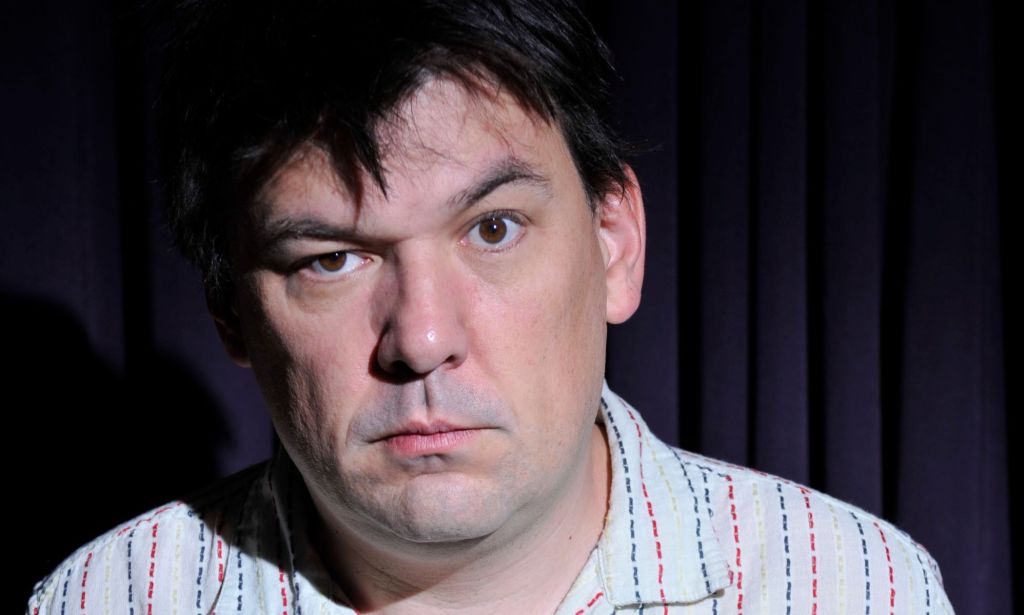
Graham Linehan. (Getty)
London’s Metropolitan Police will no longer investigate non-crime hate incidents (NCHIs) after comedy-writer Graham Linehan was informed no further action would be taken following his arrest regarding social media posts.
The gender-critical pundit and Father Ted creator was arrested at Heathrow Airport on 1 September, after arriving on a flight from the US, on suspicion of “inciting violence” in “three tweets”.
At the time, the Met confirmed a man in his fifties had been arrested and released on bail “pending further investigation”.
On his Substack, following the arrest, Linehan shared screenshots of the posts. In one, he wrote that trans women should be punched “in the balls” if they entered a “female-only space”. In a second, from April, he responded to a photograph of a trans rally by writing: “A photo you can smell.” In a follow-up, he added: “I hate them. Misogynists and homophobes. F**k ’em.”
Linehan claimed that, as part of his bail conditions, he was instructed not to use X. However, he appeared to violate this just days later and he later posted that the condition had been removed following conversations between his lawyers, the Free Speech Union and the Met.
News of the arrest drew criticism from politicians, free-speech advocates and fellow gender-critical campaigners, who claimed anti-trans voices were being silenced.
The police have informed my lawyers that I face no further action in respect of the arrest at Heathrow in September. After a successful hearing to get my bail conditions lifted (one which the police officer in charge of the case didn't even bother to attend) the Crown…
— Graham Linehan (@Glinner) October 20, 2025
Taking to X on Monday (20 October), Linehan wrote: “The police have informed my lawyers that I face no further action in respect of the arrest at Heathrow. After a successful hearing to get my bail conditions lifted (one which the police officer in charge of the case didn’t even bother to attend), the Crown Prosecution Service has dropped the case.
“With the aid of the Free Speech Union, I still aim to hold the police accountable for what is only the latest attempt to silence and suppress gender-critical voices on behalf of dangerous and disturbed men.”
A police spokesperson said: “We understand the concern around this case. The [Met] commissioner has been clear he doesn’t believe officers should be policing toxic culture-war debates, with current laws and rules on inciting violence online leaving them in an impossible position.
“As a result, the Met will no longer investigate non-crime hate incidents. We believe this will provide clearer direction for officers, reduce ambiguity and enable them to focus on matters that meet the threshold for criminal investigations.
“These incidents will still be recorded and used as valuable pieces of intelligence to establish potential patterns of behaviour or criminality. We will continue to investigate and arrest those who commit hate crimes… focusing our resources on criminality and public protection.”
NCHIs refer to an “incident or alleged incident” that “involves or is alleged to involve” an act by a person which is perceived by another to be “motivated – wholly or partly – by hostility or prejudice towards persons with a particular characteristic”, including race, disability and sexuality.
In January, a petition to abolish non-crime hate incidents attracted more than 35,000 signatures. In response, the government said a review into their effectiveness would be undertaken.
“NCHIs are recorded by the police to collect information on incidents which may be motivated by hate and which could escalate into more serious harm but which do not by themselves constitute a criminal offence,” a government spokesperson said. “For many years, the police have monitored data relating to these incidents, where necessary and proportionate to do so, in order to monitor tensions and protect individuals and communities from serious crimes.
“It is already clear in police guidance, and in the code of practice produced by the previous government, that trivial, irrational and/or malicious complaints should not be recorded.”
In September, the police watchdog called for NCHIs to no longer be recorded. Chief inspector of constabulary Andy Cooke said current legislation puts officers in an “invidious position”, adding: “We need to separate the offensive from the criminal.”
The Free Speech Union has said lawyers had been instructed to take action against the Met for alleged wrongful arrest.
“I’m glad the police have dropped the case but it should have been obvious there was no case to answer in the first place,” the Free Speech Union’s founder, Toby Young, said in a statement quoted by The Guardian.
“Graham should never have been interviewed about his tweets, let alone arrested by five armed police officers and held in a cell for over 12 hours. [He] deserves an apology, and the police must be made to pay a price so they stop behaving like the Stasi [the former East German secret police].”