
Minnesota Supreme Court rules USA Powerlifting discriminated against trans weightlifter
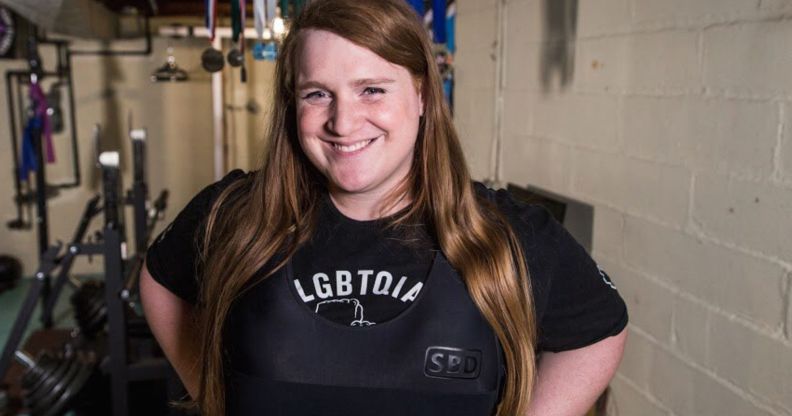
JayCee Cooper, pictured.(Twitter)
A US powerlifting regulator discriminated against a trans athlete by banning her from women’s competitions, a state Supreme Court has ruled.
Minnesota justices said in a Wednesday (22 October) ruling that USA Powerlifting’s policy barring transgender weightlifter JayCee Cooper from the women’s division is “facially discriminatory.”
“Facially discriminatory” means that a rule or policy discriminates on its face: i.e, the discrimination is built into the wording of the policy itself, not just in how it’s applied.
So when the Minnesota Supreme Court said that USA Powerlifting’s policy is “facially discriminatory,” it meant that even without looking at intent or how it’s enforced, the rule explicitly treats transgender women differently from cisgender women: by saying trans women can’t compete in the women’s division.
Cooper sued the sporting regulator in 2021 after it rejected her petition to compete in the women’s division in 2018 over a policy which bans trans men and women from elite competitions consistent with their gender identity.
The state’s top court argued Cooper is protected by the Minnesota Human Rights Act, which protects trans people from discrimination based on their identity.
The case was partially sent back to a lower court, which will determine whether USA Powerlifting has a “legitimate business purpose” to exclude trans people from gendered competitions.
It noted that attorneys would have to justify whether “seeking to ensure competitive fairness in an athletic competition” meets the law’s exceptions on “legitimate business purpose.”
Supreme Court decision will protect all trans Minnesotans, attorneys argue
In 2023, a state District Court judge ordered USA Powerlifting to “cease and desist from all unfair discriminatory practices” including the trans ban. The case was brought to the Supreme Court through an appeal by the regulator.
Gender Justice, the LGBTQ+ legal group representing Cooper, argued it had already won the most important legal claim and that the lower court decision likely won’t change the outcome.
Jess Braverman, Gender Justice legal counsel, told ABC News that the ruling was a complete victory since it will protect all trans Minnesotans from discrimination, which she said would “not be unraveled.”
She noted that the Supreme Court left only a “really narrow carve-out” which will likely be difficult for attorneys to navigate.
USA Powerlifting solicitor, Ansis Viksnins, argued the ruling was a mixed decision, saying: “Our opponents like to spin losses as victories and victories as victories, so I’m not surprised that they are calling this claim a victory.”
He said the lower court case will give attorneys the chance to explain why they believe “excluding a transgender woman from competing in the women’s division was for legitimate reasons, for maintaining fairness in athletics.”