
Trans Awareness Week 2025: ‘You can’t legally erase trans people, but you can erase our safety’
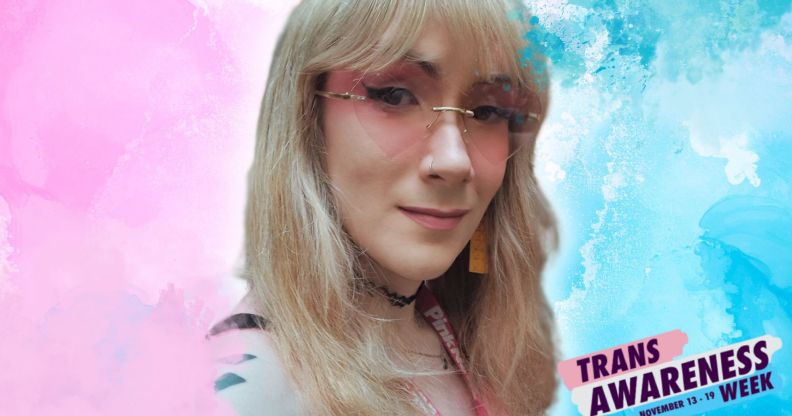
Amelia Hansford reflects on the state of trans rights for Trans Awareness Week. (Getty/Supplied)
Amelia Hansford argues that Trans Awareness Week campaigning this year should focus on the community’s safety above all else.
In April, I sat down with an Afghan woman whose girlfriend and best friend had been captured and brutally tortured by the ruling Taliban.
While trying to escape persecution, Maryam Ravish, 19, and trans woman Maeve Alcina Pieescu, 23, were stopped outside a VIP terminal in Kabul International Airport by police. After being accused of having LGBTQ+ content on their respective phones, they were detained, charged with the crime of being queer, and tortured.
I vividly recall my interview with Parwen Hussaini, who narrowly avoided detainment, like it was yesterday. I recall seeing her on my screen, sat in the cramped, unsettlingly bland white room she now reluctantly called home, a desperate look on her face as her translator explained how the Taliban had shaved Maeve bald, forced her to grow facial hair, and demanded she recite the Holy Quran while enduring brutal daily beatings.
You may have read the story. Outlets across the globe, including The Independent and even the Daily Mail, reported on the struggle to free the pair and how time was of the essence.
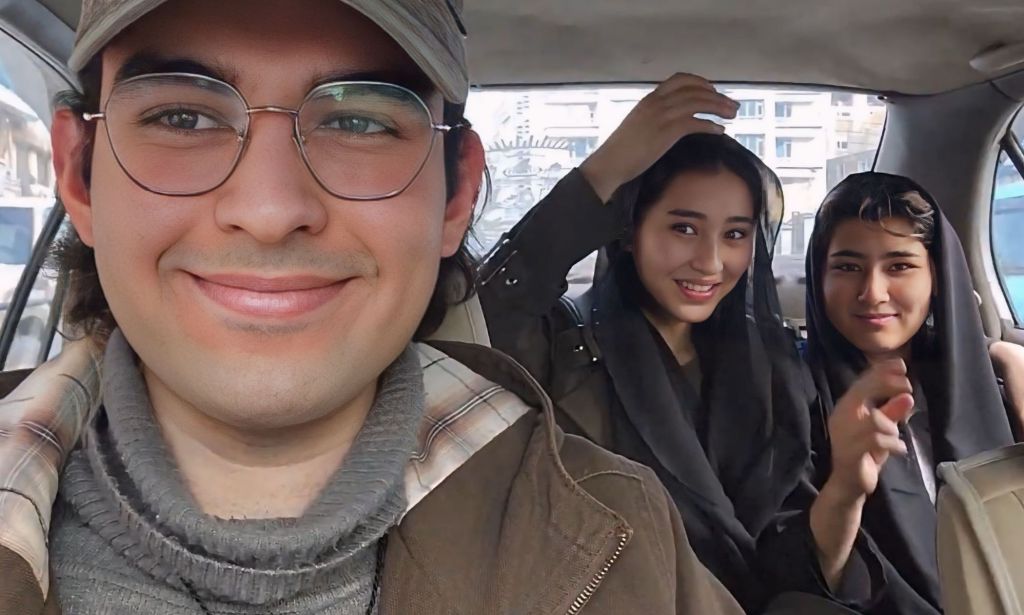
Over seven months later, as Trans Awareness Week commences once again, I couldn’t help but reflect on that story. I haven’t received any updates on whether Maeve and Maryam are safe; I’ve reached out, but heard nothing. As I’m writing this, I have the article I wrote on an adjacent screen. The header image is a group selfie of the trio smiling in a car, just days before the pair were detained.
I don’t even know whether they’re alive right now, though I’ve tried my best to find out.
It’s stories like this that make Trans Awareness Week feel so bitterly absurd. The world has, over the past decade, become suddenly very aware of trans people. Polls suggest awareness of trans issues has gone from just 8 per cent in 2008 to 42 per cent in 2021. It has become so aware that trans culture and colloquialisms are increasingly used in mainstream public life (looking at you ‘Protect the Dolls’).
We did it, we made the world aware.
There’s one key problem; education, understanding and action always lag far behind awareness. Just last year, Gallup found a slim majority of US adults think changing gender is “morally wrong,” while hate crimes against trans people in the UK have gone up steadily for years on end. Before you even think about mentioning that hate crimes dropped slightly this year, let me remind you that 88 per cent of trans people do not report the hate crimes they experience.
Rarely, if ever, does this relentless coverage about our community, even positive or sympathetic stories, result in actions that make our lives better.
Of course, the creators of Trans Awareness Week couldn’t have predicted this when the first Trans Day of Remembrance took place in 1999. My point is not to pompously mock activists for failing to psychically predict how bleak the future has become, but to compel those living in that future to take the core concepts of this week and refocus them.
It’s time to accept, as tragic as it is, that a section of the global population know we exist, but for whatever bigoted reason are intent on making our lives a living hell.
Many of them hold worrying levels of influence and are using it to push for our systemic removal from public life regardless of how many times we prove that trans rights are human rights.
It’s not enough to say that trans people exist anymore. What use is it relying on our existence when that existence is quickly becoming one defined by suffering? Maeve was trans when she tried to flee Afghanistan and she was trans when the Taliban tortured her daily. Brianna Ghey was trans when she was tragically stabbed to death because of her gender identity. The 4,732 victims of UK hate crimes were trans when they were physically or vocally attacked simply for existing. What kind of existence is that?
We cannot let the world become a place where all we have left is our identity, trans people are so much more than that. We are doctors or gymnasts, some of us are artists and others are criminals. We can be kind or cruel, messy or clean, introverts of extroverts.
We can be anything because we are as human as any of you reading this, like it or not.
What matters right now is fighting back against those who have decided, through their own stunted worldview, that we are no longer human. They are deciding for the world right now with every ban or every restriction.
We need to be aware of how to fight back.