
Sarah McBride leads calls for crackdown on anti-trans rhetoric in Congress
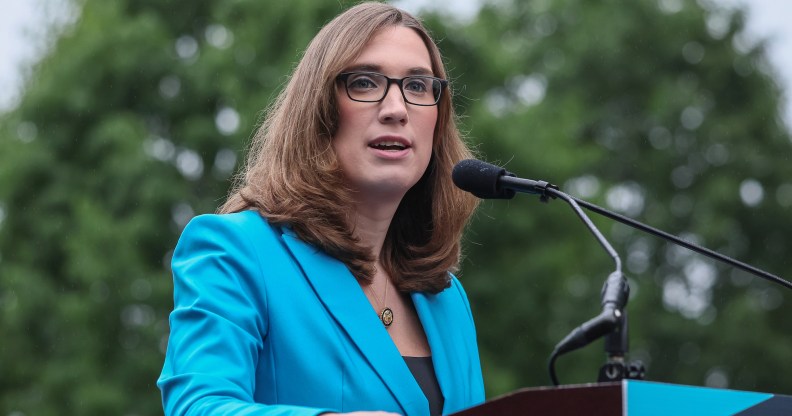
Sarah McBride was the first trans person to be elected to US congress. (Getty)
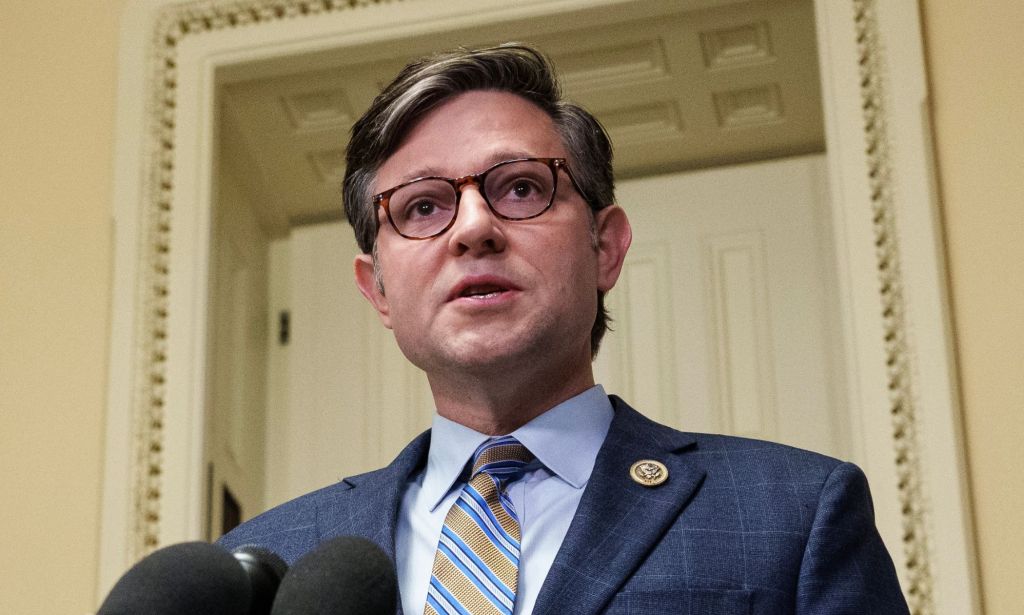
Democrats members of the US house of representative have called on speaker Mike Johnson to crackdown on anti-trans rhetoric.
On Tuesday (18 November), 212 Democrats, led by Mark Takano and trans congresswoman Sarah McBride, signed an open letter sent to the Republican speaker condemning the rise of anti-trans rhetoric being used by members of congress, and called for the house’s rules of decorum to be enforced.
“We have heard calls by members of congress to institutionalise all transgender people, comments referring to transgender people as mentally ill, and false suggestions by high-level political figures that transgender people are inherently violent and must be addressed as a national security threat,” the signatories to the letter claimed.
That language, along with a “rising number of legislative and administrative attacks” on the community, “is taking a real toll”, they added.
Federal records for last year recorded 463 hate-crime incidents motivated by gender identity bias.
‘Attacks on the transgender community are attacks on every community’
“Transgender people are part of every community. They are veterans, teachers and doctors. They are parents, children and siblings. They are neighbours and friends. They are Democrats, Republicans and independents,” the letter went on to say.
“Attacks on the transgender community are attacks on every community. Transgender people deserve government officials who will lift them up, not attack them simply because of who they are.”
The Trans Legislation Tracker reported that more than 1,000 anti-trans bills are currently under consideration across the US, and 2024 was the fifth consecutive record-breaking year for the total number of bills considered, with 88 being introduced at a federal level.
As of July this year, 647 have failed to make into law.
Share your thoughts! Let us know in the comments below, and remember to keep the conversation respectful.