EHRC latest: UK trans ‘bathroom ban’ to be based on how people look, leaks suggest
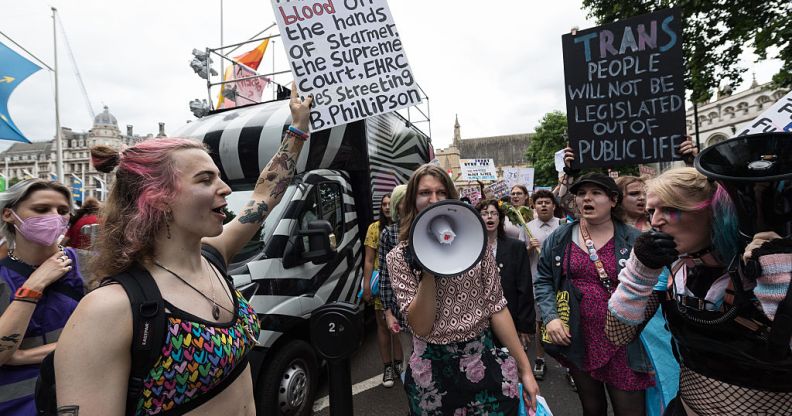
Transgender people and their supporters march outside Houses of Parliament during the seventh Trans Pride protest march for transgender freedom and equality in the UK and globally in London, United Kingdom on July 26, 2025. (Getty)
New claims that the Equality and Human Rights Commission (EHRC) intends to recommend banning trans people from certain public spaces based on their appearance have been branded “intrusive” by human rights groups across the UK.
The UK human rights regulator’s controversial code of practice on gendered facilities was sent to the UK government for consideration earlier this year.
In September, equalities minister Bridget Phillipson was handed the Equality and Human Rights Commission’s (EHRC) draft code of practice on single-sex services, which critics have warned could result in a bathroom ban for trans people.
Proposed updates published as part of that consultation included clauses banning trans women from female facilities and trans men from male facilities. A since-rescinded interim update went as far as to ban trans people from all gendered facilities.
According to a report by The Times, which has allegedly seen a final draft of the code, service providers such as hospitals, gyms, and leisure centres will be given the right to ban people from gendered facilities based on their appearance alone.
The report claims that, should a provider believe an individual is lying about their birth sex, the code of practice allows the provider to ban them from using those services and attempt to find a ‘suitable’ alternative.
It describes the enforcement of its guidance as a “legitimate aim” in ensuring the “safety” and “privacy” of cisgender people. There is no evidence to support this. In February 2025, for example, The Williams Institute (UCLA) published a finding that: “There is no evidence that allowing transgender people access to bathrooms aligning with their gender identity jeopardises safety and privacy.”
Trans toilet ban a ‘misogynist’s charter’, human rights groups argue
The alleged proposals have caused immense concern among members of the public and human rights groups concerned over the ramifications of a ban on trans people using public toilets.
Trans+ Solidarity Alliance founder Jude Guaitamacchi said that, if the leaks were correct, the EHRC’s code of practice would amount to a “misogynist’s charter.”
“The leaks reveal that not only does the EHRC’s proposed code of practice seek to require trans exclusion, it instructs service providers to police this based on appearance and gender stereotypes,” they said. “This is a misogynist’s charter, plain and simple, and the government must reject it.”
Zack Polanski: “It’s awful not just for trans people”
Green Leader Zack Polanski also criticised the leaked information, writing on X.com: “This is awful and beyond the realms of what anyone would see as basic decency for human beings. It’s awful not just for trans people but for anyone who doesn’t present with narrow stereotypes of femininity and doesn’t want the state policing women’s appearance.”
As Polanski points out, the ramifications of such proposals would extend far beyond the trans community. The UK has seen a sharp rise in harassment against all women since the Supreme Court ruling dictated the 2010 Equality Act’s definition of a woman referred to “biological sex.”
A report from nonprofit TransActual found that huge swathes of cis, trans, and intersex people have been wrongfully denied access to gendered facilities based on their appearance alone, while others have faced workplace harassment and even violence in public.
One individual, a trans man, said he was banned from both male and female changing rooms at his local gym and was instead forced to use the family changing room despite having no kids.
A cisgender lesbian woman, meanwhile, recalled feeling “invalid and embarrassed” after an individual confronting her in a female public toilet, saying she was “not allowed” to use it.
The 47-year-old woman, who said she currently sports a “short haircut that some would define as masculine,” said the confrontation has made her hesitant to use public facilities.
Equalities minister questions EHRC code of practice
Good Law Project director, Jolyon Maugham, said the alleged recommendations will result in the “intrusive questioning of women who don’t conform to norms about how they should look.”
“It shows no regard to the dignity or privacy of trans people,” Maugham wrote on Bluesky. “Whether this will detain a Labour Party which ahs shown itself willing to undermine the human rights of other groups attacked by the far right is a moot point.”
Equalities minister Bridget Phillipson questioned the EHRC’s provisions in a recent High Court submission as part of the Good Law Project’s lawsuit against the regulator, saying its “trans-exclusive interpretation” didn’t factor in exemptions such as parents taking their children into changing rooms.
PinkNews has asked the EHRC to confirm whether the Times’ claims are accurate and whether it plans to publicly release the draft code of practice.