Trans refugee slams Labour’s asylum changes: ‘I want the UK to remain the place I first felt safe’
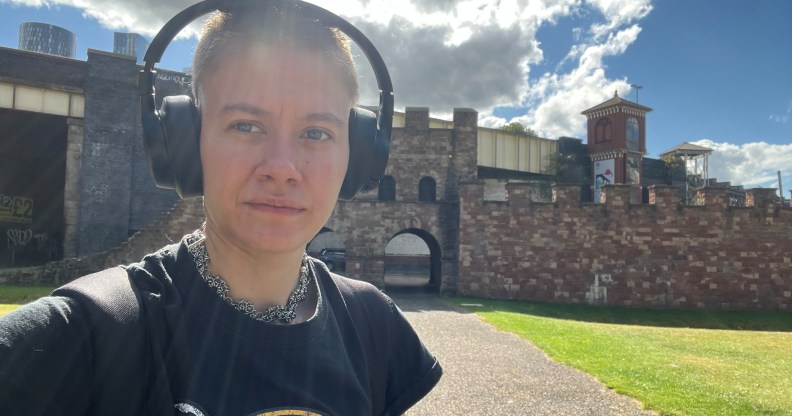
Ayman Eckford writes about the government’s proposed changes to the asylum system for PinkNews (Ayman Eckford)
The Labour government’s “absurd and cruel” proposed changes to the asylum system alongside anti-LGBTQ+ media and political rhetoric is sending the message to queer refugees that they are not welcome in Britain, Ayman Eckford – a member of Rainbow Migration’s Refugee Advisory Panel – writes exclusively for PinkNews.
I’m trans, autistic, and I have been a refugee in the UK for two years, hoping to apply for citizenship in three years time.
It has been an extremely long journey.
Before finally receiving my status, I lived as an asylum seeker for five years: five years suspended in uncertainty, five years without right to work, five years of bureaucratic nightmares that led to PTSD, five years waiting for permission to build a life.
At some point during that endless wait, the UK slowly became my home.
I began to feel connections and love toward Sheffield: real, grounding affection, that I had never felt toward my hometown of Donetsk. For the first time in my life, I felt safe walking down the street. No one shouted slurs at me for being queer. No one mocked me for being autistic. No one pushed me because I looked weird. No one threatened me for being politically outspoken. Safety is a simple thing for many local people, but for people like me, it is something new, almost revolutionary. I started to trust society. I stopped being scared of people around me.
That fragile sense of safety is now being shaken.
The UK government is introducing an extreme new anti-immigration law: one that could force refugees to wait up to twenty years for citizenship, impose brutal barriers to family reunification, and make the already- hostile environment even harsher.
The message is unmistakable: You are not welcome here, and you will never truly belong.
As a member of the community, I hear stories from other LGBTQ+ refugees. I’ve been speaking with local queer refugees in Sheffield as well. People who fled torture, imprisonment, forced marriage, honour-based violence, conversion therapy. People who escaped countries where homophobia and transphobia are not just state policy but something absolutely normal, something that is considered to be part of natural social life.
I met people who would think that it is not discrimination if they lost their job for being queer or it is not hate speech if the nurse literally cursed them. Some of those people realise that it is not normal. Some of them came to the UK specifically because this country had a reputation: earned over decades, for protecting the persecuted.
But that reputation is eroding rapidly.
Anti-immigration rhetoric is becoming a bipartisan sport. Not just Reform, but some Labour politicians are openly flirting with Donald Trump’s approach, praising his “deterrence” tactics and promising to be “tougher than the Tories” on migration. Just like Trump, they are blaming “illegal aliens” for tearing the country apart. It feels like a cold betrayal not just because it is a lie, but also because it seemed like modern day Britain had overcome its colonial legacy and began believing in multiculturalism, compassion and universal human rights.
It’s not happening in isolation.
“Trans people are being used as cultural scapegoats”
It is going hand in hand with rising anti-LGBTQ+ narratives in politics and the media. Trans people are being used as cultural scapegoats. Queer refugees, especially trans refugees, are increasingly framed as “suspicious,” “undeserving,” or “burdensome”. Access to healthcare is delayed. Asylum appeals are becoming harder. Hate crimes are rising. Politicians continue to argue about bathrooms instead of dealing with real problems.
What worries me most is how closely this moment resembles America’s “Make America Great Again” era. We are watching a British version emerge: a “Make Britain Great Again” agenda shaped by culture wars, nostalgia politics, and American-style fearmongering. Refugees become punching bags. Queer people become moral threats. Migrants seen as statistics, not neighbours. All of this is happening with the support of foreign billionaires, like Elon Musk.
But I am someone’s neighbour. I volunteer. I work. I mentor other disabled and LGBTQ+ asylum seekers. Even if I hadn’t done any of it, my rights matter all the same: because we value people based on how useful or normal they are, we are heading towards fascism. I don’t want that for the UK. I care about this country, deeply. That makes it heartbreaking to see lawmakers, many of whom will never meet a refugee or trans person in their lives, decide that people like me should wait decades before we can call the UK our home.
“I want this country to choose compassion over American-imported hostility”
Citizenship is more than a passport. It’s stability, protection, a chance to start a family life, to participate in politics. It’s the right to participate fully in society. Asking refugees, people who have already lost everything, to wait twenty years to belong here is extremely absurd and cruel.
I want the UK to remain the place where I first felt safe walking down a street. I want future LGBTQ+ refugees from Eastern Europe, the Middle East, and former colonies to feel that same safety. I want this country to choose compassion over American-imported hostility, and think about their own values, not ideas that the far-right is bringing from the other side of the ocean.
Because refugees are not threats. We are part of the fabric of the communities we join. It has always been like that in the UK. We are the people who make Sheffield, Manchester, Glasgow, London, and every corner of this country, richer, brighter, more interesting and resilient.
The UK taught me what safety feels like. I am asking now not to take that safety away.