
Six lies transphobes tell about puberty blockers – debunked

Puberty blockers are safe, effective, and reversible, despite what some may say. (Getty)
Puberty blockers are among the most-misunderstood – and most-targeted – form of gender-affirming care, and that’s no coincidence.
Often referred to as hormone suppressants, they are a form of medication designed to postpone the physical and emotional effective of puberty experienced by youngsters under the age of 18.
Despite their common use by trans youngsters, and those experiencing precocious puberty, dating back some 35 years, the rise of transphobic misinformation and vilification has prompted vague “concerns” over their safety, resulting in bans in several countries, including New Zealand and the UK.
There is little evidence to suggest that puberty blockers pose a threat to young people. The research that does exist has almost always shown them to be safe, effective, and, in many instances, life-saving.
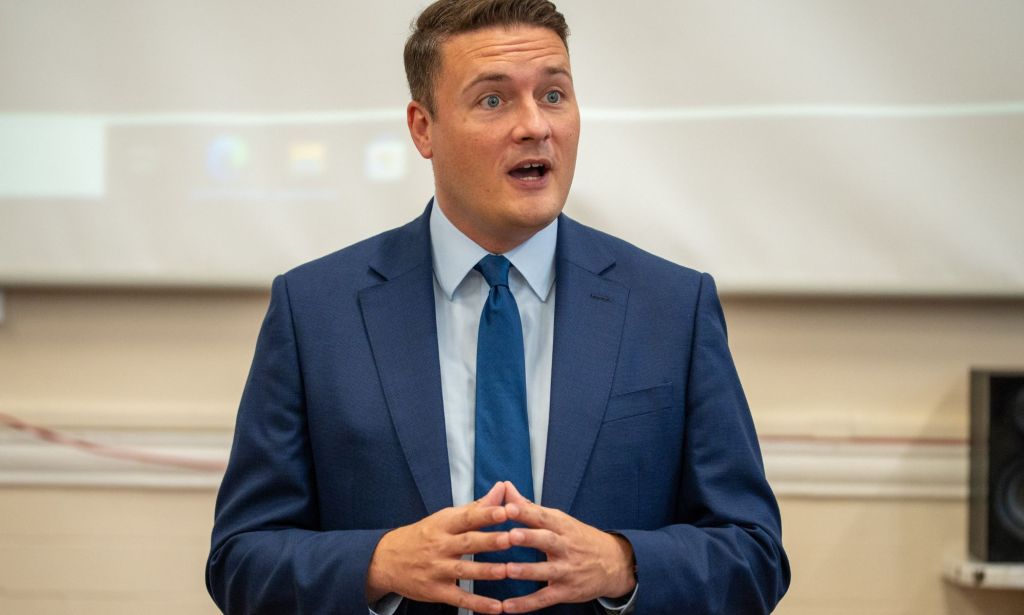
However, anti-trans opponents of the treatments claim that there isn’t robust enough research into whether the drugs pose any potential physical or emotional side effects, and they insist that young people shouldn’t be allowed to undergo potentially damaging or permanent treatments, despite a lack of evidence that hormone suppressants are either of those.
The majority of arguments against puberty blockers are either built on a foundation of lies perpetuated by anti-trans groups, or often ignore fundamental healthcare rules in the UK.
Here are some of the biggest lies you’ve probably heard about puberty blockers, and why they’re nonsense.
‘We don’t know enough about puberty blockers to prescribe them to children’
As you are reading this, the NHS doctors and practitioners are handing out puberty suppressants quite legally and uncontroversially to children facing precocious puberty, a disease that causes puberty to begin too early.
It’s irrelevant whether or not you believe precocious puberty is a more justifiable reason to be allowed to take puberty blockers. Medical professionals have deemed the drugs safe enough to prescribe to children as young as eight, with their gender identity making no difference.
There’s a lot we don’t know about medicines. Research for The Journal of the American Medical Association has shown that, in many cases, doctors prescribe medication with little knowledge as to whether it will actually help a patient.
What we do know is that puberty blockers almost always improve the lives of transgender young people.
‘Kids shouldn’t be making major decisions about their health’

This argument falls in the face of the Gillick competence and Fraser guidelines, which determines whether a child under the age of 16 has the maturity and intelligence to consent to medical treatment.
UK charity the National Society for the Prevention of Cruelty to Children says the test, brought in in the 80s, is often used in contraceptive healthcare as a way to balance the human right of a child to make decisions about their own body with the responsibility to keep that youngster safe.
Young people are not incompetent simply because they are young. A 10-year-old can be convicted of a criminal offence, a 14 year old can get a part-time job, and anyone of any age can babysit another child, give evidence at a criminal trial, although not under oath, and can even be sued (although not held responsible for a debt until the age of 18).
Every person has the right and ability to make their own informed decisions, no matter their age. You may disagree with those decisions – they may even be ones that the person could come to regret – but that does not make someone less capable of making them.
‘They’re a form of chemical castration’
No. Puberty blockers do not, and have never been known to, cause sterility. Rare side effects can include fertility issues, just like anti-psychotic drugs and chemotherapy which are given to people under the age of 18.
Even if puberty blockers did cause sterility, this alone isn’t a good enough reason to ban them. Children who fall under the Gillick competence guidelines have the right to choose their own health over the ability to conceive in the future, just as you have the right to drink alcohol despite the fact that it can affect fertility.
Note the use of “castration” here: a charged word, heavily associated with forms of torture by oppressive regimes or groups. This isn’t a coincidence: right-wing groups routinely try to associate trans care with a form of torture subjected upon innocent young children.
‘Doctors are handing out puberty blockers like candy’
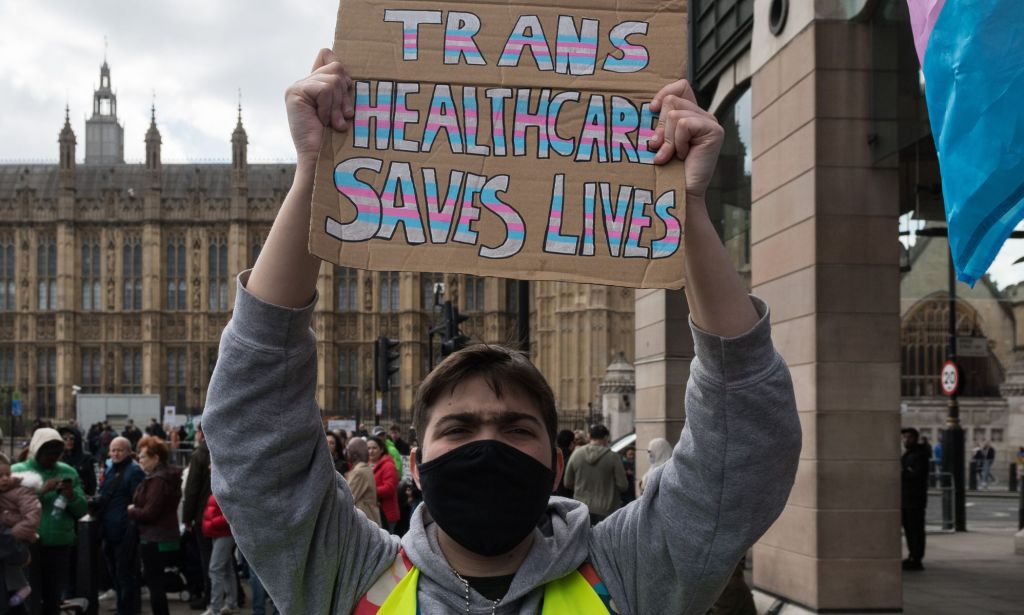
Again, this is not true. Not only are puberty blockers currently inaccessible to transgender youngsters in the UK not part of a limited NHS trial, prescriptions have always been incredibly difficult to obtain.
Prior to the ban, the only way to access puberty blockers on the NHS was through a referral to the Tavistock Gender Identity Development Service, in North London. At their height, waiting times for a first appointment – which almost never resulted in a prescription – were in excess of two years.
When trans youngsters did access the facilities, they typically had to jump through several legal and medical hoops to acquire a prescription, all while the effects of natural puberty were taking place.
In March 2024, the same month NHS England banned puberty blockers, fewer than 100 people were prescribed the treatment.
‘There’s no proof they help trans youngster’
Yes there is, mountains of it. Studies from the US, Canada, Australia and other countries have all come to the same conclusion: puberty blockers are safe, effective and, above all else, possibly life-saving.
One study, commissioned by the New South Wales government in Australia, analysed 82 papers published between 2000 and 2019 and concluded that the benefits of puberty blockers far outweighed any drawbacks.
Another, from October 2024, showed that 97 per cent of US and Canadian under-18s accessing care were “highly satisfied” with the results. Another published in the same year revealed that less than one per cent of transgender youngsters regretted starting taking puberty blockers.
Regret rates for trans healthcare are abnormally low. One paper last year showed that transition-related regret was lower than that of patients who had opted for knee surgery, breast augmentation, and even having children.
Since gender-affirming care aims to improve the wellbeing of an individual, the only way you could justify thinking there is no proof that puberty blockers are beneficial is by ignoring trans young people.
‘It’s better to wait for them to become adults’
Puberty blockers are reversible medications that, when prescribed, not only significantly improve a trans person’s quality of life, but can reduce depression, anxiety and suicidality. Almost half of all trans young people have attempted suicide in the UK. It’s not better to make trans youngsters wait for potentially life-changing treatment.
Natural puberty is not reversible. Once its changes have taken place, there is nothing anyone can do. When a parent, guardian, healthcare professional or politician forces a trans child to wait until adulthood before accessing care without their say, they are choosing to deny them the right to stop changes to their own body that they will never be able to reverse. It’s why so many of them take their own lives.
The idea that puberty is always more desirable than puberty suppressants because it’s ‘natural’, is wrong and rooted in anti-trans prejudice. Cancer is ‘natural’, earthquakes are ‘natural’, pandemics are ‘natural’, but we have made every effort as a society to treat and prevent these things because they make people’s lives worse.
Suicide is preventable. Readers who are affected by the issues raised in this story are encouraged to contact the Samaritans on 116 123 (samaritans.org), or Mind on 0300 123 3393 (mind.org.uk). Readers in the US are encouraged to contact the National Suicide Prevention Line on 1-800-273-8255.
Share your thoughts! Let us know in the comments below, and remember to keep the conversation respectful.