
Labour’s trans policies follow highest ethical standards, Wes Streeting insists

Wes Streeting defended Labour’s policies on trans rights in a Commons debate this week. (Getty)
Health secretary Wes Streeting has insisted the government’s approach to trans youth healthcare is based on the “highest standards of ethics” despite concerns over the impact on young people.
The Ilford North MP, 42, argued that the government is committed to an “evidence-based approach” to gender-affirming care for trans and non-binary young people.
Responding to questions on the upcoming NHS puberty blocker trial during a Commons debate on Wednesday (17 December), Streeting insisted he was following “clinical advice” in his decision-making.
The NHS Pathways trial will study the effectiveness of puberty suppressants by analysing the physical, social, and emotional wellbeing of 220 youngsters over two years.
Led by researchers from King’s College London (KCL), the £10 million ($13.1 million) clinical trial is currently the only way to access puberty blockers through the NHS after the government permanently extended a ban on new prescriptions for the medication.
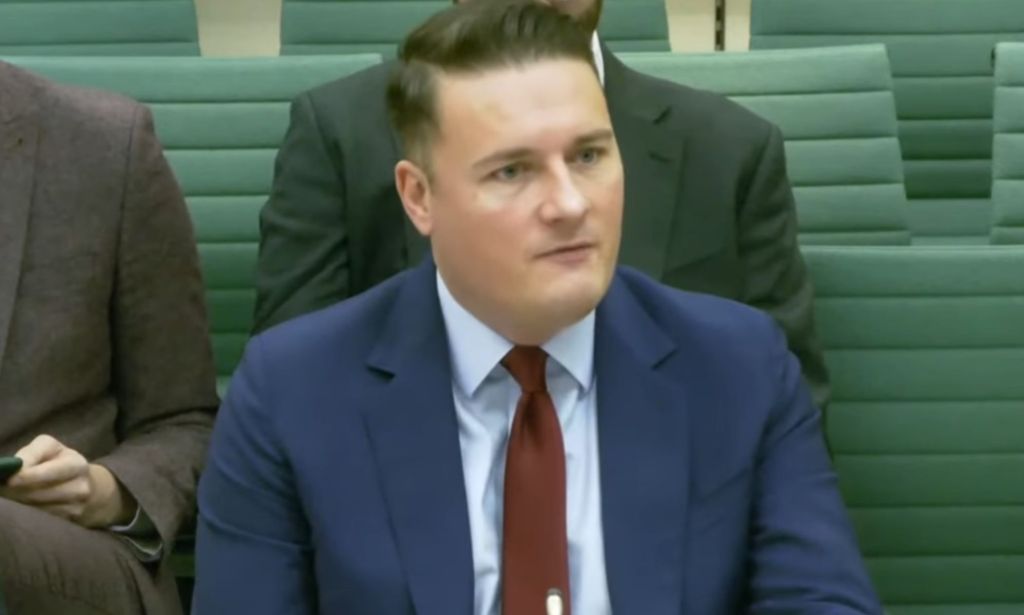
Streeting, who made the call to heavily restrict the potentially life-saving medication, said he had personal reservations about the ban, but chose to do so after hearing “expert advice”.
Ministerial diaries from 2024 suggest that, shortly after Labour came to power, the MP had scheduled a gender policy meeting with organisations LGB Alliance, Transgender Trend, Genspect, CAN-SG, the Integrated Psychology Clinic, and the Bayswater Support Group. All of these groups have campaigned to deny gender-affirming treatment for trans youngsters.
In the same month, leaked internal messages from the Bayswater Support Group showed alleged members signalling support for so-called ‘conversion’ practices.
Wes Streeting ‘uncomfortable’ with extending puberty blocker ban
“The reason I was uncomfortable with that, too, is because I had to look children and young people, and their parents, in the eye when they told me in no uncertain terms that the decision was harmful to them, as have many other clinicians who have opposed that decision,” Streeting said.
“Whatever my discomfort in this extremely sensitive area, the reason that I have made this decision is that I am following clinical advice and, as health secretary, it is my responsibility to follow expert advice.”
Asked why he had apprehensions about approving the ban, Streeting, who has previously said on multiple occasions he does not believe trans women are women, said that his main concern was that “we may continue to see unsafe or unethical practice”.
“I think we will be doing a service to medicine in this country as well as internationally if we have a high-quality trial with the highest standards of ethics, approvals, oversight, and research from some of our country’s leading universities and healthcare providers to ensure that, for this particular vulnerable group of children and young people, we are taking an evidence-based approach to health and care.”
There is virtually no reliable evidence to suggest puberty suppressants, which are supported by major healthcare organisations across the globe, pose a risk to trans young people. Puberty blockers remain available for cisgender young people experiencing precocious puberty.
There is evidence, however, that the puberty blocker ban has had a significant impact on the health and wellbeing of trans youth in the UK, with many developing depression, anxiety, and suicidal thoughts as a result of the ban.
Asked by Labour MP John Slinger whether the health secretary is considering the health of those facing immense stress over the ban, Streeting said he is committed to ensuring that trans young people receive “the right therapeutic support to enable them to have health, happy childhoods and to understand themselves, the world they live in and how they relate to it”.
He added: “The reason I am doing this is that I have to think about this extremely small group of people. I do not know what it is like to walk in their shoes, and I have to think very carefully about what is in their best interests. The best way to do that is to build the evidence base that we need to provide high-quality healthcare.”
Share your thoughts! Let us know in the comments below, and remember to keep the conversation respectful.