
Gen Z women are more likely to identify as bisexual – but no, the lesbian label is not ‘dying out’
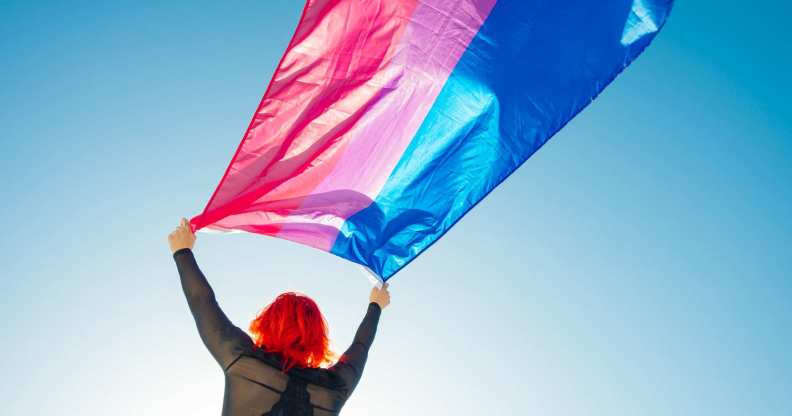
Gen Z women are more likely to self-report as bisexual (Canva)
A new study has revealed Gen Z women are more likely to describe themselves as bisexual whilst older demographics prefer the lesbian label – but no, this does not mean lesbians are “dying out”.
The study, carried out by researchers at the University of Manchester, analysed account data from 913,253 users of sapphic dating app Zoe from 122 countries between January 2023 and May 2025 and examined their self-reported sexual identities across geography and age.
Across all users the results, which were published in journal of population sciences Demographic research, showed the most common identities were lesbian (48.3 per cent) and bisexual (39.8 per cent), followed by pansexual (6.6 per cent), queer (3.4 per cent), gay (1.2 per cent) and asexual (0.7).
However, those born between 1997 and 2006, known as Gen Z, were the most likely to self-report their sexuality as bisexual (45 per cent), followed by the labels of lesbian (42.2 per cent), pansexual (7.3 per cent), queer (3.4 per cent), gay (1.2 per cent) and asexual (0.9).
The results also showed that those who use the lesbian label increases with age, with 65 per cent of users in the 50+ age group using it compared with 42.2 per cent in the 20-29 group and 46 per cent in the 17-19 age group. By contrast, only 25 per cent of users in the 50+ group identify with a bisexual label – the lowest percentage across all the age groups.
“Younger generations are showing us that sexuality is not a fixed category — it’s a spectrum,” lead author and lecturer in social statistics at the University of Manchester, Francesco Rampazzo, said in a statement about the research.
“Across the world, more young people are comfortable describing their identities in diverse and fluid ways.”
Rampazzo added: “Our study is a reminder that technology isn’t just transforming how people meet – it is reshaping how we understand ourselves and each other.”
The research also found that the diversity of identities varies on geography, with users in Europe, North America and Oceania more likely to use a variety to terms to label their sexuality compared to users in Africa and Asia which are relatively homogeneous.
“Where people feel safe, they are more likely to express who they really are,” said Dr Canton Winer, co-author from the Northern Illinois University.
“In places where LGBTQ+ identities remain stigmatised or even criminalised, that freedom is much narrower.”
The research comes amid claims that the lesbian identity is “dying out” and “under threat”, a narrative usually promoted by pundits and organisations that hold anti-trans views. Indeed, the Daily Mail‘s coverage of the above study alleged in its headline that lesbians are “dying out” – despite the research literally showing that the lesbian label remains the most prevalent overall and highly prominent across all age demographics.
Commenting on the findings of the study, Milan Kovacic, the former CEO of Zoe, said: “At Zoe, we have always believed that responsible collaboration between industry and academia can produce insights that genuinely benefit LGBTQ+ communities.
“Studies like this show how data, when handled with care and respect, can deepen our understanding of people’s experiences and help create safer, more inclusive digital spaces.
“We are proud to support research that contributes to that goal.”