
LGBTQ+ SNP members call on party to stand up for trans rights: ‘Trans people are not demons’
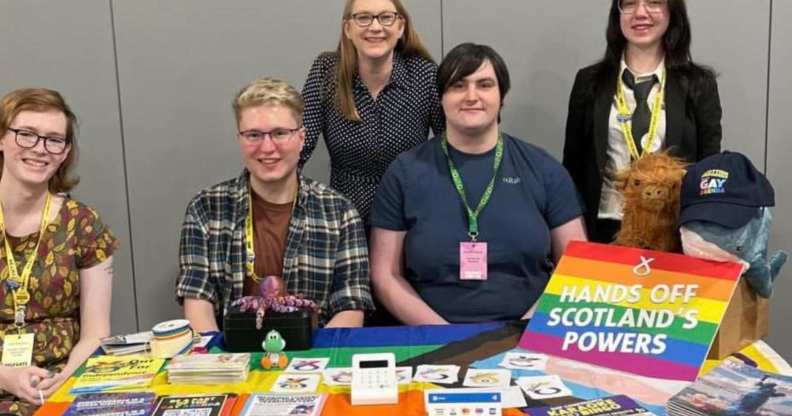
Out for Independence is the SNP’s LGBTQ+ arm (Out for Independence)
The LGBTQ+ wing of the Scottish National Party (SNP) has called on party leaders to stand up for trans rights.
Out for Independence (OFI), which represents LGBTQ+ members of the nationalist party, penned a column for Scottish daily title The National in which it outlined the SNP’s strong track record on LGBTQ+ rights and urged the party to be on the “forefront of the fight” for trans people.
In the column, OFI stated that it – alongside SNP national equalities convener Sadie Matthews – moved a resolution at the SNP’s policy-making body, the National Council, earlier this month rejecting the Equality and Human Rights Commission’s controversial proposals on access single-sex spaces made following the UK Supreme Court ruling in April, which decided the definition of ‘sex’ for the purposes of the 2010 Equality Act refers to “biological sex” only.
In its interim guidance, the EHRC recommended organisations, businesses and service providers bar trans men and women from using single-sex services and spaces, such as changing rooms and toilets, which align with their gender.
It also added in “some circumstances” trans people could be barred from spaces that align with their “biological sex” as well – as per the Supreme Court’s language.
The EHRC later clarified these “circumstances” referred to situations where “reasonable objection” could be taken to a trans person’s presence in a gendered space, such as in female spaces when “the gender reassignment process has given [a trans man] a masculine appearance or attributes”.
In the months since the ruling and publication of the interim guidance, trans, LGBTQ+ and wider human rights groups and activists – as well as some MPs – have warned that such measures could lead to the “widespread exclusion” of trans people from public life.
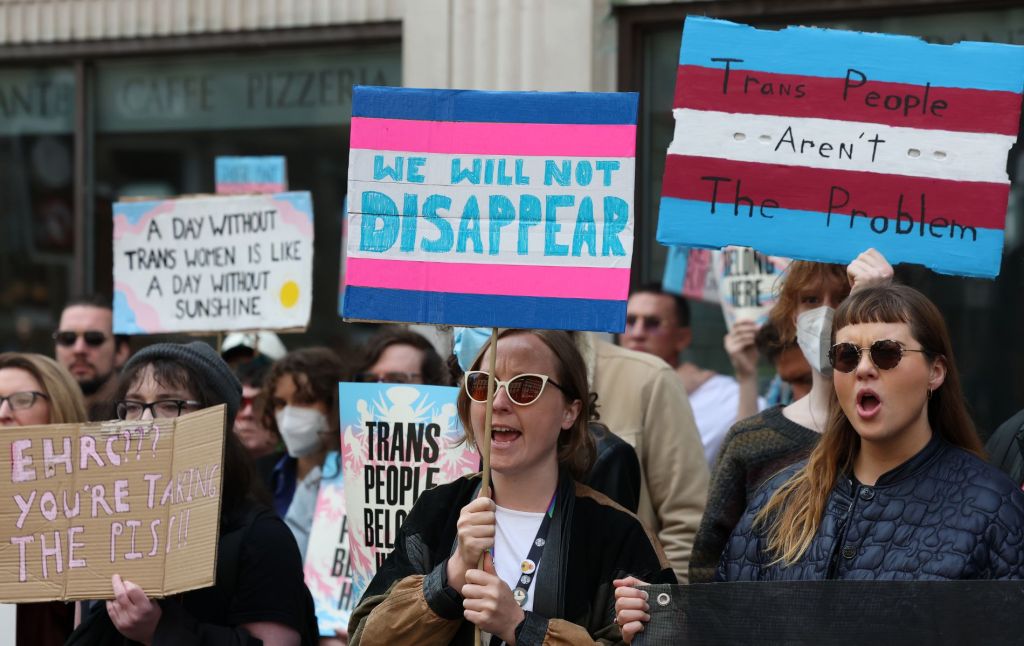
Several organisations have, however, already taken steps to exclude trans people from certain spaces, including the cross-party Scottish Parliamentary Corporate Body (SPCB) which decided in May that use of “all facilities designated as male or female” within Holyrood will be based on “biological sex” so as to be “in line with the court judgement”.
The OFI’s resolution sought to reaffirm “trans people’s human rights to privacy and protection from discrimination, and demanded that the guidance be properly debated in the House of Commons, where radical, discriminatory proposals can be recognised for what they are and rejected”.
“Trans people are… not the demons the media make them out to be”
The National Council “passed our resolution by acclaim”, the group wrote, explaining: “As its drafters, proposers, and ordinary members ourselves, there are many reasons we saw support.
“Firstly, party members are not fools. They know that trans people are ordinary people with hopes, dreams and bills to pay, not the demons the media make them out to be.
“Our members also know that employers and service providers have better things to do than indulge grotesque political games.
“And they have noticed that when those who claim the Supreme Court required the blanket exclusion of trans people from spaces they have long been welcome in had their day in court, two Scottish employment tribunal judges in the space of a week rejected this exclusion.”
OFI continued: “Secondly, they know Westminster overreach and attacks on devolution when they see it.
“For too long, Scotland’s attempts to build a fairer and more equal country have been stymied by UK institutions, whether that was blocking elements of the incorporation of the UN Convention on the Rights of the Child, blocking the Gender Recognition Reform Act, or this case.”
Back in January 2023, Scotland’s Gender Recognition Reform (Scotland) Bill was blocked from passing into law by Westminster via a never-before-used Section 35 order from the 1998 Scotland Act – an unprecedented move in the history of devolution.
The bill passed in Holyrood in December 2022 in a 86-39 vote, following years of consultation by the Scottish government, and aimed to make it easier for trans Scots to get a Gender Recognition Certificate (GRC) by removing the highly medicalised process implementing a system of self-ID. As well as this, the bill would open up the process to 16 and 17-year-olds for the first time.
Alister Jack, the then-Scotland minister, cited “single-sex” spaces and “equal pay” protections as reasons for preventing the proposed law gaining royal assent and said the UK government had concerns the legislation would have a “serious adverse impact, among other things, on the operation of the 2010 Equality Act”.
“Finally, party members understand that the SNP and pro-independence movement prosper when they firmly reject the politics of fear and hate,” the OFI went on to write, adding: “They, and we, know that we build support for independence when we stick to our values and present a vision of an independent Scotland that is free, fair, equal, and prosperous, where all can flourish.
“They knew it would be both wrong and foolish to change course now, when our opponents have decided their last chance to keep Scotland chained to England is to use trans people, refugees or disabled people as bogeymen.”
The group concluded that passing the resolution was “welcome, but it is only the beginning”.
“The SNP must be at the forefront of the fight to resolve this quagmire and restore everyone’s rights to live fully, freely, and authentically, for people who are trans and not alike, by updating the Equality Act,” they wrote.
“We must do this because it is right, it is what we have always done, and because too much is at stake.”