
Is ‘Homonationalism’ really on the rise, and what does the term mean?

What exactly is homonationalism?
There’s a good chance you may have heard the term homonationalism used in political or public debate recently.
In fact, just a couple of days ago, Spiked published an article claiming that homonationalism is “on the rise” and suggesting that it is linked to the fact that “across Europe, gay voters are moving rightwards.” But what exactly does the term mean?
First coined by Rutgers University professor and Gender Studies scholar Jasbir Puar in her 2007 book Terrorist Assemblages: Homonationalism in Queer Times, the phrase has skyrocketed in usage over the past two decades and has yet to reach its peak, according to Google.
While the term’s specific meaning is incredibly nuanced, especially in the historical context that Puar first used it, the term broadly refers to the selective acceptance of LGBTQ+ people as a way to promote nationalist ideologies or actions.
The Oxford Encyclopedia of Communication summarises the phrase as the “growing embrace of LGBT rights by (mostly Western) nations, as well as the parallel complicity of lesbian, gay, bisexual, and transgender (LGBT) individuals and associations with nationalist politics.”
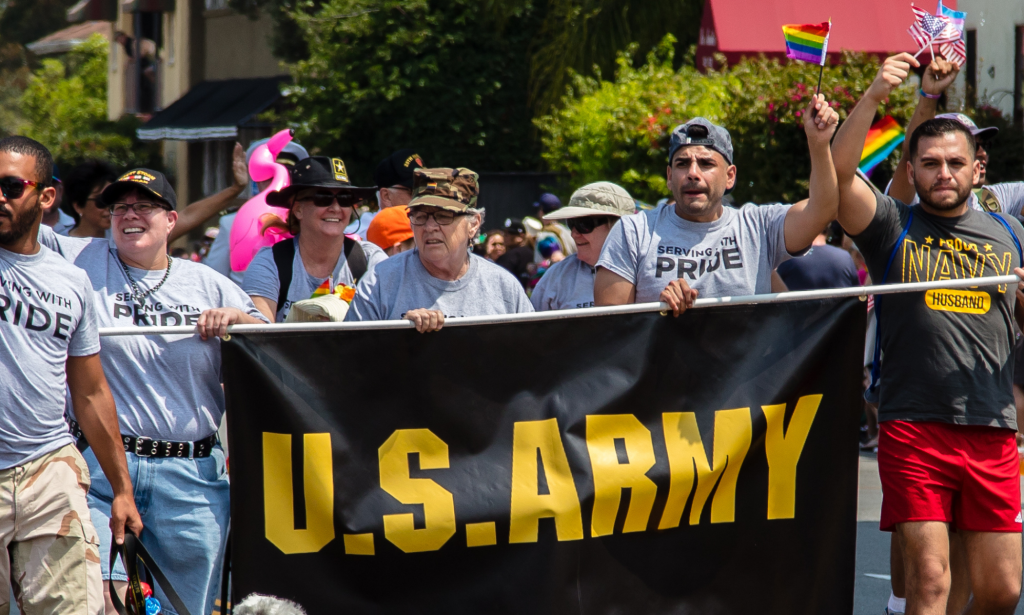
Puar coined the term while analysing how the United States attempted to justify its invasion of Iraq, Afghanistan, Syria, and other second- and third-world nations during its “war on terror” in the early 2000s following the September 11 terrorist attacks on the World Trade Center.
During its campaign, the US government attempted to deter widespread criticism by appropriating pro-LGBTQ+ rhetoric and constructing a narrative that the largely Muslim nations were inherently homophobic.
The majority of historical examples, Puar notes, are of Western nations using homonationalist rhetoric to justify Islamophobia by positioning Western “modernity” and liberal democracy as inherently superior compared to non-Western nations.
How do governments use homonationalism?
It’s important to emphasise that progress on LGBTQ+ rights is not a prerequisite of homonationalism. In fact, nations that use the tactic often have a poor track record on LGBTQ+ rights, despite claims to the contrary, and will rarely actually take meaningful actions to improve things – for example, same-sex marriage remained illegal in the US for nearly 15 years after the “war on terror” began.
Homonationalism also typically only extends support to white, cisgender, gay or bisexual men, and tends to ignore more marginalised groups such as non-white queer women or trans and non-binary people.
While the tactic is most prominently used against Muslims, Western nations have also used it to justify actions against actions in Africa, Eastern Europe, and Asia.
Following Russia’s invasion of Ukraine in 2022, political scientist Emil Edenborg warned against Ukrainians using homonationalist rhetoric to dehumanise Russians, arguing that it mirrors the problematic nature of Russian nationalism by positioning LGBTQ+ rights as “evidence of ‘our’ national superiority.”
More recently, the term has seen particular usage while discussing Israel’s justification of the war in Gaza following the 7 October attacks in 2023.
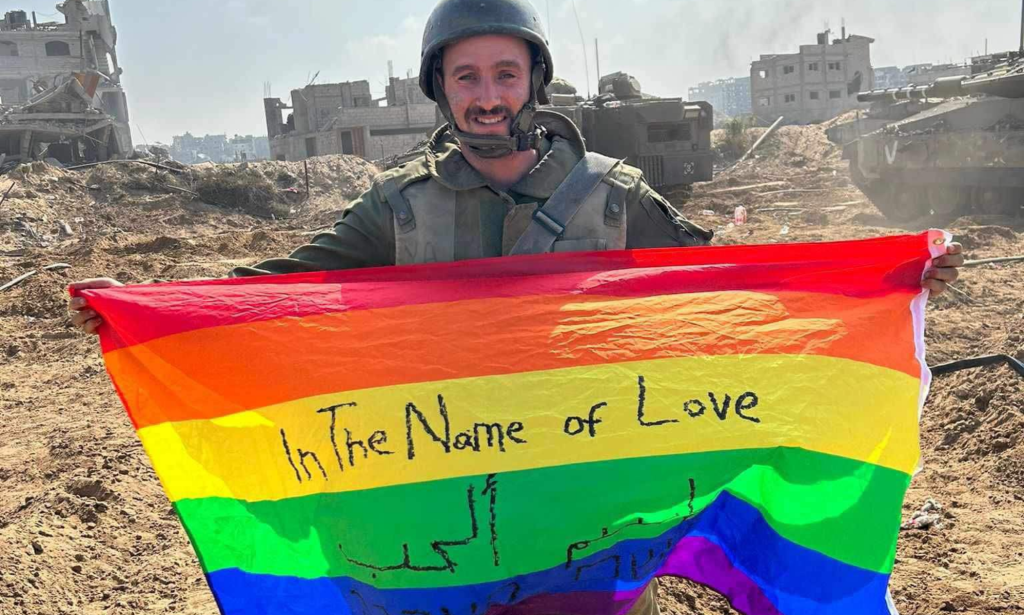
The Israeli government ramped up its homonationalistic rhetoric following the attack as a tactic to justify its continued campaign in Gaza, which has killed at least 71,200 Palestinians, including 20,000 children.
In November 2023, the official Israeli state X/Twitter account posted images of an IDF soldier holding a Pride flag in what appears to be war-torn ruins, with the caption: “The first ever Pride flag raised in Gaza.”
Same-sex marriage is currently illegal in Israel, where 56 per cent of citizens believe it is morally unjustifiable.
Homonationalism has also been linked to pinkwashing – defined as the act of a nation state or private institution promoting LGBTQ+ rights to divert attention from human rights abuses – and femonationalism, an unrelated term which describes how nationalist ideologies side with feminist discourse to justify racism or Islamophobia.
Critics of homonationalism have argued that its usage can often obfuscate the complex experiences of LGBTQ+ groups living in countries that use the tactic by inadvertently lumping them in with the nation state.
Others argue that criticism of homonationalistic rhetoric must consider the ways that colonialism, racism, and class influence islamophobic or nationalistic ideologies rather than assuming the tactic relates only to gender or sexuality.