
Yet another study proves puberty blockers are life-saving for trans youth

Trans youth almost always feel less suicidal while undergoing treatment. (Getty)
Yet another study proving that trans youth almost always feel less suicidal on gender-affirming care has been thrown on the pile of evidence that puberty blockers are safe and effective.
Research set to be published in the Journal of Paediatric’s February volume has once again proved that trans adolescents show “meaningful reductions” in depression and anxiety after beginning clinically-endorsed hormone therapy.
Co-written by paediatricians in Nevada, Texas, and Missouri, the study examined the wellbeing of 432 patients before and after undergoing treatment.
The participants, aged 12 to 20, were surveyed on their mental health before and at least 364 days after beginning appropriate medical treatment such as puberty blockers and hormone replacement therapy (HRT).
Using the Ask Suicide-Screening Questions (ASQ) toolkit – an internationally acknowledged assessment of suicidality in young people and adults – researchers found significant improvements in the mental health of patients across the board.
Suicidality among participants decreased significantly over time, according to the study’s results, with rates continuing to decrease as time went on.
The reductions, clinicians noted, were consistent regardless of gender identity, treatment duration, and, interestingly, the age at the start of therapy.
This not only once again proves that gender-affirming care is remarkably effective in improving the wellbeing of trans patients, but that its effectiveness in reducing suicidal tendencies does not diminish as patients get older.
Clinicians recommended following-up the study with a “larger sample and longer follow-up” to sufficiently prove the consistency of gender-affirming care’s mental health treatments.
Politicians continue to ban puberty blockers despite evidence
Numerous studies across the globe have proven that gender-affirming care is almost always a good thing for trans people, especially trans young people.
One study from October 2024 found that 97 per cent of trans under-18s were “highly satisfied” with the results of gender-affirming treatment, while another from March in the same year found that, out of 548 patients who accessed trans healthcare, just two regretted it.
Regret rates for gender-affirming treatment are very low according to a paper from May 2024, which found that patients are more likely to regret knee surgery, breast augmentation, and even having children than those starting gender-affirming care.
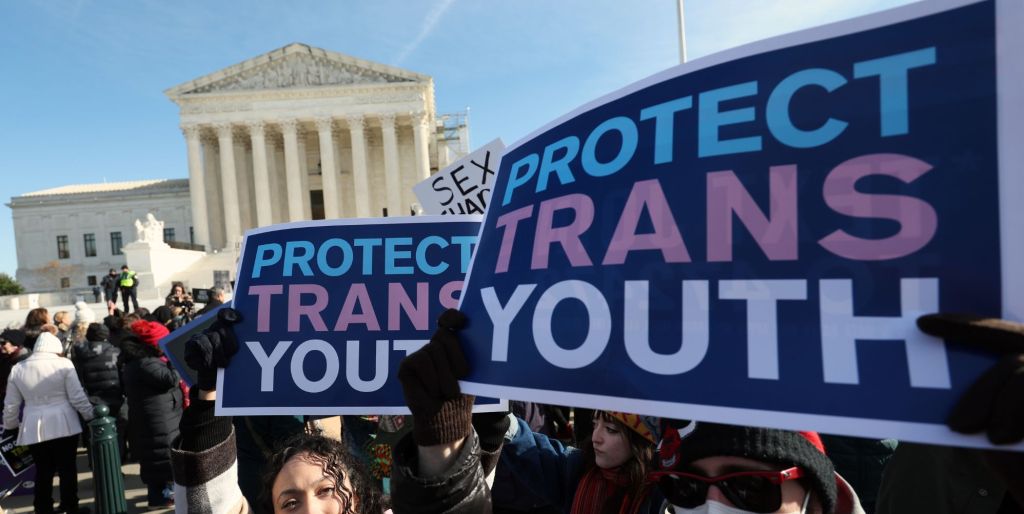
Despite the mountain of evidence proving that gender-affirming care can be, and almost always is, life-saving, anti-trans politicians and political pundits regularly claim trans young people shouldn’t be allowed to access clinically-approved medical treatment.

At least 27 states in the US ban gender-affirming care in some capacity, preventing over 40 per cent of America’s trans youth population from accessing care. Puberty blockers are also banned for trans youth in the UK, despite being freely available for cisgender youth.
The Trevor Project, an LGBTQ+ suicide prevention organisation, warned these bans have “detrimental impacts” on the mental health of trans young people, who are already disproportionately likely to feel suicidal.
Research conducted by Dr Natacha Kennedy in the University of London found that Wes Streeting’s ban on puberty blockers for trans young people is “significantly, extensively, and relentlessly harming trans children and young people”.
She spoke to the parents of trans young people who were once “happy, well-adjusted, and little different from most cis children”, but who have now resorted to self-harm because of an inability to access care.
Suicide is preventable. Readers who are affected by the issues raised in this story are encouraged to contact the Samaritans on 116 123 (www.samaritans.org), or Mind on 0300 123 3393 (www.mind.org.uk). Readers in the US are encouraged to contact the National Suicide Prevention Line on 1-800-273-8255.