
Supreme Court to hear case on trans youth sports bans – here’s what to know

The Supreme Court is set to hear oral arguments on West Virginia v BPJ. (Getty)
The US Supreme Court is set to hear oral arguments on two cases that could decide the future of laws banning trans youth from sporting events – here’s what to know.
Human rights organisations announced they would speak in defence of trans youth across the US as part of a Tuesday (13 January) hearing for West Virginia v BPJ.
The lawsuit, brought on behalf of trans teenager Becky Pepper-Jackson, seeks to overturn a West Virginia law banning trans students from competing in competitive sporting events.
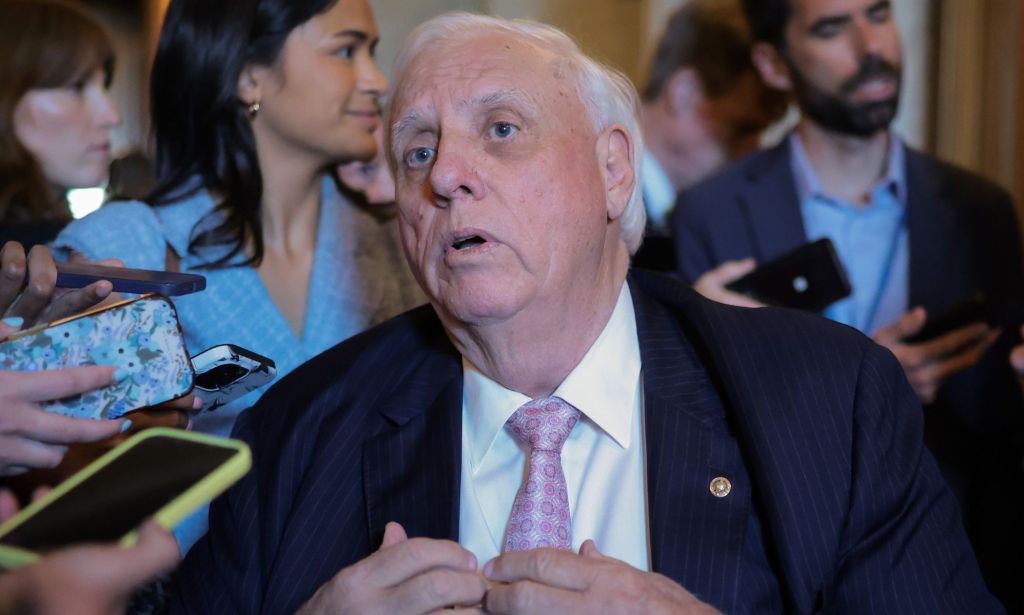
Pepper-Jackson, 15, who was 11 when the lawsuit was filed, was denied the right to compete in her middle schools’ cross-country team after state governor Jim Justice signed House Bill 3293 into law in 2021.
Pepper-Jackson was allowed to compete in the team in 2023 after a US court granted a temporary injunction. During that time, she competed in both cross-country and track-and-field events without complaint.

West Virginia is one of 27 states that ban trans young people from playing school sports under claims that trans people have an inherent advantage in sporting events.
The Supreme Court granted certiorari – a formal order agreeing to take on a case – to Pepper-Jackson’s case in June 2025 alongside a similar court cases involving a trans young person attempting to overturn the West Virginia law.
Its first oral hearing will involve arguments from Lambda Legal, the legal organisation representing Pepper-Jackson, and the American Civil Liberties Union (ACLU), also defending Pepper-Jackson’s right to play in sporting events.
In the lead-up to the hearing, Lambda Legal announced a public education campaign which it said aims to “navigate conversations about this topic with empathy, clarity, and confidence”.
The campaign includes a newly released guide on how to navigate conversations around trans youth in sports which gives allies and activists “ideas on how to answer hard questions, ask thoughtful questions in return, and use these moments to build connection rather than division”.
“Many Americans hear a regular drum beat of loud, hateful rhetoric – often from zealots who reject trans people’s right to exist – spouting falsehoods and sowing fear,” Lambda Legal CEO Kevin Jennings said ahead of the hearing.
“As an antidote, Lambda Legal is offering new tools to help lower the temperature, foster curiosity and understanding, and promote constructive neighbour-to-neighbour conversations.”
What is West Virginia v BPJ and how did it reach the Supreme Court?
Becky Pepper-Jackson first sought to take on the West Virginia State Board of Education at just 11 years old.
In April 2021, the state’s Republican governor Jim Justice, signed into law House Bill 3292 (H.B. 3293), which effectively banned trans students from competing in sports teams that align with their lived gender identity.
The bill, promoted by several anti-trans groups including the Alliance Defending Freedom (ADF) during its passage, defines the terms male and female as “based solely on the individual’s reproductive biology and genetics at birth.”
A lawsuit was filed on behalf of Pepper-Jackson, who comes from a family of avid runners, by Lambda Legal following the bill’s passage into law.
A US District Court granted a preliminary injunction in July 2021 temporarily blocking the enforcement of HB 2393, allowing trans students to participate in sporting events for a limited time.
That was eventually reversed in January 2023 after a court judge ruled the bill was “constitutional” and allowed the state’s Board of Education to implement the ban, a judgement that was successfully challenged less than a month later.
Following yet another defeat, West Virginia filed an application with the US Supreme Court in March 2023 to allow the implementation of the bill. Justices agreed to hear the case in June 2025.
As the legal back-and-forth has continued, Pepper-Jackson, now 15, has said she has felt “sad and frustrated” by not being able to join her friends in her favourite sport.
“Nothing makes me happier than being on a team with my friends and competing on behalf of my school,” she said. “I have many more years of cross-country and track-and-field left, and I just want the opportunity to participate in school sports like any other girl.”
How would the Supreme Court’s ruling on West Virginia v BPJ affect trans youth?
The Supreme Court’s ruling would likely have far-reaching implications around the legality of similar bans across the US.
If the nation’s top court rules in favour of Pepper-Jackson, it would likely set a legal precedent that sporting bans on trans youth are, on some level, unconstitutional or impede on trans people’s freedoms. The impact of this would vary greatly depending on the court’s findings.
If it rules in favour of West Virginia, this would likely give states carte blanche to continue implementing restrictions on trans youth’s freedoms in sporting events and possibly in other parts of public life.
The Supreme Court ruled on a case with similar implications in June 2025 which allowed the state of Tennessee to enact its ban on gender-affirming care for trans under-18s despite widespread evidence that the treatment can be life-saving.
Reacting to the ruling at the time, Chase Strangio, co-director of the ACLU’s LGBTQ+ & HIV Rights Project, said the ruling was devastating for everyone who cares about the constitution.”
Despite the “painful setback”, as Strangio put it, judgements like these are not impossible to overturn, but can require years or even decades of litigation to reverse.
A decision on the case, according to Lambda Legal, will likely come in the spring or early summer of 2026.