
Key takeaways from Supreme Court hearing on trans sports bans
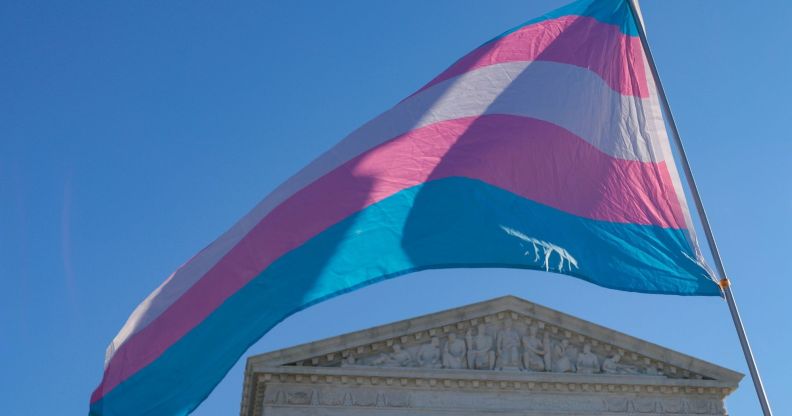
A trans flag waving over the Supreme Court. (Getty)
The Supreme Court held its first hearing for a set of cases that could determine the legality of laws banning trans students from sporting events. Here’s what to know.
Held on Tuesday (13 January), Supreme Court justices heard its first set of oral arguments for two cases, West Virginia v BPJ, and Little v Hecox.
Both cases challenge two similar laws banning trans people from participating in sporting events passed in West Virginia and Idaho.
The US states are among 27 that ban trans young people from playing school sports in some capacity under claims that they have an inherent advantage.
Lambda Legal, the legal advocacy group that challenged West Virginia’s ban on behalf of 15-year-old trans track runner Becky Pepper-Jackson, argued ahead of the hearing that the laws not only ignore the evidence but “reject trans people’s right to exist”.
Its proponents, meanwhile, have attempted to justify the bans by falsely insisting that trans women are not women and that they have “countless athletic advantages”.
Here are some of the key points to take away from the hearing held this week.
Solicitor general insists sex is ‘what matters in sports’
Alan Hurst, Idaho’s solicitor general, argued in favour of the ban during the case of Little v Hecox.
Defending Idaho’s ban, passed in 2020, Hurst argued that the state classifies boys and girls teams on the “basis of sex” because, he claimed, “sex is what matters in sports”.
“It correlates strongly with countless athletic advantages, like size, muscle mass, bone mass, and heart and lung capacity,” he continued.
Hurst admitted that there had been “significant discrimination against transgender people”, but claimed the ban did not compare to the discrimination historically faced by women or Black people.
Justices did not signal whether they were ready to address the discriminatory nature of the bans, but noted that a ruling would likely set the precedent on whether trans people are a protected class.
Justices torn on whether to class trans people as legally protected
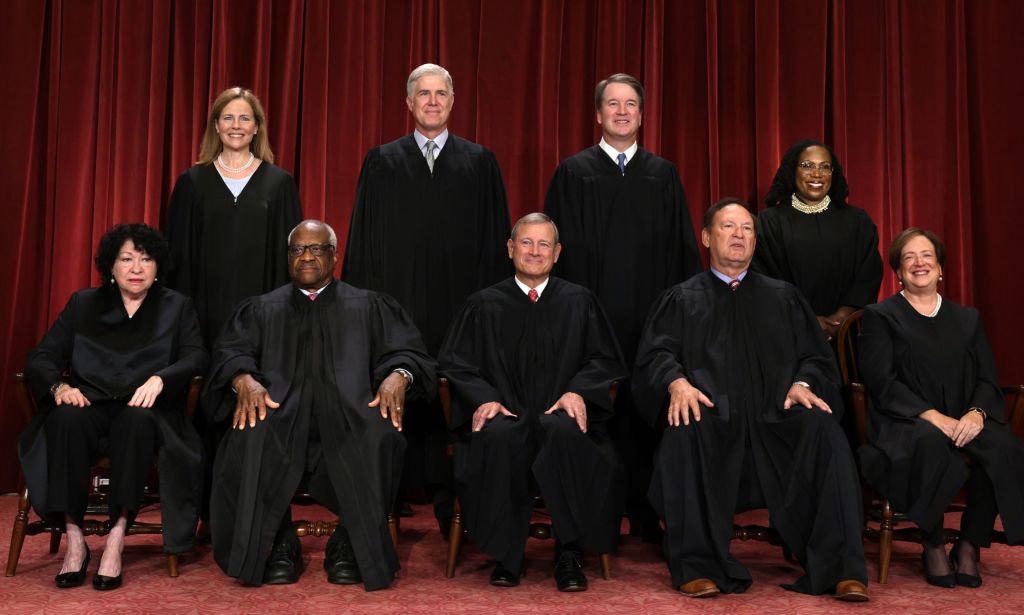
Court justices seemed divided on whether trans people should be considered a legally protected class, which could massively affect any legislation restricting their rights.
Neil Gorsuch, a conservative justice, said that answering the question was a key component of any ruling on these cases.
Democratic justice, Sonia Sotomayor, argued instead that the bans amounted to sex discrimination regardless of trans people’s status as a protected characteristic.
“There’s no question here that a male who identifies as a female … is being excluded from a female sport,” she said. “By its nature, that’s a sex classification.”
Trump administration believes the bans are lawful because of the small number of trans athletes
Arguing on behalf of the Trump administration for both cases, solicitor Hashim Mooppan argued that, because it is commonplace to separate teams between boys and girls, any “sex-based rule” denying trans students the right to compete must be lawful.
“It is undisputed that states may separate their sports based on sex in light of the real biological differences between males and females,” he said. “States may equally apply that valid sex-based rule to biological males who identify as female.”
He further argued that the laws are valid because there are only a small number of trans student athletes currently competing in the US.
The National Collegiate Athletic Association told Congress in 2024 that, of the over 550,000 college athletes nationwide, less than 10 are out as trans. In some cases, plaintiffs aiming to overturn these bans are the only trans college athletes in their respective states.
This argument has been used by human rights campaigners to conversely argue that the sheer political scrutiny against such a small number of people is unjustifiable.
Amy Coney Barrett questions what it means for trans boys
Conservative justice Amy Coney Barrett noted that the majority of laws banning trans student athletes seemed to only target trans girls, not trans boys.
She asked solicitor Kathleen Hartnett, arguing on behalf of trans runner Lindsay Hecox, whether the laws amount to discrimination, if anyone, including trans boys and trans girls, can play on the boys’ team, while trans girls cannot play on the girls’ team.
Hartnett responded saying the Supreme Court had previously ruled in favour of scrapping discriminatory laws that did not cover the entire protected class and that her case focused on a specific subgroup.
Posing the same question to American Civil Liberties Union (ACLU) lawyer Joshua Block, Block argued that boys and girls teams are segmented to give girls athletic opportunities, not because girls are inherently worse at sports than those assigned male at birth.
Previous Supreme Court rulings could apply to trans sports bans
Chief justice John Roberts questioned whether a ruling in 2020 protecting trans people from workplace discrimination also applied to this case.
The landmark ruling found that Title VII of the 1964 Civil Rights Act, which forbids workplace discrimination on the basis of race, religion, national origin, and sex, also applied to LGBTQ+ and trans workers.
Roberts, who sided with the majority in that decision, said he wasn’t sure whether the same reasoning would apply to this case.
“The question here is whether or not a sex-based classification is necessarily a transgender classification,” he said.
Trans athletes have no explicit competitive advantage, plaintiffs argue
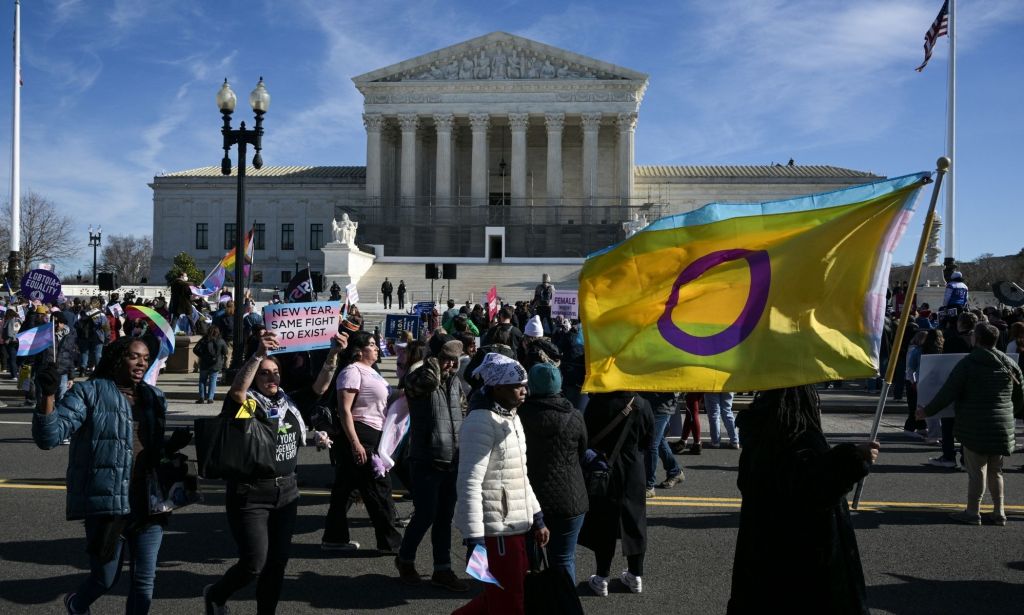
Plaintiffs in both cases argued that the use of gender-affirming care mattered and should allow athletes to lawfully apply because it eliminates sex-based advantages.
Hartnett said her client, who takes testosterone suppressants, has no further “biological advantages” because of the treatment.
She further noted that there are countless examples of cisgender athletes who have beaten their trans competitors in sporting events, and that examples of trans students who have “participated and excelled” are “few and far between”.
She claimed state bans erase medical and biological realities, adding: “The question in this case is, if the person had actually mitigated their sex-based advantage, their exclusion doesn’t match the statutory interest.”
Justices likely to vote in favour of the ban, but much remains to be seen
Analysts and experts have argued the Supreme Court seems likely to uphold the state bans, which would have overarching implications for trans rights in the US beyond sports.
Associated Press argued that the court’s conservative majority would likely vote against overturning the laws, citing their previous rulings which further attacked the rights of trans people.
The court’s three liberal justices, political analysts argued, seem intent on mitigating any setbacks for trans people by supporting a narrow ruling in favour of allowing some trans athletes to participate in sporting events.
A decision on the cases will likely come in the spring or early summer of 2026 following further litigation, according to Lambda Legal.