
The Traitors is actually based on a Soviet-era psychological experiment
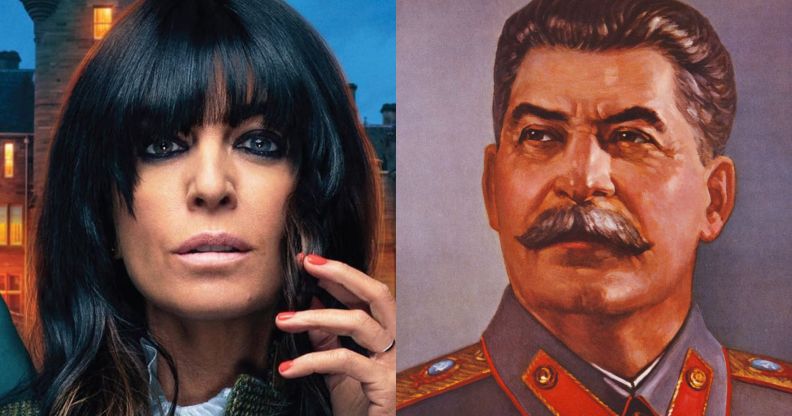
Yes, that’s right, the Traitors is based on a 1980s Soviet-era experiment. (BBC/Getty)
Yes, that's right, the Traitors is based on a 1980s Soviet-era experiment. (BBC/Getty)
Everyone and their uncle is talking about The Traitors after its delightfully deceptive season finale this weekend, but did you know it’s loosely based on an old psychological exercise invented in the Soviet Union in the ’80s?
Warning: This contains spoilers for the season finale of The Traitors UK. Reader discretion is advised.
The reality TV show, which sees 22 people from across the UK participate in a weeks-long social deduction game to work out who amongst them is secretly a “Traitor”, aired the acclaimed finale to its tense fourth season on Friday (23 January).
Contestants and this season’s surviving Traitors, Stephen Libby and Rachel Duffy, bagged £95,750 during Friday night’s conclusion, which was watched by over 9.6 million people according to the BBC.
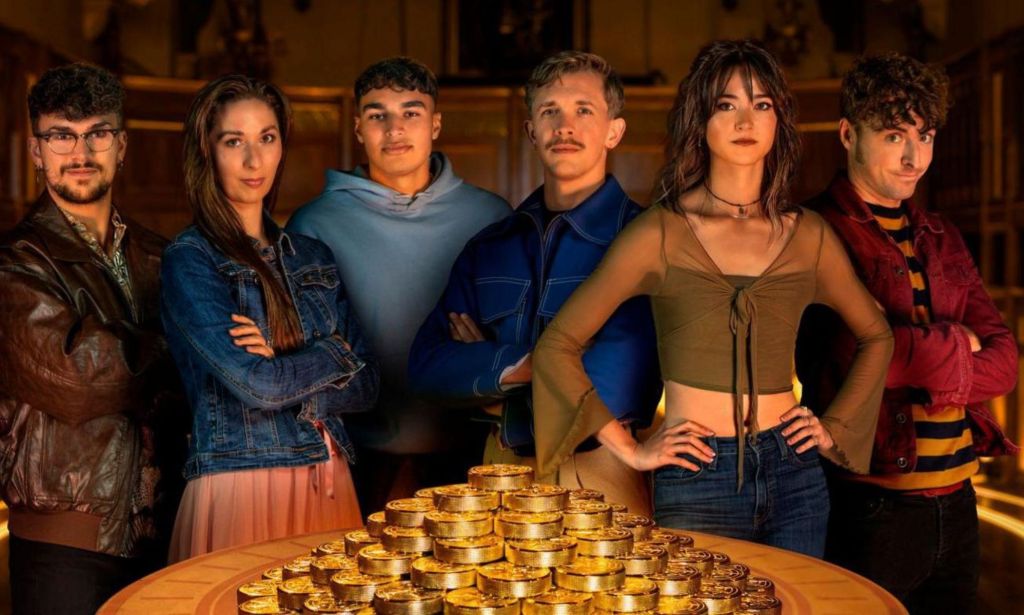
Based on the Dutch series De Verraders, the BBC show and its celebrity off-shoot has seen critical acclaim since it first began in 2022, raking in multiple awards.
While it takes its own unique spin on the social deduction formula, the game’s format is actually based on a Soviet-era experiment that dates all the way back to the 1980s.
The Russian social experiment that became known as ‘Mafia’
In the late 1980s, Moscow State University psychology student, Dimitry Davidoff, had a problem. Juggling his course work and a teaching job, the young academic struggled to present his research in a palatable or unique way, and had increasingly little time to work on doing so.
Working to earn his degree in the heart of Russia during an intense transitional period for the Soviet Union, Davidoff’s student years were practically submerged in the politics of deception.
Flash-forward to a snowy November evening in 1987 Moscow – just months after the 1986 Chernobyl nuclear disaster – the budding psychologist combined his work and created a social experiment to try with his students.
“I asked a couple of students to go outside and agree on a secret discussion topic for the class, then move us into discussing your topic without us noticing,” he told Vulture. “They would come back and try to manipulate the group into talking about it.”
The task wasn’t particularly engaging to begin with. Students tasked with changing the topic failed to sway the group. This, however, gave the professor his self-described “eureka moment.” What if no one knew who was trying to change the topic?
The aim of the experiment, inspired by the work of 1920s psychologist Lev Vygotsky, was to prove that a few people with perfect information can almost always triumph against numerous people with incomplete information. Davidoff later described the experiment as an example of the “uninformed majority versus the informed minority.”
It became incredibly popular amongst his students, who began sharing it with friends and family until it spread into a global phenomenon known as Mafia or Werewolf.
‘No man has a good enough memory to be a successful liar’
Mafia’s structure is simple; there are two teams, traitors and innocents. Each round consists of a day and night phase. During the day, innocents are tasked with voting out all the traitors, and during the night, traitors are tasked with eliminating all the innocents. The only catch – the traitors know who the innocents are, but the innocents don’t know who the traitors are.
It is widely considered one of the most fundamental social deduction games of the entire genre, with off-shoots like Blood on the Clocktower or Secret Hitler using Mafia’s core structure.
Davidoff noted that the game became exceptionally popular in Silicon Valley during the mid 1990s, which helped launch it into the cultural zeitgeist.
“As time went on and the year 2000 came, there was a Mafia story every week,” he said. “An African village was cut off from electricity, so the people played Mafia through the crisis. A Christian camp in Pennsylvania gets busted because of naked Mafia games.”
It eventually went on to spawn the series of international reality TV shows known as The Traitors. Davidoff said that while he found the show entertaining, it was “disappointing” to see how the mechanics of the game had been used.
Asked if he had any tips for fans and players to seek out any Traitors, he said: “I think Abraham Lincoln said, ‘no man has a good enough memory to be a successful liar,’ so lie as little as you can.
“But, really, there are no secrets to this game. That’s the whole point of Mafia and why it is special. Nothing from outside the game can really help you in Mafia – no knowledge, no skill, no experience.”
Share your story! Do you have an important, exciting or uplifting story to tell? Email us at [email protected]