
Charities don’t need to exclude trans people, Charity Commission says

Charity Commission CEO, David Holdsworth, said charities should wait before enacting exclusive policies. (Channel 4/YouTube)
Charity Commission CEO, David Holdsworth, said charities should wait before enacting exclusive policies. (Channel 4/YouTube)
Charities don’t need to abandon trans-inclusive policies despite calls to do so, the Charity Commission has confirmed.
The UK’s regulator of charitable organisations said that organisations should not rush to scrap or modify their trans-inclusive policies in response to the UK Supreme Court’s ruling on the 2010 Equality Act’s definition of a woman.
In April, the nation’s top court ruled that the legislation’s definition of ‘sex’ and ‘woman’ referred strictly to biology only. It clarified in the ruling that this was not a “triumph of one or more groups in our society at the expense of another”.
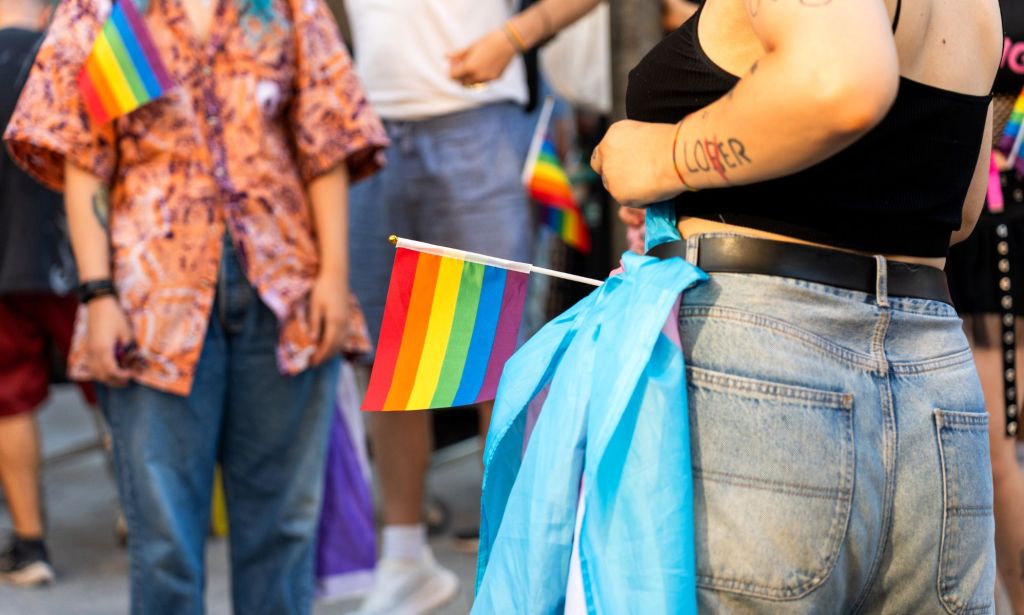
Several organisations, including those on the Charity Commission’s registry, have since begun enacting or changing policies to exclude trans people from so-called “single-sex” groups and facilities, such as toilets, over fears they weren’t complying with the law.
Most notably was youth charity Girlguiding’s decision to exclude trans girls from its groups, which include Rainbows, Brownies, Guides, and Rangers.
However, Charity Commission CEO, David Holdworth, told registered charities to “wait for legal clarity” before choosing to exclude trans people from using their services.
His comments came in response to an open letter from charity governance consultant Penny Wilson, who expressed her deep concern that organisations were being pressured into taking action when they didn’t need to.
Charities enacting trans bans over external pressure, charity governance consultant says
The letter, signed by hundreds of charity workers, urged the Charity Commission to issue a “regulatory alert” advising charities not to rush into policy changes before they have to, as reported by The Canary.
Wilson added: “We are concerned that, given the size and public visibility of the charities recently targeted, other organisations may now feel compelled to exclude trans people, even when this runs counter to their values, their charitable objects, and their understanding of how best to meet the needs of their communities.
“These organisations have been forced to navigate an area of law where key cases are still progressing through the courts. They found themselves in an impossible position: either exclude a marginalised group, or risk legal action that could jeopardise the future of their organisation, ultimately leading to closure.”

Much of the confusion has arisen out of the Equality and Human Rights Commission’s (EHRC’s) code of practice into single-sex service provision, which many have misconstrued as legally binding.
While an unpublished finalised draft of the code could become law in the future, proposed updates shared by the EHRC in April are not currently legally binding. The now-scrapped interim guidance, which banned trans people from all gendered public services regardless of sex assigned at birth, was also not legally binding.
In response to the open letter, Holdsworth wrote that, while the Commission could not “pre-empt” the code, he confirmed that charities did not need to implement policies as yet and instead should wait for the government’s decision on the code.
He said the Commission’s current advice for registered organisations is to “await the final statutory guidance, or alternatively to seek legal advice relevant to their charity’s position and make changes as they consider necessary”.
“We have engaged with several charities concerning their own circumstances, and we are now using insights gained from those discussions alongside wider feedback, concerns, and complaints received by us as part of our policy and guidance activity and preparation,” he added. “All your suggestions of possible next steps are noted, with thanks, and we will consider them as part of our work.”
Responding to backlash over its respective decision to ban trans girl guides, Girlguiding insisted it was one that officials “preferred not to make”, but was done after “detailed considerations” in the wake of the Supreme Court’s judgment.
However, numerous legal experts have noted that the ruling on its own is not a sufficient reason to implement exclusive policies.
Barrister Oscar Davies told PinkNews in September that the EHRC and organisations excluding trans people are “getting it wrong”, saying that equality law is “permissive rather than exclusionary”.
“The Equality Act is meant to be a shield rather than a sword. It’s not meant to attack people and get rid of their rights,” they said. “If you have a single-sex space, my interpretation is that a trans person can still go into that single-sex space, but if someone complains, they can bring out a sex discrimination claim or the organisation can exclude that person,” they said. “But that doesn’t happen automatically.”
Share your story! Do you have an important, exciting or uplifting story to tell? Email us at [email protected]