
‘It made me defend my existence’: The queer pop star taking on Turkey’s LGBTQ+ censorship
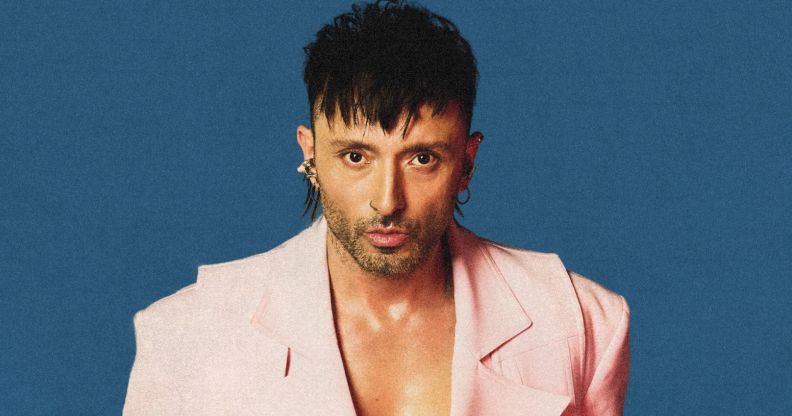
Mabel Matiz: ‘I’m trying to be an inspiring and liberating persona.’ (Supplied)
Mabel Matiz’s laughter lines crease as he thinks about the previous evening. The 40-year-old musician, known as one of Turkey’s biggest pop stars, performed to thousands in the country’s capital Ankara.
Being on stage at all is “like a miracle”, he says, considering how debilitatingly shy he was as a child growing up in Mersin, on Turkey’s south coast. Now, 15 years after the release of his eponymous debut record, being on stage has become “more playful, more free and more nourishing”.
The near two billion Spotify streams and five million monthly listeners are probably natural confidence builders. “I feel so happy to be on stage, to show my authentic self to people,” he says. “I know it will be a reflection for people and the audience usually feel happy to see [themselves in] my reflection. It’s like a conversation.”
The Ankara gig was a good show, he says, with a good audience. “I was also good,” he adds. “But sometimes it depends. Some shows are better, some shows you feel more emotional. And last night was a little bit emotional maybe.”
It’s understandable. The past five months have been a maelstrom of bogus controversy for the singer-songwriter. We’re speaking over Zoom, Mabel from Istanbul, to discuss the musician’s upcoming show at London’s Royal Festival Hall. It’s his third ever performance in the capital – he sold out the Barbican in 2022 and 2024 – and he’s “excited”. His live show, which features his now signature fusion of band-backed traditional Anatolian folk and playful, experimental electronica, is being reworked with new musical arrangements for the first time. “So actually, on my mind always, London is spinning,” he laughs, flashing perfect pearly whites.

Yet the past few months have been unavoidably heavy. “Where can I start from?” Matiz smiles wryly when I broach the subject. In early September, he teamed up with French electronic duo Ko Shin Moon on song “Perperişan”, a woozy Turkish pop song which he has described as telling “a love story through metaphors”. Matiz is gay, and the “passionate and intense” lyrics use male pronouns. “I wish to be stripped bare and placed on a pillow with him,” one line goes.
Two weeks after its release, Turkish authorities launched a criminal case against Matiz over the song, claiming that its suggestive lyrics breached obscenity laws. In a first of its kind request, the Turkish Ministry of Family demanded the song be removed from streaming services, citing possible harm to “public order and general health”. Prosecutors are reportedly seeking a prison sentence of between six months and three years.
In a statement at the time, Mabel Matiz rebuked the charge, stating that lyrics had been deliberately twisted. “I want to believe that public order and our general well-being are not so fragile that they would be disrupted by a mere song,” he wrote on X, formerly Twitter. He appeared in court in January, where he was grilled on whether the song was directed at another man. “Anyone can sing a song for anyone. It’s not my place to draw those lines,” he reportedly responded. The trial was adjourned until 27 March.
Today, Matiz sounds only vaguely despondent and is instead sanguine and stoic. Admirably so. “I don’t want to exaggerate my situation,” he says. “Yes, this is my experience and I’m dealing with it [but] I’m feeling more powerful than a few months ago actually. It made me defend my existence and defend myself.”
Yes, he could never have anticipated such a jarring response from the authorities, but Matiz has dealt with outrange and censorship attempts before. In 2022, the music video for his song “Karakol” was promptly banned by Turkey’s media watchdog for featuring a same-sex love story (“It was so romantic and I’m still proud of that work,” he says now.) The following year, a planned concert of his in the city of Denizli was cancelled after he spoke out about LGBTQ+ rights.
There are numerous reasons for Matiz to remain upbeat. His fans are still showing up and his shows are still selling out. London is on the horizon. His manager, on our call too, says their legal team is feeling “positive” about the case because “factually it’s nonsense, basically”. Matiz is proud of the defence he put forward, and he refuses to be silenced.
“I’m always against censorship. I’m always against discrimination or hate speech or special behaviours against queer people,” he says. “So we don’t know [if] the case is really about the song or my persona that I reflect as a queer artist in a very mainstream way.” The furore rumbles on on social media, but so too does the overwhelming support he’s felt. “So as an experience I can say it’s really tiring and exhausting. But, you know, there are a lot of terrible stories happening all over the world.”
Homophobia isn’t, Matiz is keen to stress, only an issue in Turkey, yet the country has experienced an unavoidable rise in anti-LGBTQ+ hostility in recent years. Last year was dubbed the country’s ‘Year of the Family’ by president Recep Tayyip Erdoğan, a campaign in favour of “traditional family values” which kickstarted with an attack on LGBTQ+ people. ILGA’s annual rainbow map revealed that in 2025, Turkey was the third worst European country in terms of LGBTQ+ rights. Pride festivals have been banned, while same-sex marriage and adoption remain illegal.
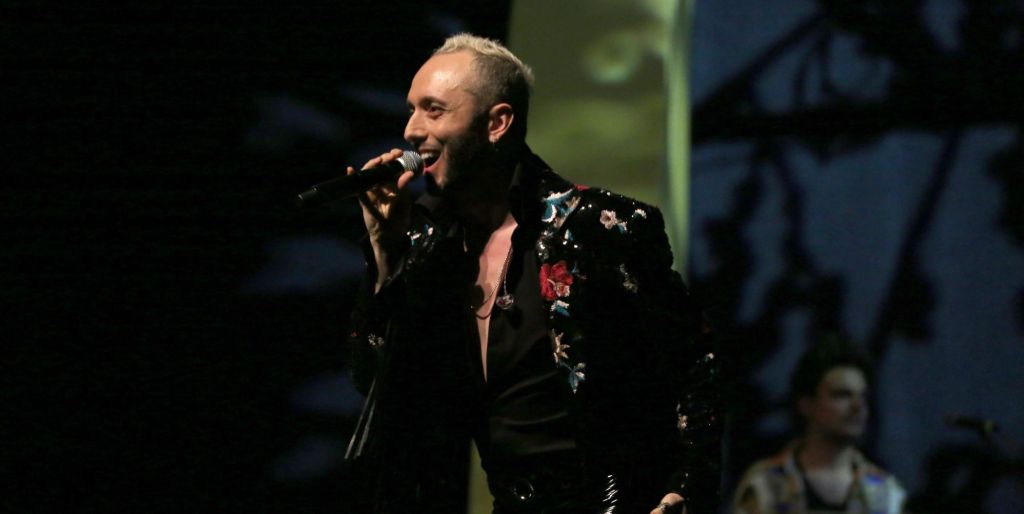
Matiz has been speaking and singing proudly about being part of the LGBTQ+ community since his early career, when his music was more progressive rock, and less of a streaming smash. Breaking into the mainstream with his 2018 art pop record Maya, named after his mother and inspired by time living in Berlin, didn’t change that.
“I love them and I see myself from my different ages on all of them,” he says of the LGBTQ+ fans he’s gathered through his defiance. “It makes me so sensitive and sentimental and also very responsible. I’m trying to be a good example; I’m trying to be an inspiring and liberating persona for myself and also for [them].”
Matiz is proud of his heritage. His visuals, as well as the music itself, are imbued with Turkish culture; the video for his 2018 song “A Canım” (66 million streams; 65 million views) is a distinctly vibrant celebration of the country. When he performs in Europe, it’s not just queer folk in the audience, but Turkish residents of those countries too.
“I always dreamed my music [would be] something that will make people come together from different walks of life because when people from different walks of life come together, I think it’s one of the biggest powers in the world,” he says, with real feeling. “Sometimes I’m still surprised when I see gay couples sitting with some old religious people and they’re all having fun and no one cares who somebody is… it means a lot to me.”
For now, Matiz remains in a tricky chapter of his career. It will hopefully close at the end of March. He’s already looking ahead to the next one. “This year, we have started a new project,” he teases. “The project will be an album in the next [few] months.” It’ll retain his usual blend of electronica and Turkish folk melodies, but with a dash of “‘70s psychedelic Anatolian band music” and some “new wave stuff”. After his show in London, he’s staying in the city to record some new songs. Is there anyone from London’s vast music scene he’s inspired by? “David Bowie always inspires me,” he says, with another broad, resilient smile.
Mabel Matiz performs at Southbank Centre’s Royal Festival Hall on 13 February. Tickets are available now.
Share your thoughts! Let us know in the comments below, and remember to keep the conversation respectful.