
‘We are the history books’: Black queer leaders vow resistance amid Trump’s Black history erasure
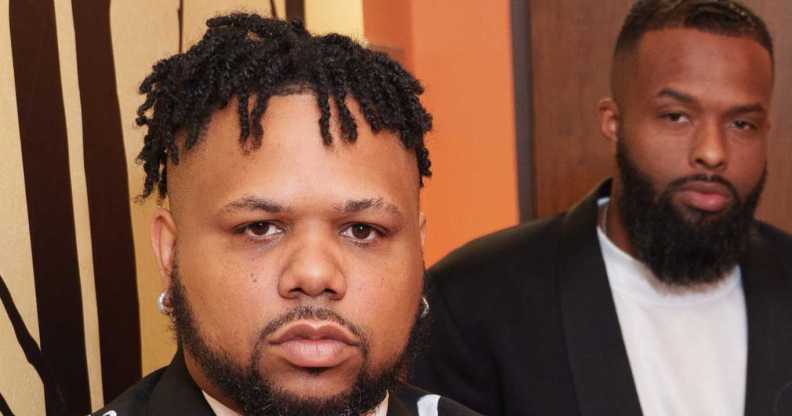
Ian L Haddock, founder and executive director of the Normal Anomaly Initiative, and Jordan J Edwards, deputy director. (Supplied)
“We will continue to move and pass down things, meaning that when they try to erase us, as long as we stay present, they can’t,” Jordan J Edwards, deputy director of Black and queer-led organisation Normal Anomaly Initiative, tells PinkNews.
The 34-year-old is talking about the Trump administration’s bid to erase Black history, alongside LGBTQ+ support and visibility.
“It’s 365 days a year,” he says of Black history, adding of the celebratory month: “But the moment the month comes around, it brings a different type of awareness into spaces, so I can look at my Black siblings and say we’ve done a lot – from something as small as a street light, understanding that a Black person created that.
“There’s something about realising that so much of us that has been ingrained. Even if they try to take it out the history books, we are the history books. We will continue to move and pass down things down.”
He acknowledges efforts to erase visibility of Black history, but notes that historically it was preserved through storytelling, something he is determined to continue.
‘Protecting power, not people’
Black History Month marked its 100th anniversary this year, but president Donald Trump’s National Black History Month proclamation omitted any references to Black Americans’ struggle to secure freedom from slavery or endurance of racial inequality.
The administration has sought to dismantle diversity, equity and inclusion programs and reframe US history in what it describes as a more “patriotic light”, which includes refusing to acknowledge slavery, a move condemned by Amnesty International as “protecting power, not people”.
At the same time, it has rolled back anti-discrimination policies, targeted trans rights and support for queer youth, and reduced federal recognition of LGBTQ+ communities, most recently removing a pride flag from New York’s Stonewall National Monument.
Normal Anomaly Initiative, founded by 38-year-old Ian L Haddock has led on the frontlines of trans rights advocacy, HIV education and community empowerment in Houston, Texas. For Ian, Black History Month is deeply personal.
“It reminds me that I have to do the work to be in the history books. I have to do the work to change this moment for the better,” he says.
The month is also, he explains, a reminder of the response of human rights activist greats – Bayard Rustin, Essex Hemphill, Audre Lorde, bell hooks, Marsha P Johnson and Monica Roberts – and of “other Black queer leaders who gave it all in situations they would argue are more difficult than this moment”.
He summarises his conviction simply: “Black History Month is both a call and a response: a call for me to make history and a response for me to continue the work my ancestors gave.”
‘We never believed anybody was coming to save us’
Both men speak passionately, fully aware of the structural hardships facing Black queer communities, but undeterred.
“We never believed anybody was coming to save us,” Ian says.
“Living in America, in Texas, in the South, no one really cares about Black queer people.
“When we think about what’s happening under the Trump administration, our spirit, our ancestors knew. It’s genetic. We knew that this was happening before he came into power, and we’ve been shouting it from the rooftop: if you don’t focus on the least of us, the most of us will take care of all of us.”
Through their organisation they are responding not with despair but with infrastructure, “continuing to build while being kind, considerate and empathetic” to those only now realising that Trump may not represent them.
The political climate has pushed the organisation to expand its work to cover covering Black, brown and LGBTQ+ communities more broadly, giving them, Ian says, “more of a family to work with”.
‘If we’re unified… we can make the change that we need’
For Jordan, however, the greatest danger is not fear, but hopelessness.
“You hear about fear and how fear stops people,” he says. “But it’s actually taking away somebody’s hope.
“Our organisation continues to make sure that we put hope back into community and put joy back into it. If we can keep that, we can keep going.
“We’ve been here before. It’s a different person, similar action. It’s individuals who try to break down certain communities and separate us – because if we’re unified and come together, we can make the change that we need.”
Rather than centring on struggle alone, Normal Anomaly adopts what Ian describes as an approach rooted in appreciative inquiry.
“We go into communities not stating the problems, we know what the problems are,” he says. “Instead we ask: what do we need to do? What are you already doing? What is working well?
“We come from a place of asking: what is the magic that is Black queerness?”
‘I might not be Black like you, but I’m Black like that’
On 27 June, the organisations newly named festival, Black Like That, will take place. The name draws from Beyoncé’s “Cozy”, in which Black trans woman TS Madison declares: “I’m Black like that.”
The timing of the event is what Ian describes as “unintentionally intentional” – held a day before the anniversary of the 1969 Stonewall uprising and coinciding with the date of National HIV Testing Day.
It will blend celebration with action, creating space for joy while raising awareness around HIV.
“It’s really hard to explain what being Black like that means,” Ian reflects. “We’re different types of Black. So it’s a space for all of us to explore all of the beauty and the queerness, which doesn’t just mean sexuality, but the difference in being Black.
“I might not be Black like you, or Black like this – but I’m Black like that, and that’s beautiful.”