
European Parliament declares trans women are women

European Parliamentary members passed the resolution last week. (Getty)
Europe’s parliament has agreed to a resolution declaring that trans women are women.
The resolution, adopted last week, made a host of recommendations for the EU to pursue at the 70th annual UN Commission on the Status of Women, which is set to take place next month.
Among the recommendations was a proclamation emphasising the “importance of the full recognition of trans women as women, noting that their inclusion is essential for the effectiveness of any gender-equality and anti-violence policies”.
Other proclamations referencing LGBTQ+ people included the need for a “comprehensive tool to monitor and counter democratic backsliding and backsliding in women’s rights”, as well as the acknowledgement of a rise in attacks against LGBTQ+ and women’s rights activists.
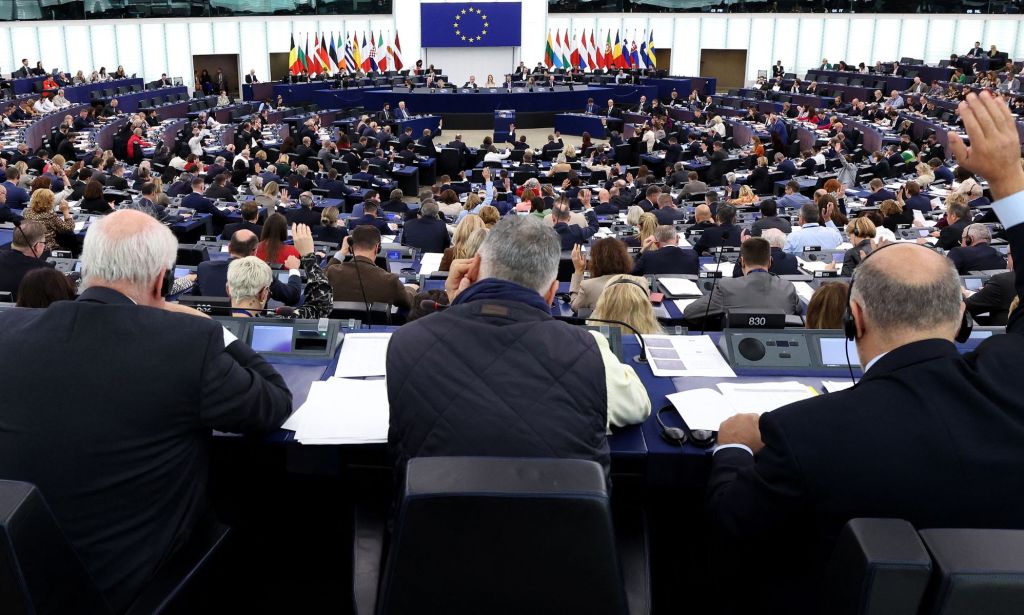
The array of recommendations were adopted in a 340-141 vote, with 68 abstentions, according to LGBTQ+ Nation.
While most European Parliament resolutions aren’t legally binding, their passage typically marks significant influence within EU member states.
Covering the convention, journalist Erin Reed suggested the resolution’s passage had put the European Union on a “direct collision course” with the United States, which will also attend the UN’s conference in New York next month.
The North American country’s LGBTQ+ rights record has plummeted following the inauguration of US president Donald Trump, who has signed a slew of executive orders targeting the community, particularly trans people.
It also comes in stark contrast to the UK government’s stance on trans rights after prime minister Keir Starmer declared that he believed trans women were not women last year.
Several countries within Europe have, themselves, begun enacting anti-LGBTQ+ policies and legislation, particularly EU member state Hungary, which enacted a ban on Pride marches last year.
Tens of thousands of Hungarians across the nation joined together to protest the law’s passage at the time, with near-daily protests taking place across June and April.
Gergely Karácsony, mayor of the Hungarian capital Budapest, faces criminal charges after defying the Pride ban in June 2025, allowing organisers to host an LGBTQ+ Pride march.
Responding to the accusations, Karácsony said on social media that he had “gone from being a proud suspect to a proud defendant”.
He added: “It seems that this is the price we pay in this country when we stand up for our own freedom and that of others.”
Share your story! Do you have an important, exciting or uplifting story to tell? Email us at [email protected]